Buying a flag in Finland – what affects the price
Published Written by Flagpole Guides
This page is an English translation of the Finnish original. Where the two versions differ, the Finnish text is the original.
Finnish flags are sold in many sizes and qualities, and the price can vary a great deal even between flags that look alike in a photo. This guide gives no prices, since they vary between sellers and over time. Instead it describes what affects the price of a flag, what the law says about Finnish flags offered for sale and what the Consumer Protection Act says about the buyer’s rights.
What affects the price of a flag?
| Factor | How it affects the price |
|---|---|
| Size | A larger flag takes more fabric and work |
| Material | The quality and weight of the fabric affect durability and price |
| Method of manufacture | A sewn cross and a printed cross differ in the work involved |
| Edges and reinforcements | Double seams and a reinforced hoist add work |
| Fittings | Snap hooks and line are sometimes included, sometimes not |
| Type of flag | National flags, pennants, facade flags and special flags differ in how they are made |
Size and the price of a flag
Size is often the largest single factor in the price. According to the Ministry of the Interior, the flag’s height is about one sixth of the pole’s length, and according to Suomalaisuuden Liitto the flag number matches the pole’s length in metres. A longer pole therefore means a larger flag. According to the Ministry’s table, for example, an 8 metre pole suits a flag of 125 × 204 cm and a 12 metre pole one of 200 × 327 cm. The right size can be worked out with the flag size calculator, and the size tables are in the guide to flag sizes.
Material, sewing and price
According to Suomalaisuuden Liitto, Finnish flags are nowadays made of polyester, because it is durable and keeps its colour in the country’s changeable weather. The quality and weight of the fabric affect how well the flag withstands wind and sunlight. A sewn flag, where the cross is a separate piece of fabric, takes more work than a printed one. Reinforced seams and hoist also affect durability and price.
Correct colours and proportions
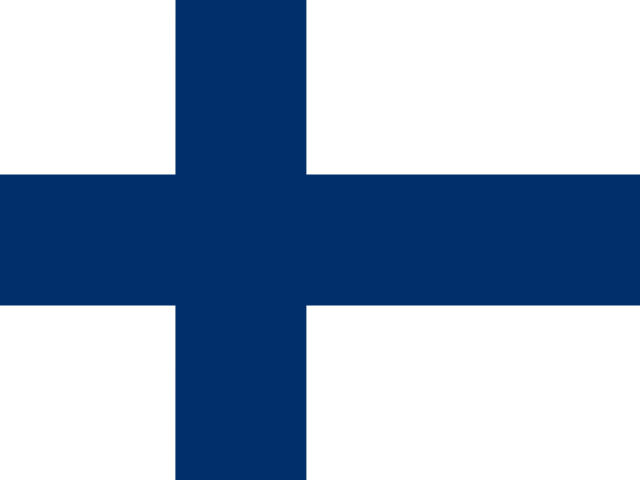
The colours and proportions of a flag sold as a Finnish flag are defined precisely. Under the Act, the ratio of the flag’s height to its length is 11 : 18, and the shade of blue is defined in Government Decision 827/1993, with approximations such as PMS 294C and NCS 4060-R90B. Under section 8 of the Act, a fine may be imposed on anyone who offers for sale as a Finnish flag a flag whose colours or proportions clearly differ from those laid down. The flag’s colours are described in the guide to flag symbolism.
Flags, pennants and price
The type of flag affects the price. Besides the national flag, the following are for sale:
- house pennants, which according to Suomalaisuuden Liitto are about half as long as the pole
- omalippu or facade flags for a staff of about 130 centimetres
- carried flags and table flags
- regional, municipal and family pennants, and company and organisation flags.
The state flag is not for private use: according to the Ministry of the Interior, a private person cannot be given permission to use it. The flag types are described in the guide to flag types.
Service life and care as part of the price
When comparing prices, the flag’s service life is one factor. According to Suomalaisuuden Liitto, city air soils a flag quickly, and following the washing and ironing instructions preserves the flag’s colour and shape. According to the Ministry of the Interior, the flag can be washed and repaired as long as the repair is not visible on the pole. A worn and faded flag is disposed of with dignity, according to the Association. Care of the flag is described in the guide to flagpole maintenance.
Consumer rights when buying a flag
- Right of withdrawal: According to the Finnish Competition and Consumer Authority (KKV), most products bought online come with a 14-day right of withdrawal, which begins when the goods are received. Goods bought in a shop have no statutory right of withdrawal, but the seller may offer an exchange or return policy.
- Defects: Under chapter 5, section 16 of the Consumer Protection Act, the buyer reports a defect to the seller within a reasonable time after noticing it or when it ought to have been noticed. Under the Act, a notice given within two months is always in time.
- Guarantee: Under the Consumer Protection Act, a guarantee does not limit the seller’s statutory liability for defects.
The Consumer Protection Act covers purchases by a consumer from a business. Other rules apply when a flag is bought from a private individual. The price of a flagpole is described in the guide to buying a flagpole.
Frequently asked questions
What affects the price of a Finnish flag?
The price of a flag depends above all on its size, the material and weight of the fabric, whether the cross is sewn or printed, reinforced edges and the fittings. Whether it is a national flag, a pennant or a special flag also affects the price.
Why does the guide give no prices?
Prices differ between manufacturers and sellers and change over time. Instead, the guide describes what affects the price of a flag, which makes it easier to compare offers.
Can a flag with colours that differ from the Finnish flag be sold?
Under section 8 of the Act on the Flag of Finland, a fine may be imposed on anyone who offers for sale as a Finnish flag a flag whose colours or proportions clearly differ from those laid down in or under the Act.
Can a flag bought online in Finland be returned?
According to the Finnish Competition and Consumer Authority, most products bought online come with a 14-day right of withdrawal, which begins when the goods are received. There is no statutory right of withdrawal in a shop.
Within what time is a defect in a flag reported?
Under the Consumer Protection Act, a defect is reported to the seller within a reasonable time after the buyer noticed it or ought to have noticed it. Under the Act, a notice given within two months is always in time.
Sources
This guide is based on the following sources, most of them in Finnish:
- Laki Suomen lipusta (380/1978) – Finlex (oikeusministeriö)
- Valtioneuvoston päätös Suomen lipun väreistä (827/1993) – Finlex (oikeusministeriö)
- Suomen lippu – usein kysytyt kysymykset – Sisäministeriö
- Liputus – Suomalaisuuden Liitto
- Peruuttamisoikeus verkkokaupassa – Kilpailu- ja kuluttajavirasto
- Kuluttajansuojalaki (38/1978) – Finlex (oikeusministeriö)
Related guides
- Flag sizesFinnish flag sizes: the 11 : 18 proportions, flag numbers by pole length, the Ministry of the Interior’s size table and the sizes of pennants.
- Flag size calculatorFlag size calculator for Finland: the size of the Finnish flag and house pennant by pole length, from the Ministry of the Interior’s size table.
- Flag typesFinnish flag types: the national flag, the state flags, the President’s flag, the house pennant, the facade flag, and the flags of Åland and the Sámi.
- Flag symbolismThe symbolism of the Finnish flag: the blue cross, blue and white, the official colours in PMS and NCS, the coat of arms on the state flag and respect.
- Buying a flagpoleThe price of a flagpole in Finland: how height, material, halyard, base, delivery and installation affect it, and what consumer law and the Building Act say.
- Flag rulesFlag rules in Finland: flying times, the Midsummer and Independence Day exceptions, the polar night, raising and lowering the flag, and respect for the flag.