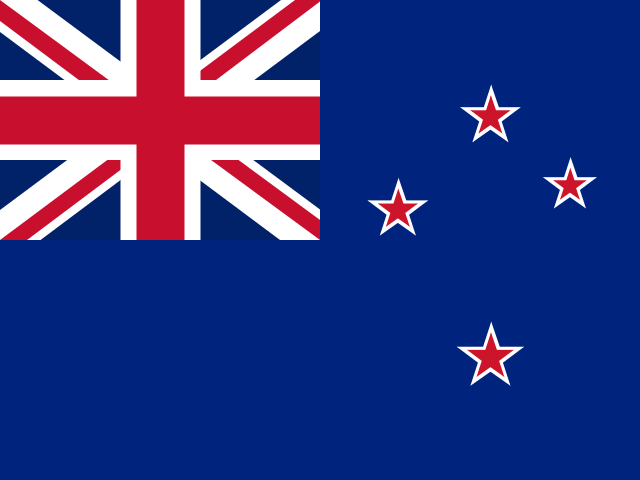
Flagpoles and flag flying in New Zealand
Published Written by Flagpole Guides

Flags are part of everyday life in Aotearoa New Zealand: the New Zealand flag over Parliament, council buildings and schools, the Tino Rangatiratanga flag beside it on Waitangi Day, the red ensign on marae, and club, iwi and company flags on flagpoles at homes, farms and business parks. The rules behind them come from a few places: a law that defines the flag and protects it from misuse, a notice from the Minister for Arts, Culture and Heritage on when it flies on government buildings, guidance from Manatū Taonga – Ministry for Culture and Heritage, and building and planning law that decides when a flagpole needs a consent. This section brings together what applies to flag flying and flagpoles in New Zealand, with sources from New Zealand legislation and government agencies.
The essentials
- Flag days: The New Zealand Flag Notice 2024 lists twelve days of national commemoration, from Waitangi Day to the King’s birthday on 14 November. The dates are in the guide to flag days.
- Who may fly flags: The New Zealand flag can be flown on any day of the year, by anyone. The details are in the guide to flag flying rules.
- Half-mast: The flag is lowered more than its own depth from the top of the pole. More in the guide to half-mast.
- Size: Manatū Taonga gives the guide of one yard of flag for every 10 feet of flagpole. The flag size calculator works it out.
- Buying: What affects the price is explained in the guides to buying a flagpole and buying a flag.
- Consents: The Building Act and the council’s district plan decide whether a flagpole needs a consent. More in the guide to installing a flagpole.
Law, notice and responsible bodies
The Flags, Emblems, and Names Protection Act 1981 declares the New Zealand Ensign, the blue flag with the Union Jack and four red stars of the Southern Cross, to be the New Zealand Flag and the symbol of the Realm, Government and people of New Zealand. It makes it an offence to alter the flag without lawful authority, or to use, display, destroy or damage it in or within view of a public place with the intention of dishonouring it. The Act also protects the customary use of the New Zealand Red Ensign on places and occasions of Māori significance.
Under section 10 of the Act, the Minister may prescribe the days, times and manner in which the flag is flown on government land and buildings. The current rules are in the New Zealand Flag Notice 2024, which came into force on 1 March 2024. Rules of etiquette published under the same section have no force of law. The Act is administered by Manatū Taonga – Ministry for Culture and Heritage (MCH), which publishes the display rules, issues half-masting directives and keeps an email list that tells subscribers when the flag is to be flown at half-mast.
| Level | What it covers |
|---|---|
| Parliament and the Minister | The Flags, Emblems, and Names Protection Act 1981 and the New Zealand Flag Notice 2024 for government buildings |
| Manatū Taonga | Display rules, half-masting directives and guidance on the Tino Rangatiratanga flag |
| Councils | Building consents under the Building Act 2004 and the rules of the district plan |
The flagpole in New Zealand

There are no national rules on what a flagpole must look like. Under the Building Act 2004, a mast pole on a building that is more than 7 metres above its point of attachment or base support is itself a building, and Schedule 1 of the Act, which lists building work that needs no building consent, has no exemption that names flagpoles; the council can exempt work it considers unlikely to endanger people or buildings. District plans add their own rules: in the Auckland Unitary Plan, for example, a flagpole counts as a building for the plan’s rules when it is more than 7 metres higher than its point of attachment or base support. According to a New Zealand flag maker, the 1800 × 900 mm flag suits many flagpoles of 5 to 8 metres. More in the guides to types of flagpoles and flagpole heights.
About the guides
The guides below are sorted by topic. Each covers one subject, ends with frequently asked questions and lists its sources, and shows when it was last updated. The flag days are shown for 2026 and 2027, following the New Zealand Flag Notice 2024 and the Matariki dates set by law.
All guides
Flag flying and protocol
When and how flags are flown in New Zealand – from Waitangi Day and Anzac Day to half-mast, mourning, the position of honour and flags of other countries.
- Flag daysAll days of national commemoration on which the New Zealand flag is flown in 2026 and 2027, from Waitangi Day and Anzac Day to Matariki and Labour Day.
- Flag flying rulesThe rules for flying the New Zealand flag: who may fly it, flying at night, the flag’s condition and disposal, advertising and the offences in the Flags Act.
- Half-mastWhat half-mast means in New Zealand: how far down the flag flies, how it is raised and lowered, who issues directives and when flags are flown at half-mast.
- Flags in mourningHow flags are used in mourning in New Zealand: the death of the Sovereign, former prime ministers, tragedies, local deaths and the flag on a coffin.
- Flags on public holidaysFlying flags on New Zealand public holidays: Waitangi Day, Anzac Day, the King’s Birthday, Matariki, Labour Day and the regional anniversary days.
- Flag protocolThe position of honour for the New Zealand flag: a line of flags, buildings, circles, yardarms and gaffs, and flying it with the Tino Rangatiratanga flag.
- Foreign flags in New ZealandFlying the flag of another country in New Zealand: position beside the New Zealand flag, the order of several national flags, the Union Jack and flag hire.
The flag
The New Zealand flag and the other official flags, flag sizes, what affects the price of a flag, and a calculator for the flag size on a flagpole.
- Flag typesThe official flags of New Zealand: the national flag, the red and white ensigns, the air ensigns, the Governor-General’s flag and the Tino Rangatiratanga flag.
- Flag sizesThe five standard New Zealand flag sizes from 1 to 3 yards, the 1:2 proportions of the national flag and Manatū Taonga’s guide for matching flag and pole.
- Flag size calculatorThe flag size calculator shows the flag length for a flagpole by Manatū Taonga’s guide, the size at 1:2 and the nearest of the five New Zealand flag sizes.
- The New Zealand flagWhat the New Zealand flag means: the royal blue, the Union Jack and the Southern Cross, the official colours, the 1902 star positions and the flag referendums.
- Buying a flagBuying a New Zealand flag: what affects the price – size, fabric, printed or sewn, finish, colours – and consumer rights under the Consumer Guarantees Act.
The flagpole
Types, materials, heights, accessories, lighting and what affects the price of a flagpole – and how flags and flagpoles came to New Zealand.
- Types of flagpolesFlagpole types in New Zealand: in-ground poles on a spigot, folding spigots, base and parapet mounts, tapered poles, and flag masts with yardarm and gaff.
- Flagpole materialsFlagpole materials compared for New Zealand conditions: marine-grade aluminium, powder coating and anodising, fibreglass, steel and timber, sea spray and wind.
- Flagpole heightsHow tall a flagpole can be in New Zealand: the 7 metre line in the Building Act and district plans, common heights of 5 to 12 metres and matching flag sizes.
- Flagpole accessoriesThe parts of a flagpole explained: truck and pulley, halyard, toggles and sister clips, cleat, lockable halyard access, yardarm, gaff, spigot and lighting.
- How a flagpole worksHow a flagpole works: the halyard and truck, internal and external halyards, breaking a flag at the top, half-masting, yardarms and gaffs, and folding spigots.
- Flag lightingWhen the New Zealand flag flies at night, how flags are lit, light spill and district plan lighting rules, and who may do the electrical work on a flagpole.
- Flagpole historyThe history of flags in New Zealand: the United Tribes flag of 1834, the Union Jack and the flagstaff at Kororāreka, the ensign of 1869 and the referendums.
- Buying a flagpoleBuying a flagpole in New Zealand: what affects the price – height, finish, halyard, mounting, delivery and installation – plus consents and consumer rights.
Installation, safety and care
Building consents and district plans, footings, safety, maintenance and transport – for homes, marae, schools, businesses and councils.
- Installing a flagpoleInstalling a flagpole in New Zealand: building consent under the Building Act, district plan rules, heritage, footings, underground services and power lines.
- Flagpole safetyFlagpole safety in New Zealand: wind zones, storm flags, overhead power lines and NZECP 34, underground services, work at height and duties under HSWA.
- Flagpole maintenanceFlagpole and flag maintenance in New Zealand conditions: checking the pole, mount and halyard, UV and sea spray, folding, storing and disposing of flags.
- Flagpole repairCommon flagpole faults in New Zealand and their causes: broken or stuck halyards, seized pulleys, wrapped flags, corrosion, loose mounts and storm damage.
- Lifespan and sustainabilityHow long flagpoles and flags last in New Zealand sun, wind and sea spray, what shortens their life, storm flags, and how old flags and poles are disposed of.
- Transporting a flagpoleCarrying a flagpole on a car, ute or trailer in New Zealand: the 1 metre rule, warning flags and panels, red lights at night and the 4 metre trailer overhang.
- Flagpoles for businessesFlagpoles for New Zealand businesses: house flags beside the national flag, the flag in advertising, flags as signs, half-masting and health and safety duties.
Frequently asked questions
Can anyone fly the New Zealand flag?
Yes. According to Manatū Taonga – Ministry for Culture and Heritage, the New Zealand flag can be flown on any day of the year. Government buildings are required to fly it and follow the flag protocols, while local government, schools, private entities and individuals can fly it and follow half-masting directives but are not required to.
Which law covers the New Zealand flag?
The Flags, Emblems, and Names Protection Act 1981. Section 5 declares the New Zealand Ensign to be the New Zealand Flag and the symbol of the Realm, Government and people of New Zealand, and section 11 makes it an offence to alter the flag without lawful authority or to damage it in a public place with the intention of dishonouring it.
Does a flagpole need a building consent in New Zealand?
It depends on the pole and the site. Under the Building Act 2004, a mast pole on a building that is more than 7 metres above its point of attachment or base support is a building, and Schedule 1 of the Act has no exemption that names flagpoles. The council decides whether a particular flagpole needs a building consent, and its district plan may also set rules for flagpoles.
How far down is a flag at half-mast in New Zealand?
According to Manatū Taonga, the position depends on the size of the flag and the length of the flagpole, but the flag is lowered more than its own depth from the top of the pole, so that it does not look as if it has accidentally fallen down.
What is the Tino Rangatiratanga flag?
It is the flag that Cabinet recognised on 14 December 2009 as the preferred national Māori flag, after a nationwide consultation. According to Manatū Taonga, it has no official status but is a symbol of the land that can complement the New Zealand flag, and flying the two together on days such as Waitangi Day symbolises the Crown–Māori relationship.
Sources
This guide is based on the following sources:
- Flags, Emblems, and Names Protection Act 1981 – New Zealand Legislation
- New Zealand Flag Notice 2024 – New Zealand Gazette
- New Zealand flag – Manatū Taonga – Ministry for Culture and Heritage
- Display rules for the New Zealand flag – Manatū Taonga – Ministry for Culture and Heritage
- Tino rangatiratanga flag – Manatū Taonga – Ministry for Culture and Heritage
- Building Act 2004, sections 8 and 41 and Schedule 1 – New Zealand Legislation