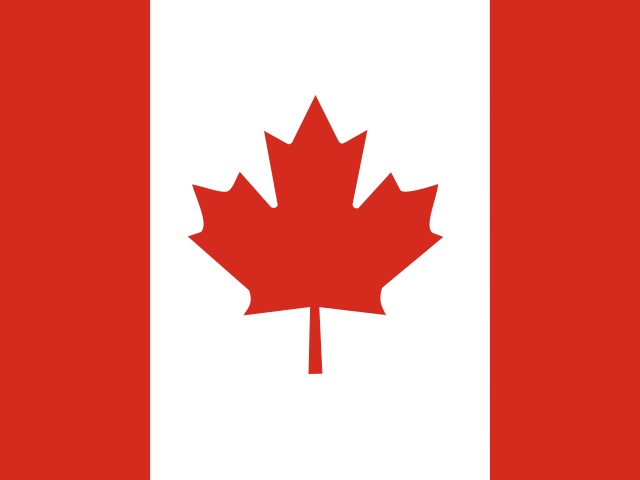
Flagpoles and flag flying in Canada
Published Written by Flagpole Guides

The maple leaf flag is everywhere in Canada: on the Peace Tower in Ottawa, over schools, post offices and legion halls, on cottage docks and on flagpoles in front of homes, farms and businesses. Beside it fly the flags of the ten provinces and three territories, from the fleurdelisé of Québec to the inuksuk of Nunavut. The rules behind them come from several places: a short federal act that encourages Canadians to fly the flag, a protocol published by the Department of Canadian Heritage, provincial laws and protocols, and municipal bylaws that decide where and how high a flagpole may stand. This section brings together what applies to flag flying and flagpoles in Canada, with sources from Canadian legislation and government departments. The same guides are available in French.
The essentials
- Flag days: Under the federal rules, the flag flies at half-mast on seven special days a year, and the Royal Union Flag flies beside it on three. The dates are in the guide to flag days.
- Who may fly the flag: Every Canadian is encouraged to display the National Flag, day and night. The details are in the guide to flag flying rules.
- Half-mast: As a general rule, the centre of the flag is halfway down the mast. More in the guide to half-mast.
- Size: Canadian Heritage lists a flag size for each range of pole lengths, from 0.90 × 1.80 m on a 5.10 to 6 m pole. The flag size calculator shows the row for a given pole.
- Buying: What affects the price is explained in the guides to buying a flagpole and buying a flag.
- Permits: Rules for flagpoles are set by the provinces and the municipalities. More in the guide to installing a flagpole.
Law, protocol and responsible bodies
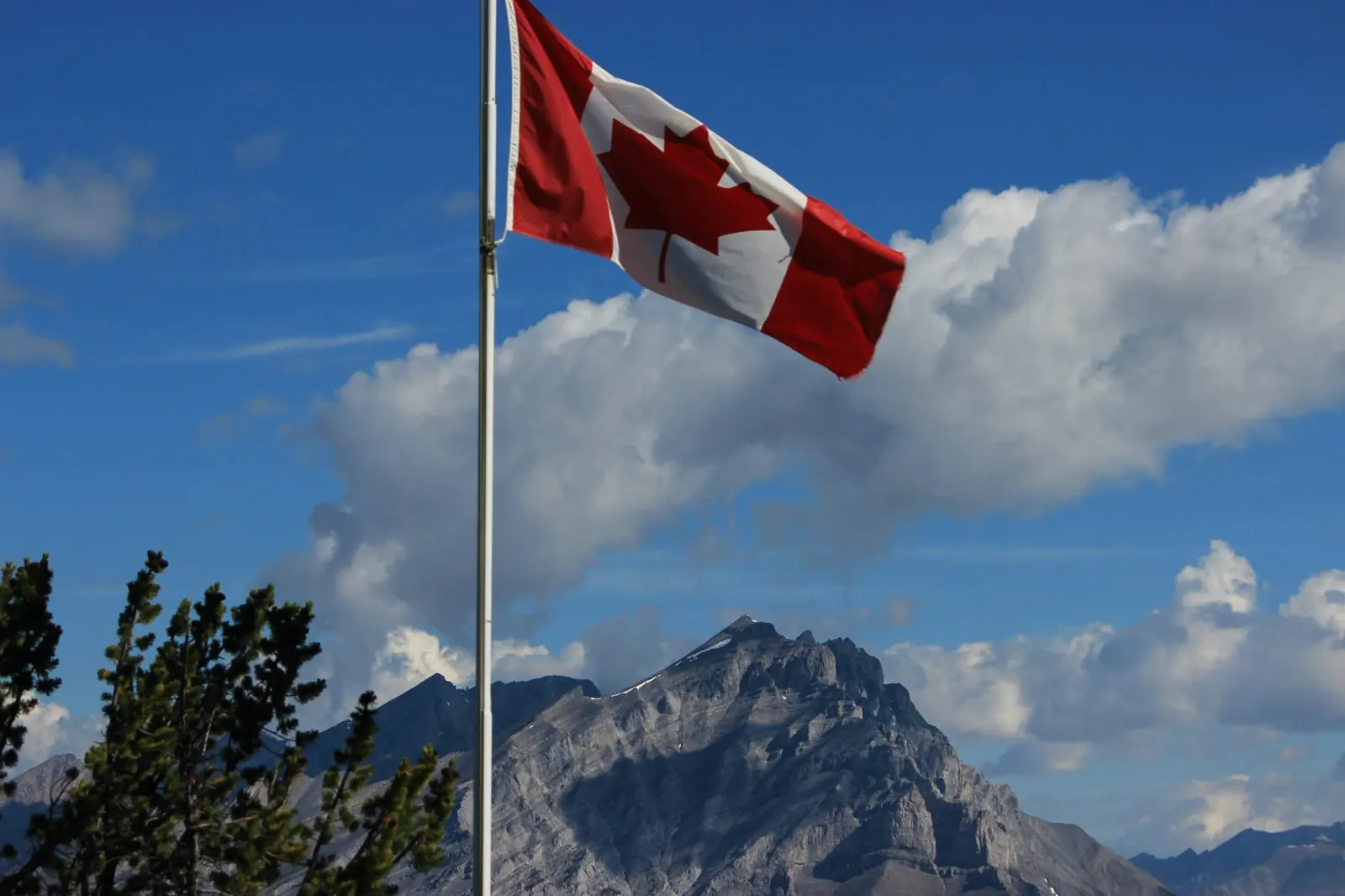
The National Flag of Canada was approved by Parliament in 1964, proclaimed by Queen Elizabeth II on 28 January 1965 and raised on Parliament Hill for the first time on 15 February 1965. The National Flag of Canada Act of 2012 encourages all Canadians to display the flag in accordance with flag protocol, and encourages those in control of apartment and condominium buildings and gated communities to allow it. The National Flag of Canada Manufacturing Standards Act has the Canadian General Standards Board set standards for flags for outdoor, indoor and one-event use.
According to Canadian Heritage, the way flags are displayed in Canada is not governed by legislation but by established practice. The department sets the protocol for federal buildings, properties and institutions; its rules are not mandatory for individuals or organizations but may serve as guidelines for anyone who flies a flag. The Directorate of History and Heritage of the Canadian Armed Forces regulates military flags, and the Canadian Heraldic Authority, part of the Office of the Secretary to the Governor General, creates and registers official flags.
| Level | What it covers |
|---|---|
| Federal | The flag itself, the protocol and half-masting rules for federal buildings, the flag standards and the protected status of the flag under the Trademarks Act |
| Provinces and territories | Their own flags and flag protocols, half-masting for provincial buildings, building codes and consumer protection |
| Municipalities | Zoning bylaws, sign bylaws and building permits, and the flags on city halls |
In Québec, the Loi sur le drapeau et les emblèmes du Québec and the Règlement sur le drapeau du Québec require the fleurdelisé on the buildings of ministries, courts, municipal councils, schools and health institutions. According to Canadian Heritage, the Government of Québec has decreed that on buildings under its authority, including city halls, the flag of Québec takes precedence over the National Flag; on federal property in Québec the National Flag keeps precedence.
The flagpole in Canada
There is no national rule on what a flagpole must look like or how high it may be. Whether a permit is needed depends on the province's building code and the municipality's zoning bylaw. Canadian Heritage recommends that exterior permanent poles be fitted with a halyard and pulley so that flags can be raised, lowered and half-masted, and lists pole lengths from 5.10 to 15 metres with matching flag sizes. In a country with long, cold winters, the depth of the footing and the pole's resistance to ice and wind matter as much as its height. More in the guides to types of flagpoles and flagpole heights.
About the guides
The guides below are sorted by topic. Each covers one subject, ends with frequently asked questions and lists its sources, and shows when it was last updated. The flag days are shown for 2026 and 2027, following the federal half-masting rules; half-masting on the death of a person is announced by Canadian Heritage in a notice each time.
All guides
Flag flying and protocol
When and how flags are flown in Canada – from National Flag of Canada Day and Canada Day to half-masting, mourning, the order of precedence and flags of other nations.
- Flag daysThe days on which the Canadian flag flies at half-mast, beside the Royal Union Flag or on its own anniversary in 2026 and 2027, with the rules behind each date.
- Flag flying rulesCanadian flag etiquette: who may fly the flag, day and night, on a flagpole, from a building or vertically, and how the flag’s dignity is kept.
- Half-mastHow the Canadian flag flies at half-mast: the position on the pole, raising and lowering, flags in the same group, and when flags are half-masted.
- Flags in mourningFlags in mourning in Canada: half-masting for the Sovereign and public figures, the flag on a casket, the black cravat and flags given to families.
- Flags on public holidaysThe flag on Canada’s public holidays: Canada Day and Victoria Day at full mast, Remembrance Day and 30 September at half-mast, provincial holidays.
- Flag protocolThe order of precedence for flags in Canada, the position of honour with two, three or more flags, provincial and territorial flags and Québec’s rule.
- Foreign flags in CanadaHow flags of other nations are flown in Canada: the Canadian flag’s place, the Union Jack’s three roles, the UN, NATO and Commonwealth flags.
The flag
The National Flag of Canada, the provincial and territorial flags, flag sizes, what affects the price of a flag, and a calculator for the flag size on a flagpole.
- Flag typesThe flags of Canada: the maple leaf flag, the ten provincial and three territorial flags with years and proportions, royal and historical flags.
- Flag sizesWhich flag suits which flagpole in Canada: the federal table of flag and pole sizes, the 2:1 Canadian flag, Québec’s 1:7 rule and sizes in feet.
- Flag size calculatorFor a flagpole length in metres, the calculator shows the flag size in Canadian Heritage’s table and the size of a flag of Québec by the 1:7 guideline.
- The Canadian flagWhat the maple leaf flag means, how it was chosen in the Great Flag Debate of 1964, why the leaf has 11 points, and the flag’s colours and proportions.
- Buying a flagWhat affects the price of a flag in Canada: size, fabric, sewn or printed, the CGSB flag standards, sales taxes by province and consumer rights.
The flagpole
Types, materials, heights, accessories, lighting and what affects the price of a flagpole – and the history of flags and flagpoles in Canada.
- Types of flagpolesFlagpole types in Canada: in-ground poles with a sleeve or tilt base, sectional and telescoping poles, roof and wall poles and nautical poles.
- Flagpole materialsFlagpole materials in Canada – aluminum, fibreglass, steel and wood – how they differ, which finishes exist and what the Canadian climate means.
- Flagpole heightsCommon flagpole heights in Canada in metres and feet, the federal table of pole lengths and flag sizes, and examples of municipal height limits.
- Flagpole accessoriesThe parts of a flagpole in Canada: finials and their protocol, trucks and pulleys, halyards, snaps and toggles, cleats, sleeves and flag spreaders.
- How a flagpole worksHow a flagpole works: raising the flag with a halyard and pulley, internal and external halyards, half-masting, yardarms and tilt bases.
- Flag lightingCan the Canadian flag fly at night without lights? What Canadian Heritage and Québec say, and who may do outdoor electrical work in Ontario and Québec.
- Flagpole historyFlags and flagpoles in Canadian history: New France, the Red Ensign, the fleurdelisé of 1948, the maple leaf of 1965 and the Peace Tower flag.
- Buying a flagpoleWhat affects the price of a flagpole in Canada: height, material, halyard, footing and installation, permits, sales taxes and consumer rights.
Installation, safety and care
Municipal rules for flagpoles, footings below the frost line, safety, maintenance and transport – for homes, schools, businesses and municipalities.
- Installing a flagpoleInstalling a flagpole in Canada: provincial building codes, municipal zoning bylaws, utility locates before digging, frost and footings.
- Flagpole safetyFlagpole safety in Canada: the three-metre rule near power lines, buried cables, Environment Canada’s wind warnings, ice, heights and vandalism.
- Flagpole maintenanceMaintaining a flagpole and flag in Canada: checks of pulleys, halyards and base bolts, cleaning aluminum, flag care and disposal of worn flags.
- Flagpole repairCommon flagpole faults in Canada and their causes: a pole leaning after frost heave, a jammed pulley, a frozen or frayed halyard and worn finishes.
- Lifespan and sustainabilityHow long flagpoles and flags last in Canada: what wind, ice, frost and salt do, why outdoor flags wear out in months, and how worn flags are retired.
- Transporting a flagpoleThe rules for carrying a long flagpole in Canada: rear overhang, red flags and lights in Ontario and Québec, securing the load, sectional poles.
- Flagpoles for businessesCompany flags at Canadian businesses: the order beside national and provincial flags, sign bylaws for flag signs and the Trademarks Act.
Frequently asked questions
Can anyone fly the National Flag of Canada?
Yes. Under section 2 of the National Flag of Canada Act, all Canadians are encouraged to proudly display the National Flag of Canada in accordance with flag protocol. According to Canadian Heritage, the flag may be flown day and night, and the federal rules are not mandatory for individuals or organizations but may serve as guidelines.
Is there a law on how the Canadian flag is flown?
Not in detail. According to Canadian Heritage, the manner in which flags are displayed in Canada is governed by established practice rather than legislation. The department sets the protocol for federal buildings, and the provinces and territories have their own rules for their buildings. In Québec, the Loi sur le drapeau et les emblèmes du Québec and its regulation decide where the flag of Québec is flown.
How far down is a flag at half-mast in Canada?
According to the Rules for half-masting the National Flag of Canada, the position depends on the size of the flag, the length of the mast and its location, but as a general rule the centre of the flag is exactly halfway down the mast. The flag is first raised to the masthead and then lowered to half-mast.
Is a permit needed for a flagpole in Canada?
There is no Canada-wide rule. Building codes are set by the provinces and territories, and zoning bylaws by the municipalities, so the answer depends on the province, the municipality, the height of the pole and the site. In Toronto, for example, a flagpole on the roof of a building in a residential zone may exceed the permitted height of the building by 1.5 metres.
What size flag suits a flagpole?
Canadian Heritage gives a table for exterior flagpoles: a 0.90 × 1.80 m flag (3 × 6 ft) for a pole of 5.10 to 6 metres, 1.40 × 2.80 m for 9 to 10.50 metres, 1.80 × 3.60 m for 12 to 13.50 metres and 2.30 × 4.60 m for a 15-metre pole. The flag size calculator shows the row nearest a given pole.
Sources
This guide is based on the following sources:
- National Flag of Canada Act (S.C. 2012, c. 12) – Justice Laws Website
- About National Flag of Canada etiquette – Canadian Heritage
- Rules for flying the National Flag of Canada – Canadian Heritage
- Rules for half-masting the National Flag of Canada – Canadian Heritage
- Position of honour of the National Flag of Canada – Canadian Heritage
- Déploiement du drapeau par une institution publique – Gouvernement du Québec
- City of Toronto Zoning By-law 569-2013, Chapter 10 – City of Toronto