Flag days in Canada 2026 and 2027
Published Written by Flagpole Guides
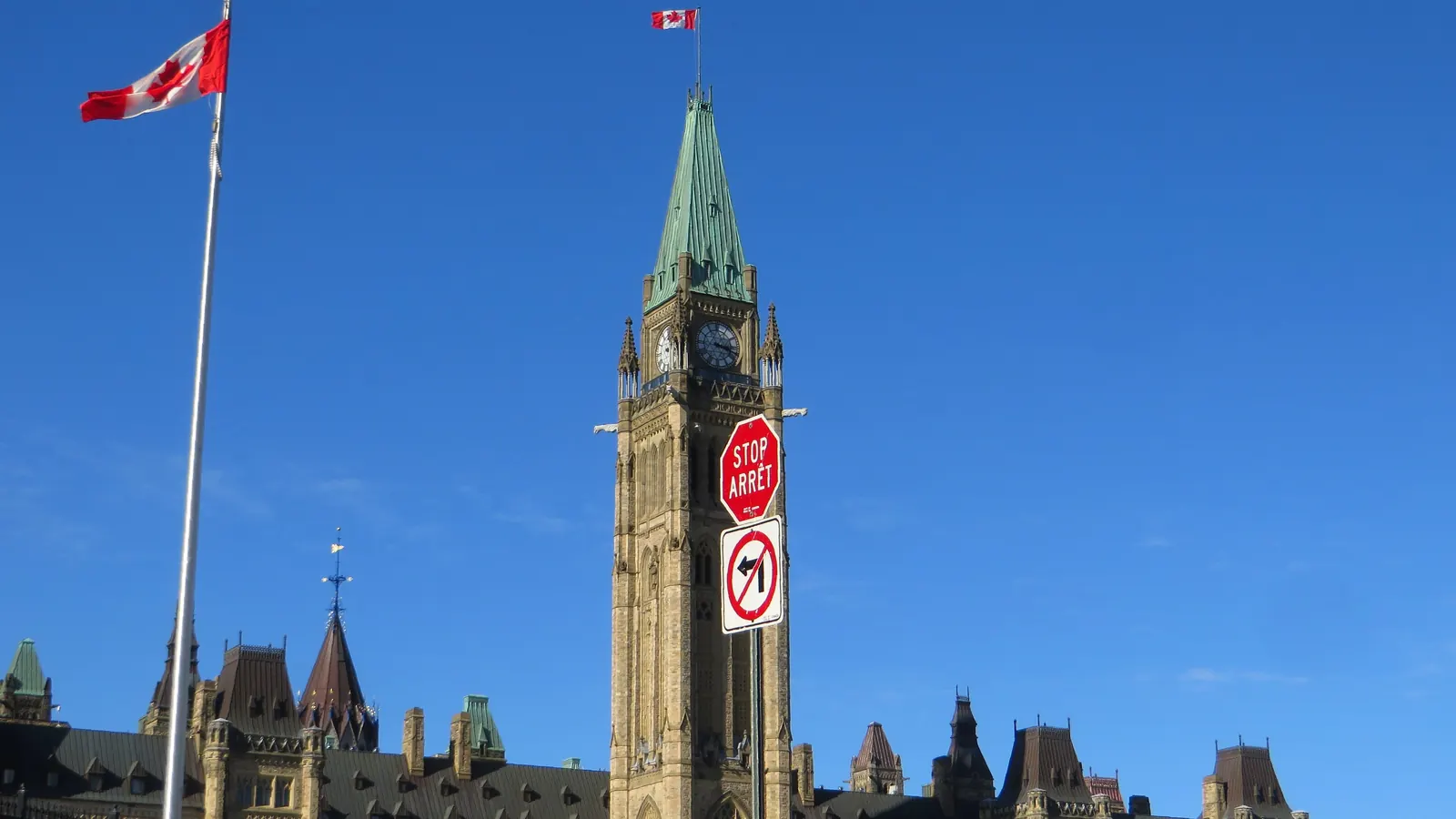
Canada has no law that lists flag days, and the National Flag may be flown on every day of the year. What the federal government does set out is how the flag is flown on certain days at federal buildings and establishments: the Rules for half-masting the National Flag of Canada name the days on which the flag flies at half-mast, and the Canadian Heritage page on foreign flags names the days on which the Royal Union Flag flies beside it. According to Canadian Heritage, these rules are not mandatory for individuals or organizations, but many municipalities, schools and private flag owners follow them.
The days in the federal rules
| Date | Occasion | How the flag is flown |
|---|---|---|
| 15 February | National Flag of Canada Day | National Flag |
| Second Monday in March | Commonwealth Day | Royal Union Flag beside the National Flag |
| 9 April | Vimy Ridge Day | Half-mast on the Peace Tower |
| 28 April | Day of Mourning for Persons Killed or Injured in the Workplace | Half-mast from sunrise to sunset |
| Monday before 25 May | Victoria Day | Royal Union Flag beside the National Flag; full mast |
| 23 June | National Day of Remembrance for Victims of Terrorism | Half-mast from sunrise to sunset |
| 1 July | Canada Day | Full mast |
| Second Sunday in September | Firefighters’ National Memorial Day | Half-mast from sunrise to sunset |
| Last Sunday in September | Police and Peace Officers’ National Memorial Day | Half-mast from sunrise to sunset |
| 30 September | National Day for Truth and Reconciliation | Half-mast from sunrise to sunset |
| 24 October | United Nations Day | United Nations flag beside the National Flag on Parliament Hill |
| 11 November | Remembrance Day | Half-mast |
| 6 December | National Day of Remembrance and Action on Violence Against Women | Half-mast from sunrise to sunset |
| 11 December | Anniversary of the Statute of Westminster | Royal Union Flag beside the National Flag |
All dates for 2026 and 2027
The table shows every day with its date for this year and next. The movable days follow fixed rules: Commonwealth Day is the second Monday in March, Victoria Day the Monday immediately preceding 25 May under the Holidays Act, and the two memorial days in September fall on the second and the last Sunday of the month. Québec’s Jour du Drapeau is included for Québec.
National Flag of Canada Day
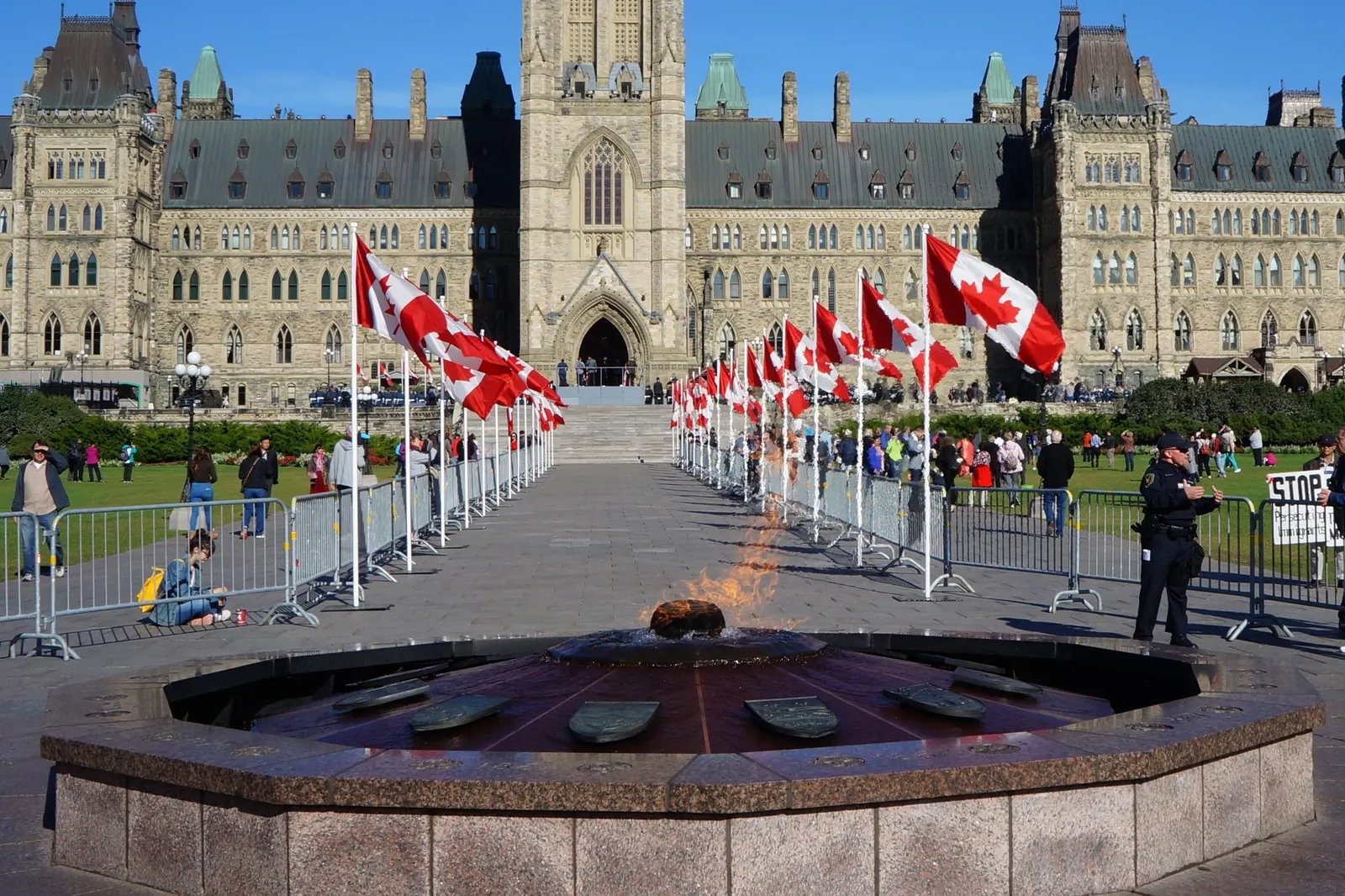
At the stroke of noon on 15 February 1965, the Canadian Red Ensign was lowered on Parliament Hill and the new maple leaf flag was raised for the first time. On the same date in 1996, National Flag of Canada Day was declared. Canadian Heritage marks the day each year with activities and material for schools and communities. The history of the flag is in the guide to the Canadian flag.
The half-masting days
Section 11 of the half-masting rules lists seven days on which the flag flies at half-mast from sunrise to sunset on all federal buildings and establishments in Canada, including the Peace Tower. For the two September memorial days and for Remembrance Day, the rules add that where a memorial service is held, half-masting can follow the order of service; at the National War Memorial and other places of remembrance on 11 November, the flag can be half-masted at 11:00. On Vimy Ridge Day, 9 April, the flag on the Peace Tower flies at half-mast; the Vimy Ridge Day Act of 2003 itself states that the Canadian flag on the Peace Tower shall be lowered to half-mast on that day. The procedure is described in the guide to half-mast.
Victoria Day and Canada Day at full mast
Section 19 of the rules states that even when the flag is at half-mast for another reason, it is flown at full mast on the two legal holidays created under the Holidays Act: Victoria Day and Canada Day. The exceptions are the deaths of the Sovereign, the Governor General and the Prime Minister. Canada Day is 1 July; when 1 July is a Sunday, the legal holiday is 2 July. More in the guide to flags on public holidays.
The Royal Union Flag and the United Nations flag
On Commonwealth Day, Victoria Day and 11 December, the anniversary of the Statute of Westminster, the Royal Union Flag is flown beside the National Flag of Canada from sunrise to sunset at federal buildings, airports and military bases, where there are at least two flagpoles. The National Flag is never replaced by it. On United Nations Day, 24 October, the United Nations flag flies with the National Flag on Parliament Hill. More in the guide to foreign flags in Canada.
Québec’s Jour du Drapeau
In Québec, 21 January is the Jour du Drapeau. On that day in 1948, the fleurdelisé first flew on the Hôtel du Parlement in Québec City, and the Gouvernement du Québec marks the anniversary each year. The flag of Québec is described in the guide to flag types.
Half-masting announced by notice
Beyond the fixed days, flags are half-masted on the death of the Sovereign, a Governor General, a Prime Minister and other persons named in the rules. Canadian Heritage publishes a half-masting notice for each occasion, with the reason, the places and the period. More in the guide to flags in mourning.
Frequently asked questions
Does Canada have official flag days?
Canada has no single list of flag days. The federal Rules for half-masting the National Flag of Canada name seven special days on which the flag flies at half-mast on federal buildings, and the Canadian Heritage page on foreign flags names three days on which the Royal Union Flag flies beside the National Flag. The National Flag may be flown on every day of the year.
When is National Flag of Canada Day?
On 15 February. At noon on 15 February 1965, the maple leaf flag was raised for the first time on Parliament Hill, and on the same date in 1996 National Flag of Canada Day was declared, according to Canadian Heritage.
On which days is the flag at half-mast every year?
Under section 11 of the federal half-masting rules: 28 April, 23 June, the second Sunday in September, the last Sunday in September, 30 September, 11 November and 6 December, from sunrise to sunset on all federal buildings and the Peace Tower. On 9 April, Vimy Ridge Day, the flag on the Peace Tower flies at half-mast.
When is the Union Jack flown in Canada?
According to Canadian Heritage, the Royal Union Flag is flown beside the National Flag at federal buildings, airports and military bases from sunrise to sunset on Commonwealth Day (the second Monday in March), Victoria Day and 11 December, the anniversary of the Statute of Westminster – where there are at least two flagpoles.
Do private households have to follow these days?
No. According to Canadian Heritage, the federal rules are not mandatory for individuals or organizations. They apply to federal buildings and establishments and may serve as guidelines for others.
Sources
This guide is based on the following sources:
- Rules for half-masting the National Flag of Canada – Canadian Heritage
- Foreign flags in Canada – Canadian Heritage
- National Flag of Canada Day — February 15 – Canadian Heritage
- National Flag of Canada half-masting notices – Canadian Heritage
- Holidays Act (R.S.C., 1985, c. H-5) – Justice Laws Website
- Vimy Ridge Day Act (S.C. 2003, c. 6) – Justice Laws Website
- Jour du Drapeau – Le fleurdelisé souffle ses 78 bougies – Gouvernement du Québec
Related guides
- Half-mastHow the Canadian flag flies at half-mast: the position on the pole, raising and lowering, flags in the same group, and when flags are half-masted.
- Flag flying rulesCanadian flag etiquette: who may fly the flag, day and night, on a flagpole, from a building or vertically, and how the flag’s dignity is kept.
- Flags on public holidaysThe flag on Canada’s public holidays: Canada Day and Victoria Day at full mast, Remembrance Day and 30 September at half-mast, provincial holidays.
- Foreign flags in CanadaHow flags of other nations are flown in Canada: the Canadian flag’s place, the Union Jack’s three roles, the UN, NATO and Commonwealth flags.