Half-mast in Canada – position, procedure and occasions
Published Written by Flagpole Guides
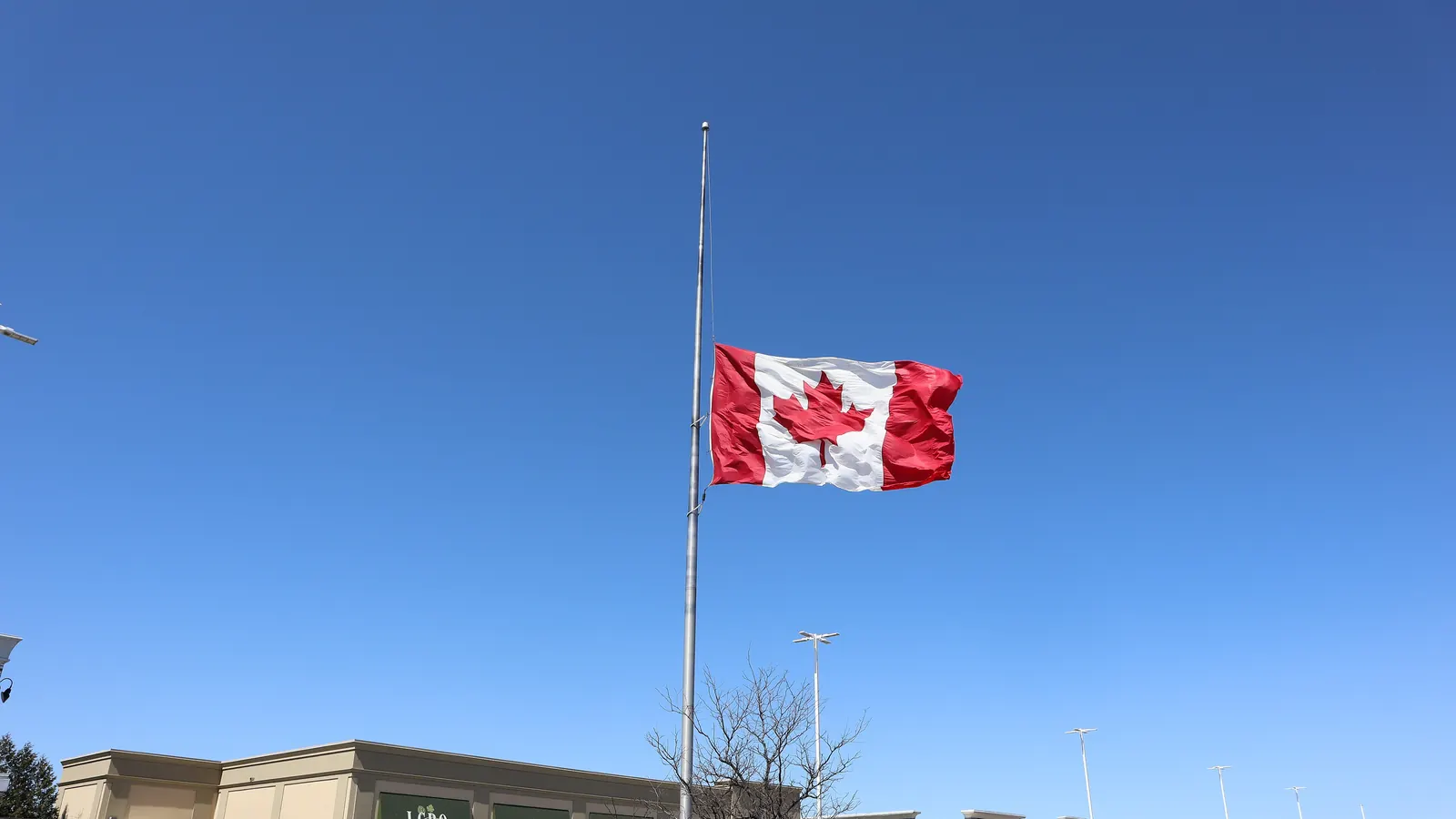
Half-masting is the most visible sign of national mourning in Canada. According to Canadian Heritage, flags are half-masted as a sign of respect and to express a collective sense of sorrow. The federal government adopted the Rules for half-masting the National Flag of Canada to have a consistent approach at all federal buildings and installations. Provinces, territories, municipalities and other organizations have similar rules for their own buildings. The federal rules are not mandatory beyond the federal government, and individuals may also fly their flag at half-mast to express mourning.
How far down
The rules define the half-mast position this way: it depends on the size of the flag, the length of the mast and its location, but as a general rule the centre of the flag is exactly halfway down the mast. This differs from countries where the top of the flag is measured from the top of the pole.
| Pole length | Centre of the flag about |
|---|---|
| 6 m | 3 m above the ground |
| 7.5 m | 3.75 m above the ground |
| 9 m | 4.5 m above the ground |
| 12 m | 6 m above the ground |
On a short pole with a large flag, the flag may reach close to the ground; Canadian Heritage’s general rule is that the flag never touches the ground.
The procedure
Canadian Heritage describes the following sequence:
- The flag is first raised to the masthead, the top of the flagpole.
- It is then lowered slowly to the half-mast position.
- To take it down, the flag is hoisted to the masthead again.
- It is then lowered completely.
When the National Flag of Canada is flown with other flags, all flags in the immediate vicinity or part of the same flag group are half-masted. When a stand of flags is half-masted, the National Flag is lowered last; if all flags can be lowered at the same time, that is also appropriate.
Which flagpoles
According to Canadian Heritage, flags are only half-masted on flagpoles fitted with halyards and pulleys. Some buildings fly flags from horizontal or angled poles without halyards, on which the flag is permanently attached; flags on such poles are not half-masted. How halyards work is explained in the guide to how a flagpole works.
Some flags are never half-masted: the Personal Canadian Flags of members of the Royal Family, the vice-regal flags of the Governor General and the lieutenant governors, and the territorial commissioners’ flags.
When the flag flies at half-mast
The federal rules distinguish three kinds of half-masting.
- Mandatory half-masting on the death of the Sovereign, the Governor General or the Prime Minister (on all federal buildings in Canada and abroad, from notification of the death until sunset on the day of the funeral or memorial service), of the Sovereign’s spouse, the heir to the throne and the heir’s heir, former Governors General and Prime Ministers, the Chief Justice, ministers, lieutenant governors, privy councillors, senators and members of the House of Commons, each with its own geographical extent.
- Special days each year: 28 April, 23 June, the second and the last Sunday in September, 30 September, 11 November and 6 December, from sunrise to sunset, and 9 April on the Peace Tower. The dates are in the guide to flag days.
- Discretionary half-masting, for instance by a minister when a federal employee dies in the line of duty, or approved by the Prime Minister on the death of a foreign head of state or in exceptional circumstances.
When a province or territory half-masts its own flag for a reason not in the federal rules, the National Flag on federal buildings in that province or territory is half-masted to the same extent, once the province’s chief of protocol has notified Canadian Heritage.
Full mast despite half-masting
Section 19 of the rules states that a flag at half-mast is nevertheless flown at full mast on Victoria Day and Canada Day. On the Peace Tower, it is also raised to full mast while a foreign head of state or head of government visits Parliament. These exceptions do not apply after the death of the Sovereign, the Governor General or the Prime Minister. After the death of a Sovereign, the flag is flown at full mast on the day the accession of the new monarch is proclaimed.
Half-masting notices
For each occasion, Canadian Heritage sends a notice to the authorities concerned, with the reason, the places and the period, and publishes it on its website. The Vimy Ridge Day Act of 2003 is an exception in law: it states that the Canadian flag on the Peace Tower is lowered to half-mast every year on 9 April.
Half-mast in Québec
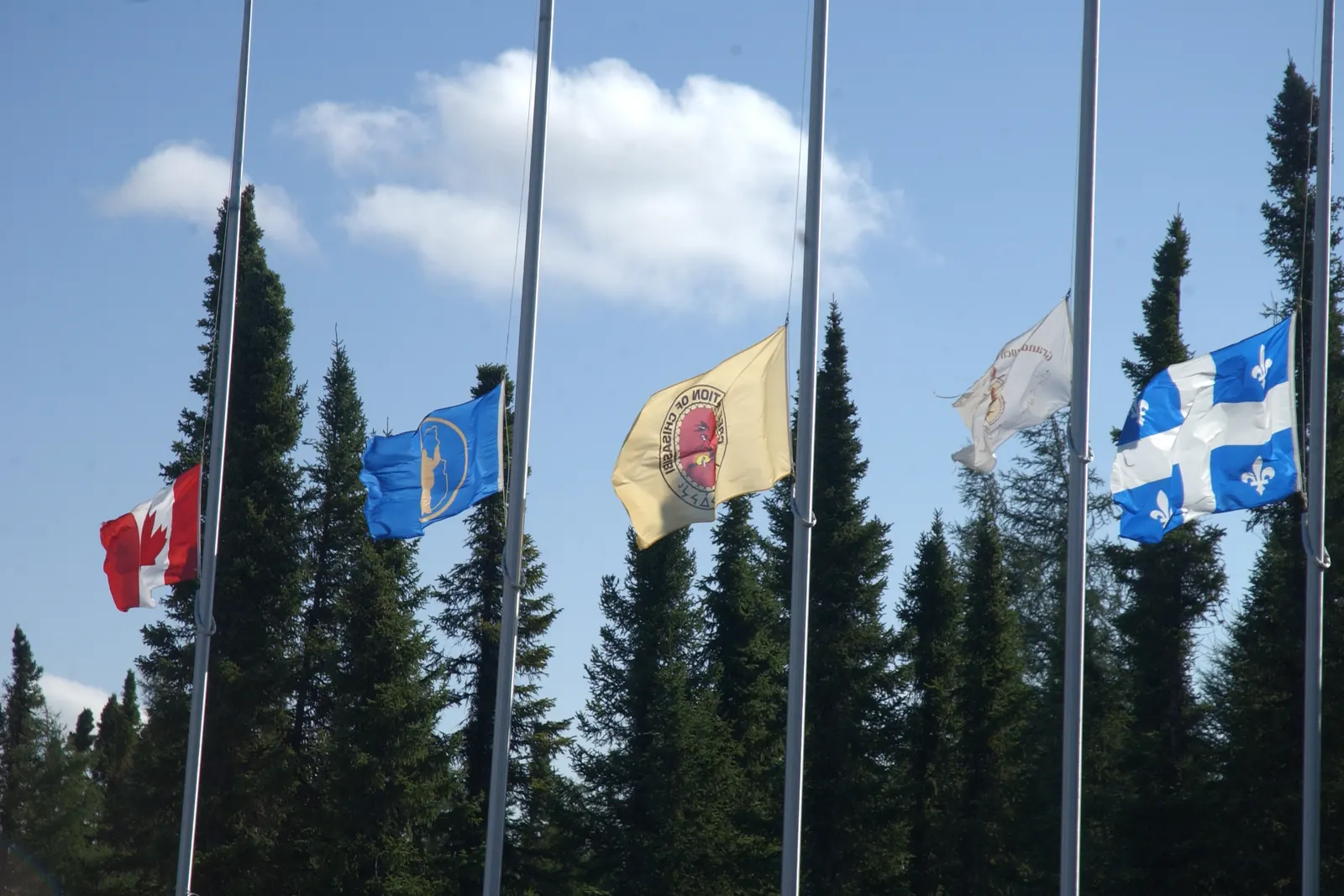
For the flag of Québec, the Gouvernement du Québec describes half-masting (mise en berne) as an official sign of collective mourning. An outdoor flag is lowered to mid-mast; on an indoor flag, mourning is shown by a black ribbon, the cravate, tied at the top of the staff. The flag of Québec on the Hôtel du Parlement is half-masted at the express request of the Premier, and under the Règlement sur le drapeau du Québec, public bodies half-mast the flag when the government declares it.
Frequently asked questions
How far down is a flag at half-mast in Canada?
According to the Rules for half-masting the National Flag of Canada, the position depends on the size of the flag, the length of the mast and its location, but as a general rule the centre of the flag is exactly halfway down the mast.
Why is the flag raised to the top before half-mast?
The federal rules state that a flag hoisted to or lowered from the half-mast position is first raised to the masthead. Canadian Heritage describes the sequence: the flag is raised to the top, then lowered slowly to half-mast; when it is taken down, it is hoisted to the masthead again and then lowered completely.
Who decides when flags fly at half-mast in Canada?
For federal buildings, the Rules for half-masting the National Flag of Canada decide, and Canadian Heritage sends a notice for each occasion. The Prime Minister can approve half-masting in exceptional circumstances. Provinces, territories, municipalities and other organizations have their own rules for their buildings, and individuals may half-mast their own flag to express mourning.
Can every flag be half-masted?
No. According to Canadian Heritage, the Personal Canadian Flags of the Royal Family, the vice-regal flags and the territorial commissioners’ flags are never flown at half-mast. Flags on horizontal or angled poles without a halyard are not half-masted either.
What happens to the other flags when the Canadian flag is at half-mast?
When the National Flag of Canada is half-masted, all flags in the immediate vicinity or part of the same flag group are half-masted as well, according to Canadian Heritage. In Québec, the Gouvernement du Québec states that other flags in the same group are either removed or half-masted.
Sources
This guide is based on the following sources:
- Rules for half-masting the National Flag of Canada – Canadian Heritage
- Half-masting and flag etiquette in times of mourning – Canadian Heritage
- National Flag of Canada half-masting notices – Canadian Heritage
- Position of honour of the National Flag of Canada – Canadian Heritage
- Mise en berne – Gouvernement du Québec
- Vimy Ridge Day Act (S.C. 2003, c. 6) – Justice Laws Website
Related guides
- Flags in mourningFlags in mourning in Canada: half-masting for the Sovereign and public figures, the flag on a casket, the black cravat and flags given to families.
- Flag daysThe days on which the Canadian flag flies at half-mast, beside the Royal Union Flag or on its own anniversary in 2026 and 2027, with the rules behind each date.
- Flag flying rulesCanadian flag etiquette: who may fly the flag, day and night, on a flagpole, from a building or vertically, and how the flag’s dignity is kept.
- How a flagpole worksHow a flagpole works: raising the flag with a halyard and pulley, internal and external halyards, half-masting, yardarms and tilt bases.