Flagpoles and flag etiquette in the United States
Published Written by Flagpole Guides
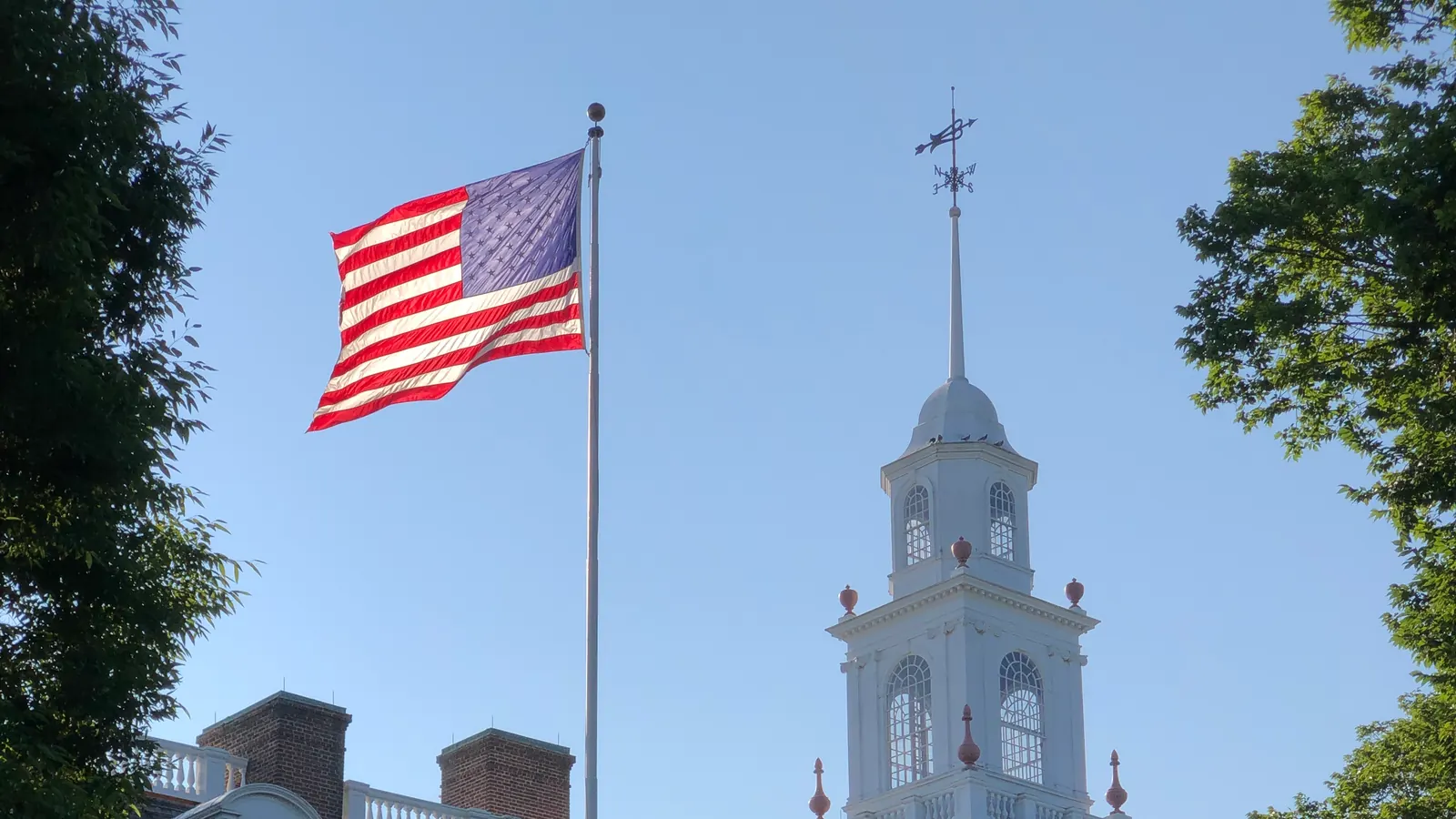
Few countries fly their flag as widely as the United States: on federal buildings, schools and polling places, on porches and front-yard flagpoles, at car dealerships and on the flagpoles of homeowners’ associations. The rules behind it come from several levels: a federal law that describes the flag and codifies the customs of flying it, presidential proclamations on half-staff, state laws on the state flag and on homeowners’ associations, and local zoning and building codes that decide where a flagpole can stand and how tall it can be. This section brings together what applies to flag flying and flagpoles in the United States, with sources from federal and state law and public agencies.
The essentials
- The Flag Code: 4 U.S.C. §§ 4–10 sets out the customs for displaying the flag. It carries no penalties and serves as a guide for civilians. The details are in the guide to the US Flag Code.
- Flag days: the Flag Code names more than twenty days on which the flag is especially displayed, from New Year’s Day to Christmas Day. The dates are in the guide to flag days.
- Half-staff: the President, and for their own state the governors, order the flag to half-staff. More in the guide to half-staff.
- HOAs: federal law and many state laws limit how far a homeowners’ association can restrict the flag. More in the guide to flags in HOA communities.
- Size: flag makers commonly give a flag length of one quarter to one third of the height of an in-ground flagpole. The flag size calculator works it out.
- Buying: what affects the price is explained in the guides to buying a flagpole and buying a flag.
- Permits: the city or county decides whether a flagpole needs a permit. More in the guide to installing a flagpole.
Law, proclamations and responsible bodies

The flag itself is defined in 4 U.S.C. §§ 1–2: thirteen horizontal stripes, alternately red and white, and a union of white stars in a blue field, with one star added for each new state on the Fourth of July after its admission. Executive Order 10834 of 1959 sets the proportions and the sizes of flags for federal agencies. The Flag Code, 4 U.S.C. §§ 4–10, first adopted by joint resolution of Congress on June 22, 1942, codifies the customs of displaying the flag “for the use of such civilians or civilian groups or organizations as may not be required to conform with regulations promulgated by one or more executive departments”. Under § 10, the President can alter or add to the rules by proclamation.
According to the Congressional Research Service, the Flag Code prescribes no penalties and no federal agency has the authority to issue official rulings binding on civilians. Separate rules apply to federal agencies and the armed forces, and each state has laws of its own on its state flag and, in many cases, on the display of flags.
| Level | What it covers |
|---|---|
| Congress | The flag (4 U.S.C. §§ 1–2), the Flag Code (4 U.S.C. §§ 4–10), observances in 36 U.S.C. and the Freedom to Display the American Flag Act of 2005 |
| The President | Half-staff proclamations, Proclamation 3044 of 1954, Executive Order 10834 and changes to the Flag Code |
| States | State flags, half-staff for state officials, service members and first responders, and laws on homeowners’ associations |
| Cities and counties | Building permits, zoning heights and setbacks, sign codes and lighting rules |
The flagpole in the United States
There is no federal rule on what a flagpole must look like or how tall it may be. The International Building Code, the model code that many state and local building codes are based on, does not name flagpoles among the work that needs no permit, and local zoning codes often add limits on height and setbacks. In Durham, North Carolina, for example, flagpoles in residential districts are limited to 25 feet unless the Board of Adjustment grants a special use permit, and a flagpole is set back from all property lines by at least its own height. According to Annin Flagmakers, a 3 × 5 ft to 5 × 8 ft flag suits a 20 ft flagpole. More in the guides to types of flagpoles and flagpole heights.
About the guides
The guides below are sorted by topic. Each covers one subject, ends with frequently asked questions and lists its sources, and shows when it was last updated. The flag days are shown for 2026 and 2027, following the Flag Code and the observances set by Congress.
All guides
Flag flying and etiquette
When and how the flag of the United States is flown – from the Flag Code and flag days to half-staff, mourning, federal holidays, the order of flags and flags in HOA communities.
- Flag daysThe days on which the US Flag Code calls for the flag to be displayed in 2026 and 2027, with the half-staff days and the federal holidays.
- The Flag CodeWhat the US Flag Code says about displaying the American flag – hours, weather, lighting, respect and retiring worn flags – and why it carries no penalties.
- Half-staffWhy US flags fly at half-staff (half-mast): who orders it, where the orders are published, the periods set by law and the half-staff dates in 2026 and 2027.
- Flags in mourningHow the US flag is used in mourning: the flag on a casket, the VA burial flag for veterans, military funeral honors, Gold Star families and retiring a flag.
- Flags on federal holidaysHow the flag is flown on the eleven US federal holidays, from Memorial Day at half-staff until noon to Juneteenth, and how state holidays fit in.
- Flag etiquetteWhere the American flag goes among other flags under 4 U.S.C. § 7: the position of honor, flags on one halyard, walls, windows, stages and the anthem.
- Foreign flags in the USHow flags of other nations are flown in the United States: separate staffs of equal height, the UN flag, embassies and the two Flag Code rules that differ.
- Flags in HOA communitiesWhat an HOA can and cannot restrict about the American flag and flagpoles under the federal flag act and the laws of Texas, Florida, Arizona and California.
The flag
The Stars and Stripes and the other flags of the United States, standard flag sizes, a calculator for the flag size on a flagpole, and what affects the price of a flag.
- Flag typesThe flags flown in the United States: the Stars and Stripes, the union jack, state flags, the POW/MIA flag, the Medal of Honor flag and the service flag.
- Flag sizesUS flag sizes from 3 × 5 ft to 30 × 60 ft, which size suits which flagpole height, the official 1:1.9 proportions and local limits on flag size.
- Flag size calculatorThe flag size calculator shows the flag length for a US flagpole by the ¼ to ⅓ guide, the standard flag sizes in that range and the nearest standard size.
- The American flagWhat the American flag stands for: the 13 stripes, the 50 stars, the red, white and blue, the official proportions and how the design grew from 13 stars.
- Buying a flagWhat affects the price of an American flag: size, fabric, sewn or printed stars and stripes, Made in USA labeling and wear – plus the buyer’s rights.
The flagpole
Types, materials, heights, accessories, lighting and what affects the price of a flagpole – and how the flag and the flagpole became part of American life.
- Types of flagpolesThe main types of US flagpoles: house-mounted poles, telescoping poles, in-ground poles with external or internal halyards, and wall and roof poles.
- Flagpole materialsUS flagpole materials compared: aluminum alloys and finishes, fiberglass, steel and bronze-clad poles, wall thickness, taper and coastal sites.
- Flagpole heightsCommon US flagpole heights for homes and businesses, how height is measured, local zoning limits, HOA rules and when the FAA needs notice of a tall pole.
- Flagpole accessoriesThe parts and accessories of a US flagpole: truck, finial and eagle, halyard, snaps, cleat, collar, security covers, brackets and lighting.
- How a flagpole worksHow a US flagpole works: the halyard over the truck, external and internal systems, winch and cam cleat, revolving trucks and how the flag reaches half-staff.
- Flag lightingWhen the US flag can fly at night under the Flag Code, what “properly illuminated” means in practice, solar and wired lights, and local and HOA lighting rules.
- Flagpole historyHow the flag and flagpole became part of American life: the liberty pole, Fort McHenry, Flag Day, the Flag Code, night display and the 50-star flag.
- Buying a flagpoleWhat affects the price of a flagpole in the US – height, wall thickness, finish, halyard, foundation, freight and installation – and the buyer’s rights.
Installation, safety and care
Permits and zoning, 811 before digging, safety near power lines, maintenance, lifespan and transport – for homes, schools, businesses and public buildings.
- Installing a flagpoleWhat applies when a flagpole is installed in the United States: building permits and zoning, HOA rules, calling 811 before digging, foundations and wind speeds.
- Flagpole safetyThe main risks around a US flagpole: wind speed ratings and flag size, overhead power lines under OSHA rules, buried utilities and 811, and work at height.
- Flagpole maintenanceHow US flagpoles and flags are cared for: checks of the halyard, truck and base, cleaning aluminum, washing and storing the flag, and local rules on condition.
- Flagpole repairCommon faults on US flagpoles – broken halyard, stuck truck, slipping winch, leaning pole, corrosion – their usual causes and the rules for repairs.
- Lifespan and sustainabilityHow long US flagpoles and flags last: about 90 days for a flag flown daily, what shortens a flag’s life, aluminum recycling and flag retirement.
- Transporting a flagpoleTransporting a long flagpole in the United States: warning flags and lights on projecting loads, federal truck rules, state rules and freight.
- Flagpoles for businessesWhen a US business flies flags: the US flag with company flags, sign codes, the Flag Code on advertising, Made in USA claims, lighting and half-staff.
Frequently asked questions
Is the US Flag Code a law that can be enforced?
The Flag Code is federal law, 4 U.S.C. §§ 4–10, but it sets out rules and customs for civilians and contains no penalties. According to the Congressional Research Service, courts have held that the Code is declaratory and advisory, and it functions as a guide that civilians and civilian groups follow voluntarily.
Can anyone fly the American flag?
Yes. The Flag Code states that the flag should be displayed on all days, and names days on which it is especially displayed. Under the Freedom to Display the American Flag Act of 2005, a condominium, cooperative or homeowners’ association may not adopt or enforce a policy that prevents a member from displaying the flag on their own residential property, subject to reasonable restrictions on time, place and manner.
Does a flagpole need a permit in the United States?
It depends on the state, the city or county and the pole. The International Building Code, the model code that many state and local building codes are based on, does not list flagpoles among the work exempt from a permit, and local zoning codes often limit height and setbacks. Durham, North Carolina, for example, limits flagpoles in residential districts to 25 feet unless a special use permit is granted.
Who orders flags to fly at half-staff?
Under 4 U.S.C. § 7(m), the President orders the flag to half-staff on the death of principal figures of the federal government and state governors. A governor may order the flag to half-staff within the state on the death of a present or former state official, a member of the Armed Forces from the state or a first responder who dies in the line of duty, and the Mayor of the District of Columbia has the same authority for the District.
How many stars and stripes does the flag have?
Thirteen horizontal stripes, alternately red and white, for the original thirteen colonies, and fifty white stars on a blue field, one for each state. The fiftieth star, for Hawaii, was added on July 4, 1960, under 4 U.S.C. § 2 and Executive Order 10834.
Sources
This guide is based on the following sources:
- 4 U.S.C. chapter 1 – The Flag (the Flag Code), 2024 edition – U.S. Government Publishing Office
- The United States Flag: Federal Law Relating to Display and Associated Questions (RL30243) – Congressional Research Service
- Freedom to Display the American Flag Act of 2005 (Public Law 109-243), note under 4 U.S.C. § 5 – U.S. Government Publishing Office
- The American flag and other national symbols – USAGov, U.S. General Services Administration
- International Building Code 2024, section 105.2 Work exempt from permit – International Code Council
- Unified Development Ordinance, Sec. 7.7 Flagpoles and Flags – City and County of Durham, North Carolina