
Types of flagpoles in the United States – an overview
Published Written by Flagpole Guides
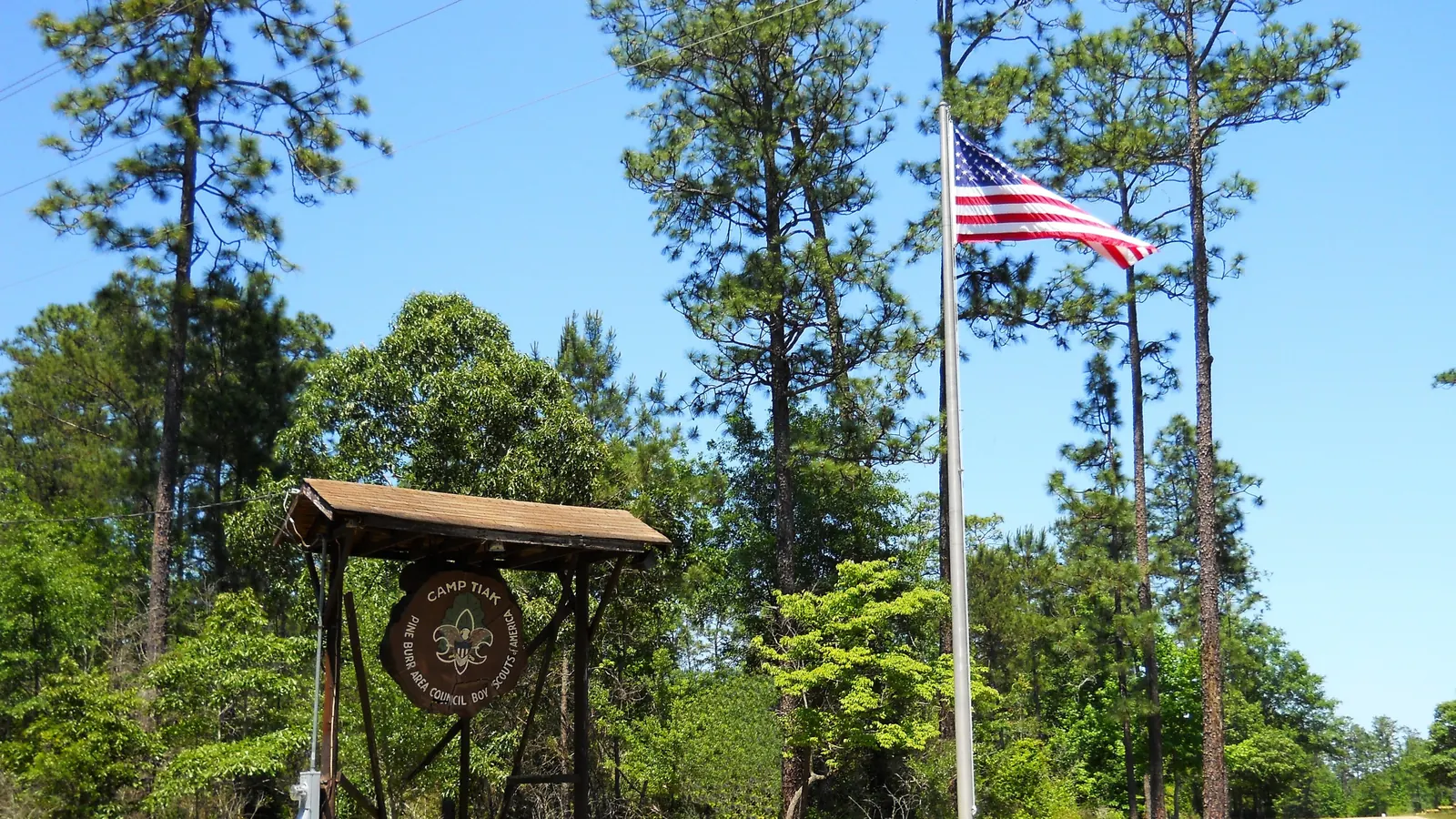
Flagpoles in the United States range from a short staff on a porch bracket to commercial poles of 100 ft or more. The type decides how the flag is raised, whether it can be lowered to half-staff, how the pole is mounted and how much it costs. This overview describes the main types; materials and heights are covered in their own guides.
The main types
| Type | Typical use | Raising the flag |
|---|---|---|
| House-mounted pole | Porches and house walls | The flag is fixed to the pole; no halyard |
| Telescoping pole | Front yards | The flag is raised with the sections |
| In-ground pole, external halyard | Homes, schools, small businesses | Rope halyard over a pulley, tied off on a cleat |
| In-ground pole, internal halyard | Schools, public buildings, businesses | Rope or wire inside the pole, behind a lockable door |
| Shoe base pole | Roofs, plazas, above-ground sites | Either halyard type |
House-mounted poles
According to Annin Flagmakers, residential house-mounted flagpoles are typically 5 or 6 ft long and best suited for a 2 ½ × 4 ft banner or a 3 × 5 ft flag. A two-way bracket holds the pole at 45 degrees, typical for flags, or 90 degrees, typical for banners. A flag has grommets on the heading, while a banner has a sleeve that slides over the pole. The Flag Code describes how a flag on a staff projecting from a window sill, balcony or building is placed: with the union at the peak of the staff (4 U.S.C. § 7(h)). As the flag is fixed to the pole, it cannot be lowered to half-staff.
Telescoping poles
A telescoping flagpole consists of nested aluminum sections that slide out of each other. According to the maker Flagsource, the flag is attached and raised section by section, each section locks with a push button, and a pin lock collar can prevent the pole from being raised or lowered by others. With a press of the release button, the sections slide back down. There is no halyard.
In-ground poles with an external halyard
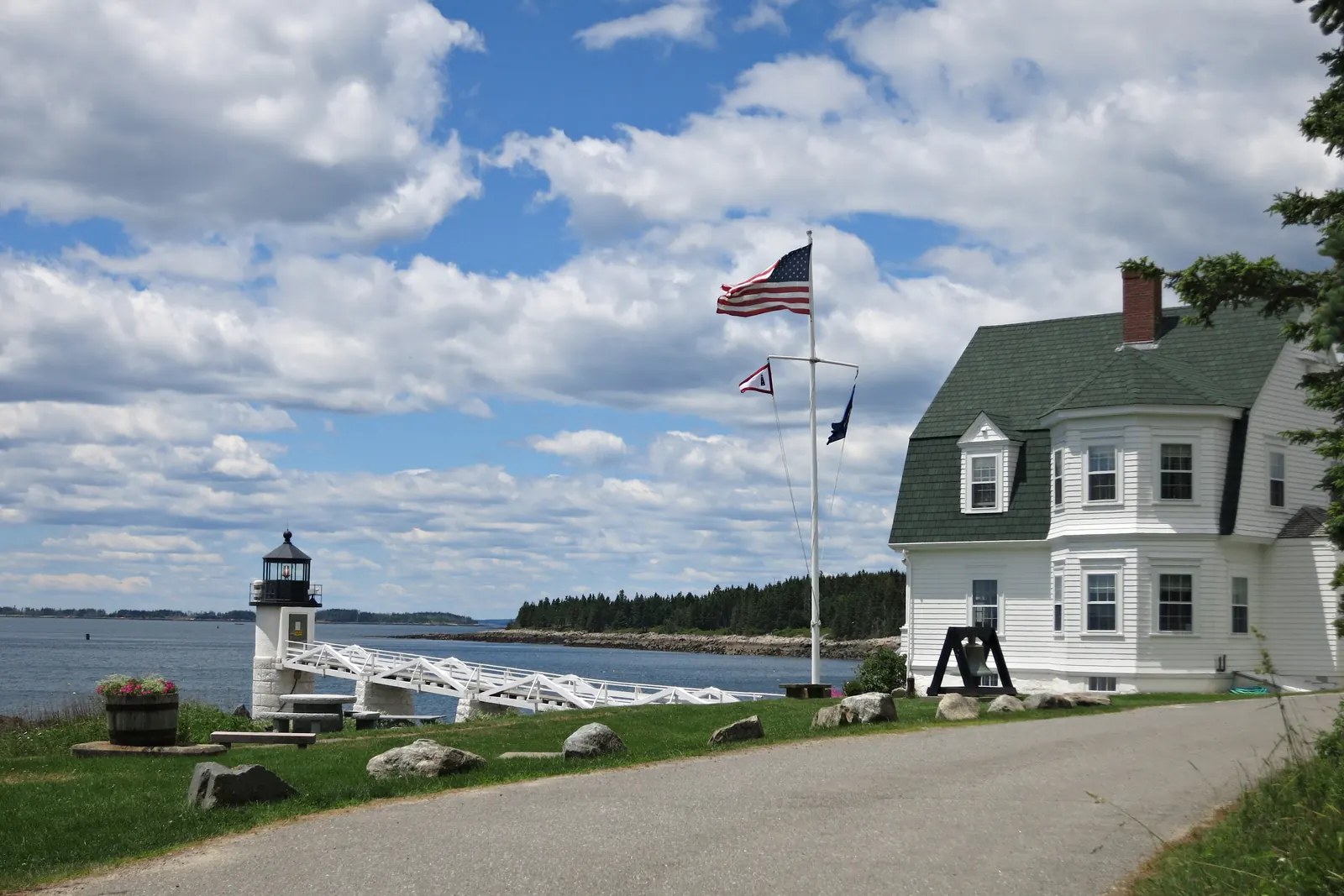
The classic flagpole is set in the ground and has a truck with a pulley at the top, a rope halyard running outside the pole and a cleat where the rope is tied off. According to Concord American Flagpole, the truck can be stationary or revolving, with a single or double pulley for one or two flags. The halyard makes half-staff possible, as described in the guide to how a flagpole works.
In-ground poles with an internal halyard
On an internal halyard pole, the halyard runs inside the pole behind a lockable access door, which protects against theft and vandalism. According to Concord American Flagpole, there are two systems: a winch system with a wire halyard and a winch handle, and a cam cleat system with a rope halyard.
Ground set or shoe base
According to Concord American Flagpole, ground set installation, where the base of the pole is set in a sleeve in a concrete foundation, is the strongest and most common form. A shoe base is used when the pole is mounted above ground, for example on a concrete plaza or a structure. Installation is described in the guide to installing a flagpole.
Wall, roof and indoor poles
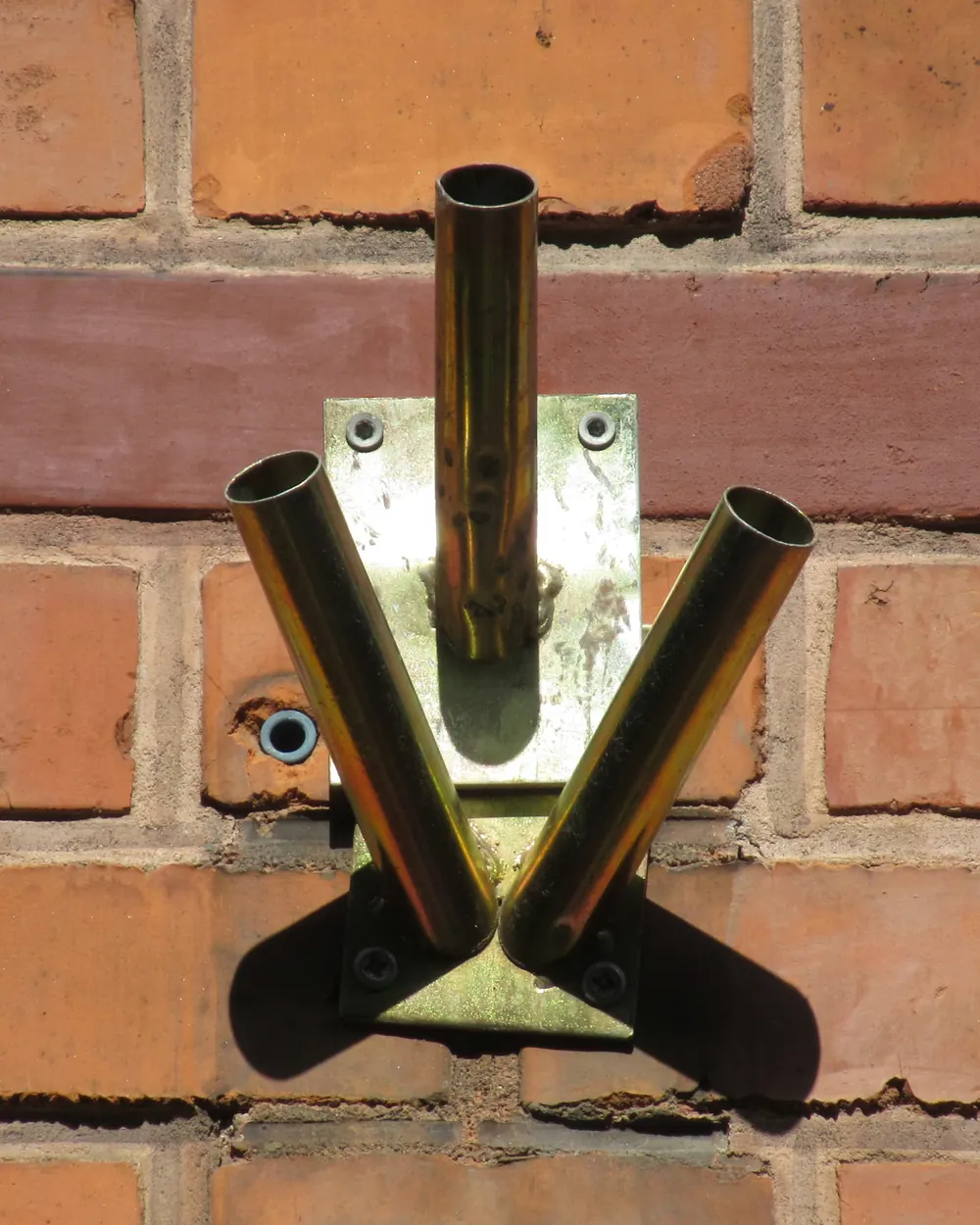
Outrigger poles project from a building wall, and roof poles stand on a building. The Flag Code covers flags displayed from a staff projecting from a building and flags suspended over a sidewalk from a rope between a house and a pole. Indoors, flags stand on floor stands; according to the Congressional Research Service, a fringe is optional and used on indoor flags only. The choice of material is covered in the guide to flagpole materials, and heights in the guide to flagpole heights.
Frequently asked questions
What types of flagpoles are there?
The main types are house-mounted poles on a wall bracket, telescoping residential poles that extend section by section, in-ground poles with an external rope halyard, in-ground poles with an internal halyard behind a lockable door, and poles on a shoe base for above-ground installation, such as on a roof or plaza.
What is the difference between an external and an internal halyard?
On an external halyard pole, the rope runs outside the pole and is tied off on a cleat. On an internal halyard pole, the rope or a wire runs inside the pole behind a lockable access door, which protects the flag against theft and vandalism, according to Concord American Flagpole.
How does a telescoping flagpole work?
It consists of nested aluminum sections that slide out and lock in place. According to the maker Flagsource, the flag is attached and raised section by section, with a push button that locks each section, and a pin lock collar can prevent the pole from being raised or lowered by others.
Which flagpole type suits a house?
According to Annin Flagmakers, residential house-mounted flagpoles are typically 5 or 6 ft long and carry a 2 ½ × 4 ft banner or a 3 × 5 ft flag. For a freestanding pole in the yard, Annin’s chart of in-ground poles starts at 18 ft, and local zoning and HOA rules can limit the height.
Sources
This guide is based on the following sources:
- Flag Materials and Sizes – Annin Flagmakers
- Choosing the Correct Size Flag – Annin Flagmakers
- Halyard Options – Concord American Flagpole
- Foundation Options – Concord American Flagpole
- Telescoping flagpoles – Flagsource
- The United States Flag: Federal Law Relating to Display and Associated Questions (RL30243) – Congressional Research Service
- 4 U.S.C. § 7(h) – U.S. Government Publishing Office
Related guides
- Flagpole materialsUS flagpole materials compared: aluminum alloys and finishes, fiberglass, steel and bronze-clad poles, wall thickness, taper and coastal sites.
- Flagpole heightsCommon US flagpole heights for homes and businesses, how height is measured, local zoning limits, HOA rules and when the FAA needs notice of a tall pole.
- How a flagpole worksHow a US flagpole works: the halyard over the truck, external and internal systems, winch and cam cleat, revolving trucks and how the flag reaches half-staff.
- Flagpole accessoriesThe parts and accessories of a US flagpole: truck, finial and eagle, halyard, snaps, cleat, collar, security covers, brackets and lighting.