Flags of the United States: national, state and official flags
Published Written by Flagpole Guides
Most flagpoles in the United States carry the national flag, but it is far from the only flag with an official status. Federal law designates several flags with a meaning of their own, every state has a state flag, and the armed forces, cities, counties and organizations have theirs. The Flag Code describes how they are flown together with the national flag.
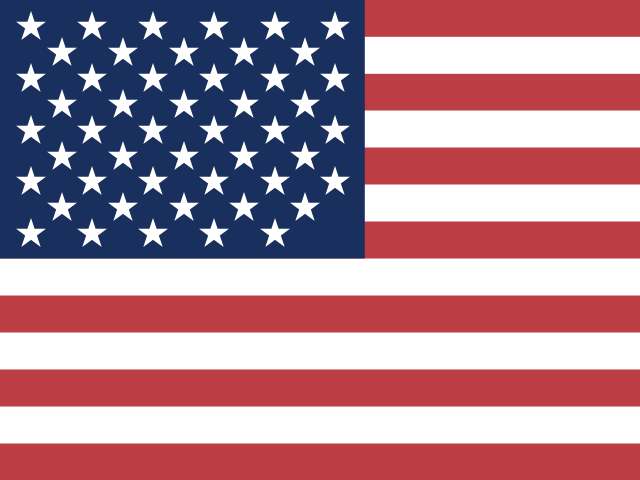
The flag of the United States
The national flag is described in 4 U.S.C. § 1: thirteen horizontal stripes, alternately red and white, and a union of white stars in a blue field. Under § 2, one star is added for each new state on the Fourth of July after its admission. The current flag, with 50 stars, has been the official flag since July 4, 1960, under Executive Order 10834, which also sets its proportions. Its common names are the Stars and Stripes, Old Glory and the Star-Spangled Banner. The design, colors and history are in the guide to the American flag.
The union jack
The union jack is the union of the national flag, the blue field with the white stars, flown as a flag on its own. Under section 23 of Executive Order 10834, the dimensions of a union jack made for federal agencies equal those of the union of a flag of an authorized size, and the union jack flown with the national flag is the same size as that flag’s union.
Flags designated by Congress
| Flag | Law | Where and when it is displayed |
|---|---|---|
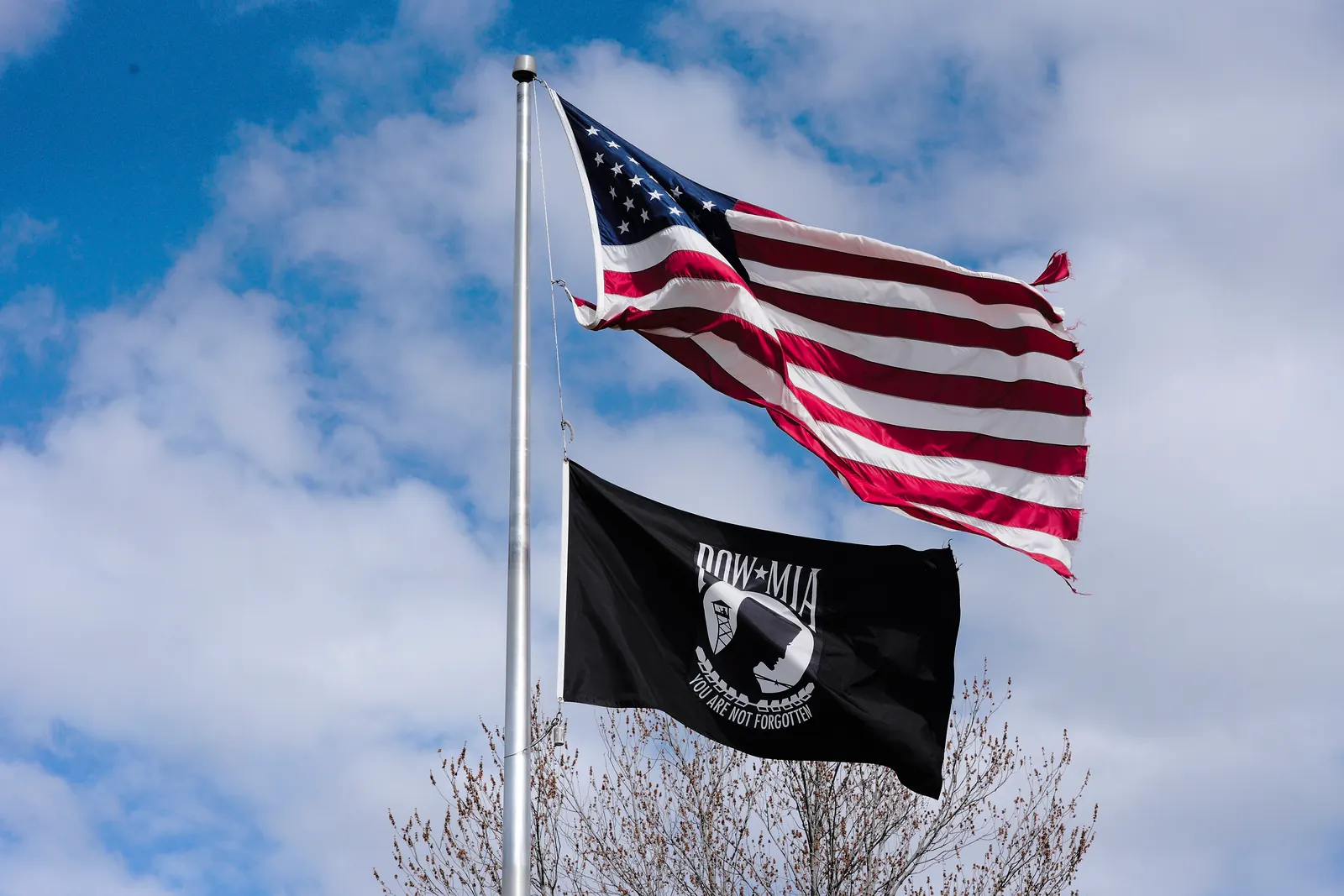
| POW/MIA flag of the National League of Families | 36 U.S.C. § 902 | On all days the US flag is displayed, at the Capitol, the White House, the World War II, Korean War and Vietnam Veterans memorials, national cemeteries, major military installations, VA medical centers, every US post office and certain federal offices |
| Medal of Honor Flag | 36 U.S.C. § 903 | Designed and designated by the Secretary of Defense and presented to recipients of the Medal of Honor |
| Hostage and Wrongful Detainee flag | 36 U.S.C. § 904 | At the Capitol, the White House and other listed locations on March 9, June 14, July 4 and when a hostage or wrongfully detained American returns or dies |
| Service flag | 36 U.S.C. § 901 | In a window of the home of the immediate family of a member of the Armed Forces serving in a period of war or hostilities |
The POW/MIA flag is the symbol of the nation’s commitment to account for Americans still prisoner, missing or unaccounted for. Until 2019 it was displayed on a set of named days; the National POW/MIA Flag Act of 2019 changed that to all days on which the US flag is displayed at the listed locations. A 2002 law states that the display does not require federal agencies to acquire or erect a new or additional flagpole. On a single flagpole with the US flag, the national flag is at the peak (4 U.S.C. § 7(f)).
State flags
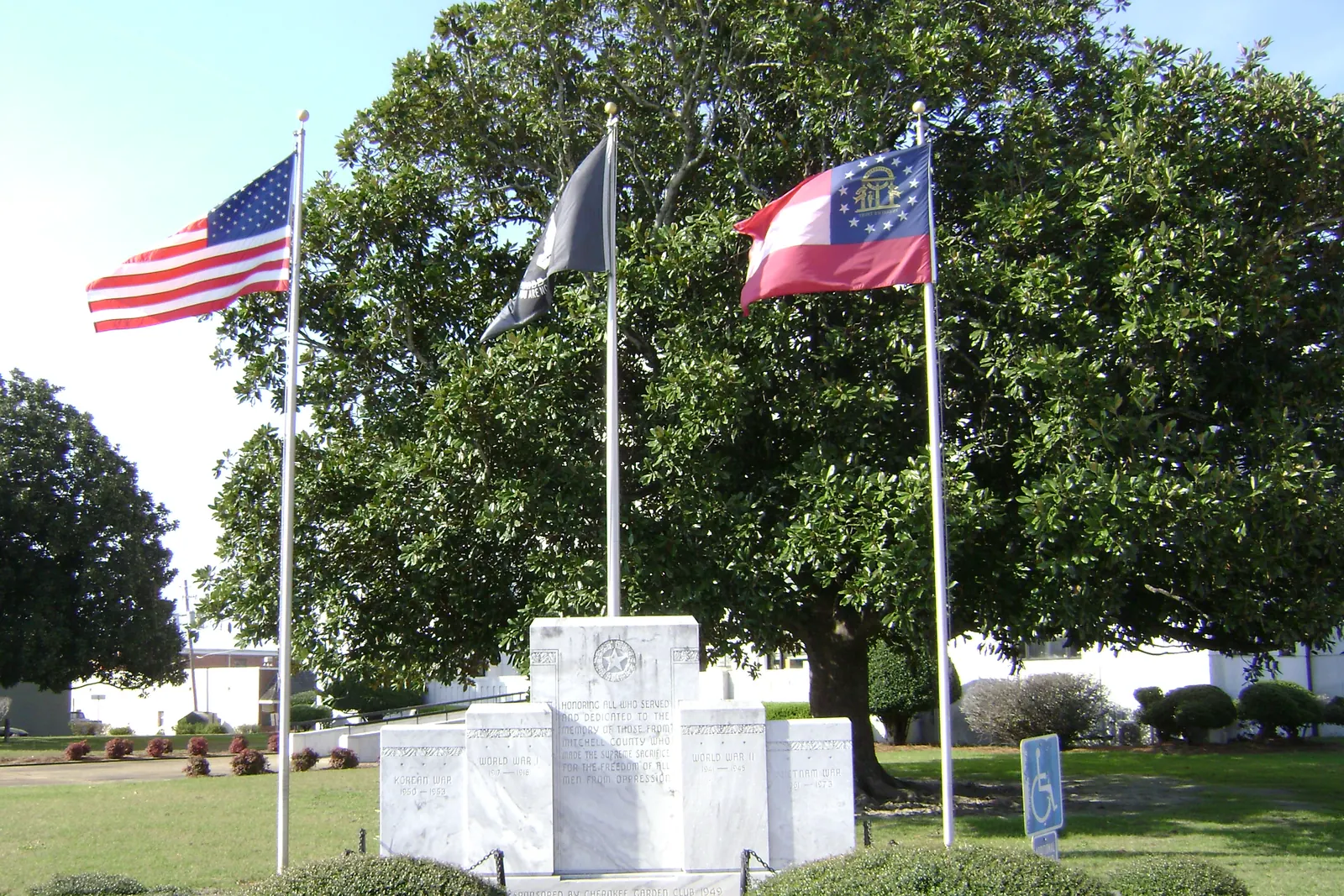
Each of the 50 states has its own flag, set by state law. Some have changed recently: Minnesota’s new flag, with a white eight-pointed star on a dark blue field shaped like the state, became official on May 11, 2024, according to the Minnesota Secretary of State. Some states have flag codes of their own; Texas, for example, sets out how the Texas flag is displayed in Chapter 3100 of its Government Code.
Under the Flag Code, the US flag is at the peak when a state flag is flown on the same halyard, and at the center and the highest point when flags of states or localities are grouped on separate staffs (4 U.S.C. § 7(e) and (f)). More in the guide to flag etiquette.
Armed forces and other flags
The flags of the Army, Marine Corps, Navy, Air Force, Space Force and Coast Guard are common at homes and veterans’ organizations, and state laws on homeowners’ associations often protect them. Arizona’s law, for example, also names first responder flags, blue star and gold star service flags, the Gadsden flag and historic versions of the US flag, such as the Betsy Ross flag. More in the guide to flags in HOA communities.
Outdoor flags and all-weather flags
The Flag Code states that the flag is not displayed on days of inclement weather “except when an all weather flag is displayed” (4 U.S.C. § 6(c)). According to the Congressional Research Service, the provision reflects the popular use of flags made of synthetic fabrics that withstand bad weather. Indoor flags often have a fringe; according to the Congressional Research Service, the fringe is optional, is used on indoor flags only and is not an unauthorized addition to the flag. Sizes are covered in the guide to flag sizes.
Frequently asked questions
What is the official name of the US flag?
The law calls it the flag of the United States (4 U.S.C. § 1). Stars and Stripes, Old Glory and the Star-Spangled Banner are common names; the Star-Spangled Banner is also the name of the national anthem and of the Fort McHenry flag of 1814 that inspired it.
Where is the POW/MIA flag flown?
Under 36 U.S.C. § 902, the National League of Families POW/MIA flag is displayed on all days on which the US flag is displayed at the Capitol, the White House, the World War II, Korean War and Vietnam Veterans memorials, national cemeteries, certain federal offices, major military installations, VA medical centers and every US post office. The 2019 National POW/MIA Flag Act extended the display from specific days to all days.
Does every state have its own flag?
Yes. Each of the 50 states has a state flag set by state law, and several have changed recently: Minnesota’s new flag became official on May 11, 2024. The Flag Code places the US flag at the peak when a state flag flies on the same halyard, and at the center and highest point of a group of state flags.
What is the union jack of the United States?
The union jack is the blue field with white stars from the national flag, flown on its own. Under Executive Order 10834, its dimensions equal the union of a national flag of an authorized size, and the union jack flown with the national flag is the same size as that flag’s union.
Sources
This guide is based on the following sources:
- 4 U.S.C. §§ 1–2 and Executive Order 10834 – U.S. Government Publishing Office
- 36 U.S.C. chapter 9 – United States flag and other flags (§§ 901–904) – U.S. Government Publishing Office
- New official Minnesota state seal and flag – Minnesota Secretary of State
- The Star-Spangled Banner – National Park Service, Fort McHenry National Monument
- Texas Property Code § 202.012 Flag display – Texas Legislature
- Arizona Revised Statutes § 33-1808 Flag display – Arizona State Legislature
- The United States Flag: Federal Law Relating to Display and Associated Questions (RL30243) – Congressional Research Service
Related guides
- The American flagWhat the American flag stands for: the 13 stripes, the 50 stars, the red, white and blue, the official proportions and how the design grew from 13 stars.
- Flag sizesUS flag sizes from 3 × 5 ft to 30 × 60 ft, which size suits which flagpole height, the official 1:1.9 proportions and local limits on flag size.
- Flag etiquetteWhere the American flag goes among other flags under 4 U.S.C. § 7: the position of honor, flags on one halyard, walls, windows, stages and the anthem.
- Flags in HOA communitiesWhat an HOA can and cannot restrict about the American flag and flagpoles under the federal flag act and the laws of Texas, Florida, Arizona and California.