Why are flags at half-staff? Half-staff orders, rules and dates in the US
Published Updated Written by Flagpole Guides
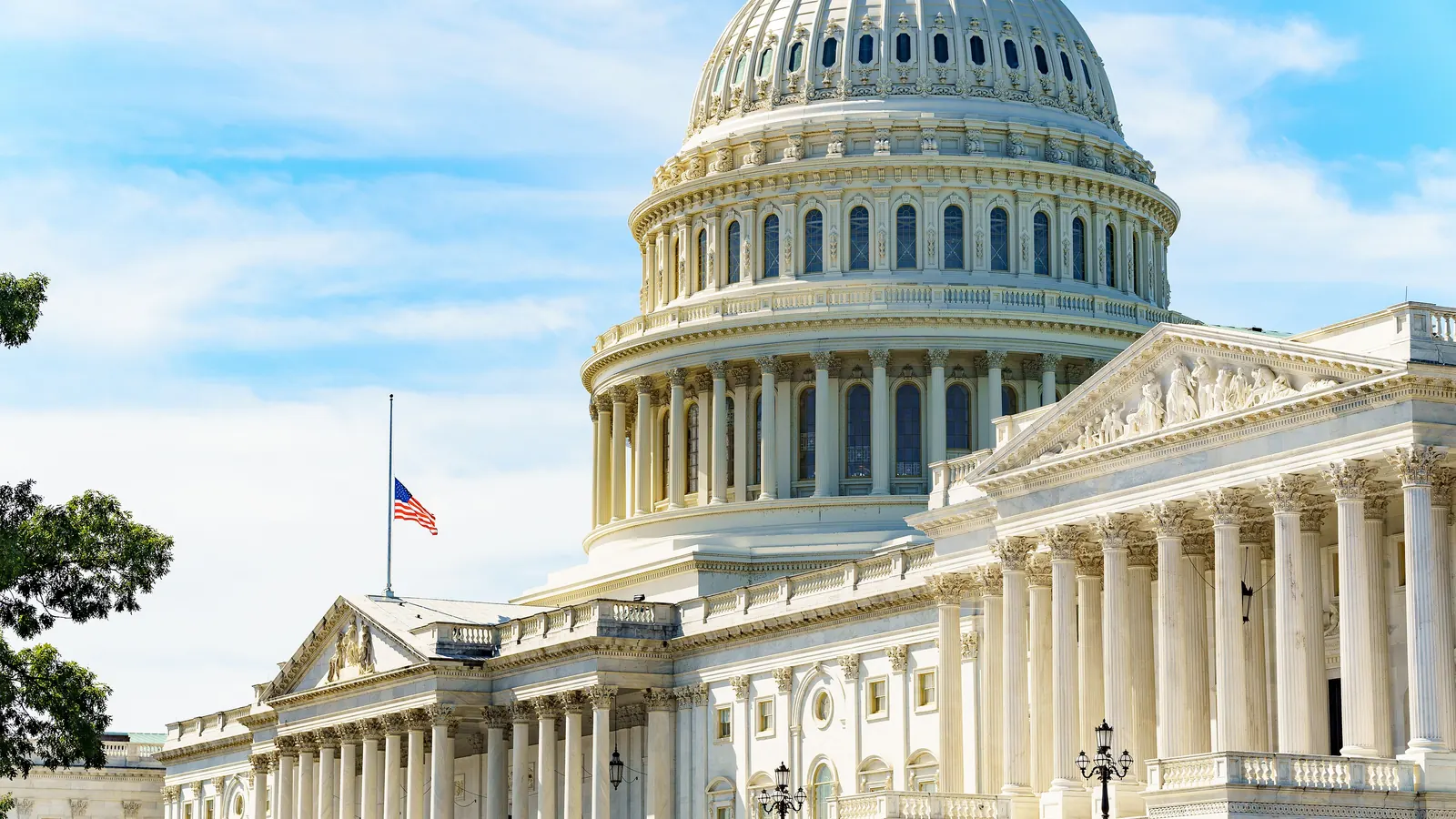
A flag at half-staff is the most visible sign of national mourning in the United States. The rules are in the Flag Code, 4 U.S.C. § 7(m), which builds on Proclamation 3044, issued by President Eisenhower in 1954. The Flag Code uses the term half-staff; USAGov uses both half-staff and half-mast.
Why flags are at half-staff
A flag at half-staff on a federal building, a state capitol or a school has one of three reasons behind it:
- An order from the President, after the death of a principal figure of the federal government or a state governor, and on other occasions, such as the death of other officials, foreign dignitaries or leading citizens. The orders are published as proclamations under Presidential Actions on the White House website and state where and for how long the flag is lowered.
- An order from a governor, after the death of a present or former official of the state, a member of the Armed Forces from the state who dies on active duty or a first responder who dies in the line of duty. Each governor publishes the orders for the state; the Mayor of the District of Columbia does the same for the District.
- A yearly half-staff day set by law, such as Memorial Day or Patriot Day. The dates are in the table below.
An order from the President applies to federal buildings and grounds across the country, while a governor’s order applies only in that state. On the same day, the flag can therefore be at half-staff in one state and at full staff in a neighboring one.
How far down
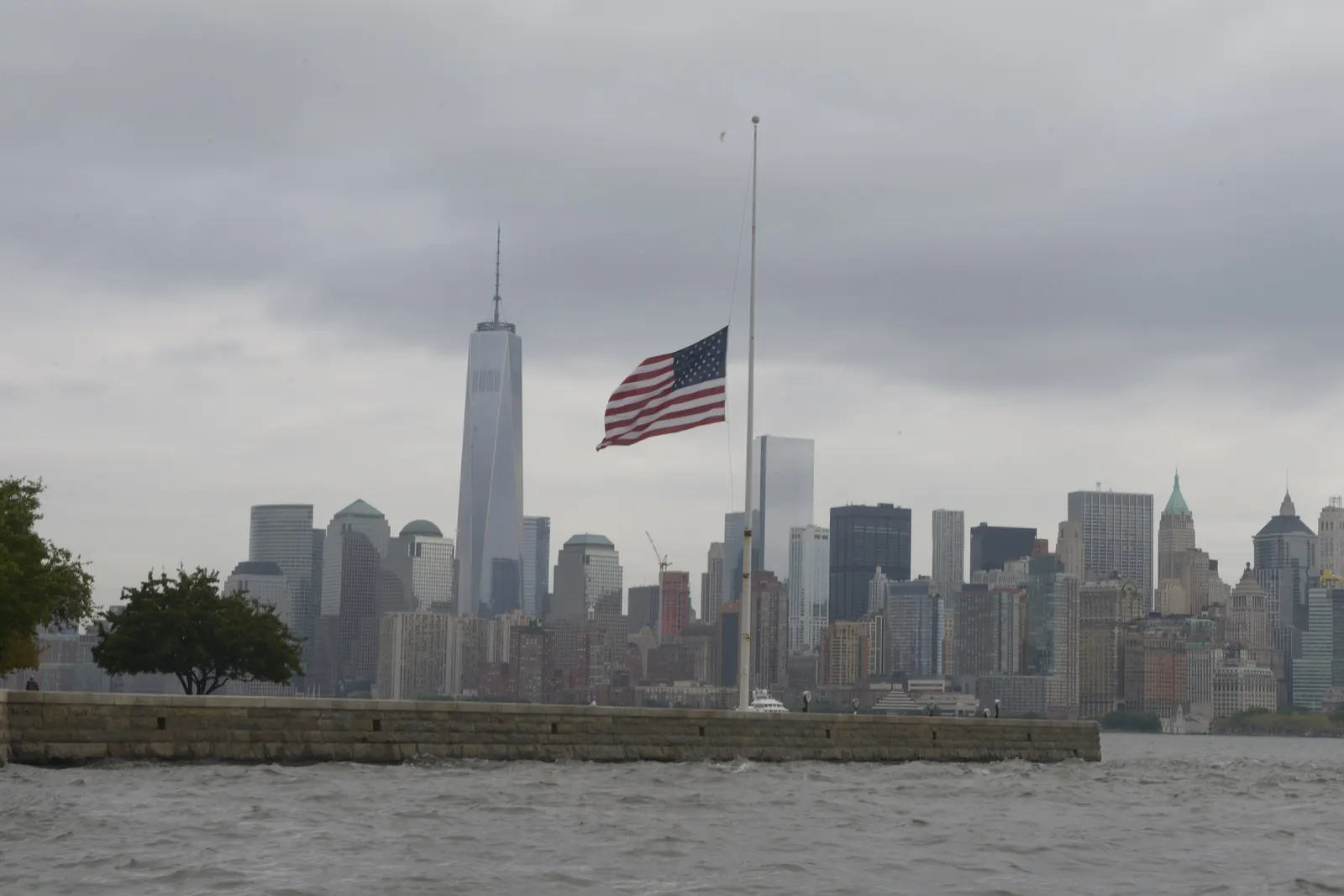
The Flag Code defines half-staff exactly: “the position of the flag when it is one-half the distance between the top and bottom of the staff” (§ 7(m)(1)). The position depends on the pole, not on the size of the flag:
| Height of the flagpole | Middle of the pole |
|---|---|
| 15 ft (4.6 m) | 7 ft 6 in (2.3 m) |
| 20 ft (6.1 m) | 10 ft (3.0 m) |
| 25 ft (7.6 m) | 12 ft 6 in (3.8 m) |
| 30 ft (9.1 m) | 15 ft (4.6 m) |
The procedure
Section 7(m) describes the sequence:
- The flag is hoisted to the peak for an instant.
- It is then lowered to the half-staff position.
- Before it is lowered for the day, it is raised to the peak again.
On Memorial Day, the flag is displayed at half-staff until noon only and then raised to the top of the staff. On a flag displayed from a staff projecting from a window sill, balcony or the front of a building, the union is placed at the peak of the staff unless the flag is at half-staff (§ 7(h)).
Who orders the flag to half-staff

| Who | When |
|---|---|
| The President | On the death of principal figures of the federal government and state governors; for other officials and foreign dignitaries by instructions or orders |
| Heads of federal departments and agencies | On other occasions they consider proper, for buildings under their jurisdiction (Proclamation 3044, para. 5) |
| A state governor | Within the state, on the death of a present or former state official, a member of the Armed Forces from the state who dies on active duty, or a first responder who dies in the line of duty |
| The Mayor of the District of Columbia | The same occasions for the District |
The authority for governors to lower the flag for service members was added in 2007, and for first responders by the Honoring Hometown Heroes Act of 2018. When a governor’s proclamation concerns a member of the Armed Forces, the flag at every federal installation or facility in the area is flown at half-staff too. According to the CRS, Presidents have also ordered the flag to half-staff on the death of leading citizens not covered by law, among them Martin Luther King, Jr.
Periods set by law
| Death of | Half-staff |
|---|---|
| The President or a former President | 30 days from the day of death |
| The Vice President, the Chief Justice or a retired Chief Justice, the Speaker of the House | 10 days from the day of death |
| An Associate Justice, the secretary of an executive or military department, a former Vice President, a state governor | From the day of death until interment |
| A Member of Congress | The day of death and the following day |
Proclamation 3044 adds details for federal buildings: on the death of a President or former President, the flag is also lowered for 30 days at US embassies, legations and military facilities abroad. On the death of a Senator or Representative, the flag is lowered in the Washington, D.C., metropolitan area on the day of death and the following day, and in the member’s state or district from the day of death until interment. The proclamation’s list for the period until interment also includes the President pro tempore of the Senate and the majority and minority leaders of the Senate and the House.
Half-staff dates in 2026 and 2027
Federal law names four yearly half-staff days with a fixed date or rule. In addition, the flag is lowered on federal office buildings on the day of the National Fallen Firefighters Memorial Service under Public Law 107-51; that day is set by proclamation each year.
| Day | 2026 | 2027 | The flag |
|---|---|---|---|
| National Fallen Firefighters Memorial Service | Sunday, May 3 | Set by proclamation | Half-staff on federal office buildings |
| Peace Officers Memorial Day | Friday, May 15 | Saturday, May 15 | Half-staff, unless the day is also Armed Forces Day, as in 2027 (36 U.S.C. § 136) |
| Memorial Day | Monday, May 25 | Monday, May 31 | Half-staff until noon, then full staff (4 U.S.C. § 7(m)) |
| Patriot Day | Friday, September 11 | Saturday, September 11 | Half-staff (36 U.S.C. § 144) |
| National Pearl Harbor Remembrance Day | Monday, December 7 | Tuesday, December 7 | Half-staff (36 U.S.C. § 129) |
On top of these days come the orders from the President and the governors, which can fall on any day. All flag days, with the days of full staff, are in the guide to flag days.
Private flags and half-staff
According to the Congressional Research Service, the half-staff provisions, like the rest of the Flag Code, are a guide and do not apply as a matter of law to private individuals and organizations. The CRS knows of no federal restriction or court decision that limits a person from lowering their own flag.
On a flagpole with a halyard, the flag can be held at any height; the parts are explained in the guide to how a flagpole works. A flag mounted on a fixed staff on a house wall cannot be lowered. Mourning customs beyond half-staff, such as the flag on a casket, are covered in the guide to flags in mourning.
Frequently asked questions
Why are flags at half-staff today?
A flag at half-staff in the United States follows an order from the President, a state governor or the Mayor of the District of Columbia, or falls on one of the yearly half-staff days set by law: Memorial Day until noon, Peace Officers Memorial Day on May 15, Patriot Day on September 11, National Pearl Harbor Remembrance Day on December 7 and, on federal office buildings, the day of the National Fallen Firefighters Memorial Service. The President’s orders are published as proclamations on the White House website, and governors publish the orders for their state.
Is half-staff the same as half-mast?
Yes, both terms describe the same position. The Flag Code uses the term half-staff, and USAGov uses both half-staff and half-mast.
How far down is a flag at half-staff?
Under 4 U.S.C. § 7(m)(1), half-staff is the position of the flag when it is one-half the distance between the top and bottom of the staff. On a 20 ft flagpole, that places the flag about 10 ft above the base.
Why is the flag raised to the top before it is lowered to half-staff?
The Flag Code states that a flag flown at half-staff should first be hoisted to the peak for an instant and then lowered to the half-staff position, and raised to the peak again before it is lowered for the day (4 U.S.C. § 7(m)).
How long is the flag at half-staff when a president dies?
Thirty days from the day of death for the President or a former President. For the Vice President, the Chief Justice or a retired Chief Justice and the Speaker of the House, it is ten days; for an Associate Justice, the secretary of an executive or military department, a former Vice President or a state governor, from the day of death until interment; for a Member of Congress, the day of death and the following day.
Can a governor order flags to half-staff?
Yes. Under 4 U.S.C. § 7(m), a governor may proclaim that the national flag be flown at half-staff after the death of a present or former official of the state, a member of the Armed Forces from the state who dies on active duty, or a first responder working in the state who dies in the line of duty. When the proclamation concerns a service member, federal installations in the area follow it too.
Do private citizens have to lower their flag when there is a half-staff order?
No. According to the Congressional Research Service, the half-staff provisions of the Flag Code, like the rest of the Code, are a guide and do not apply as a matter of law to private individuals and organizations. No federal restriction is known that limits a person from lowering their own flag.
Sources
This guide is based on the following sources:
- 4 U.S.C. § 7(m) and Proclamation 3044 (note under § 7) – U.S. Government Publishing Office
- The United States Flag: Federal Law Relating to Display and Associated Questions (RL30243) – Congressional Research Service
- The American flag and other national symbols – Flying the flag at half-staff – USAGov, U.S. General Services Administration
- 36 U.S.C. §§ 129, 136 and 144 – U.S. Government Publishing Office
- Public Law 107-51 (National Fallen Firefighters Memorial Service) – U.S. Government Publishing Office
- Presidential Actions – Proclamations – The White House
- National Fallen Firefighters Memorial Weekend, 2026 – The White House
Related guides
- Flags in mourningHow the US flag is used in mourning: the flag on a casket, the VA burial flag for veterans, military funeral honors, Gold Star families and retiring a flag.
- Flag daysThe days on which the US Flag Code calls for the flag to be displayed in 2026 and 2027, with the half-staff days and the federal holidays.
- The Flag CodeWhat the US Flag Code says about displaying the American flag – hours, weather, lighting, respect and retiring worn flags – and why it carries no penalties.
- How a flagpole worksHow a US flagpole works: the halyard over the truck, external and internal systems, winch and cam cleat, revolving trucks and how the flag reaches half-staff.