Flagpoles for businesses in the United States: company flags and the rules
Published Written by Flagpole Guides
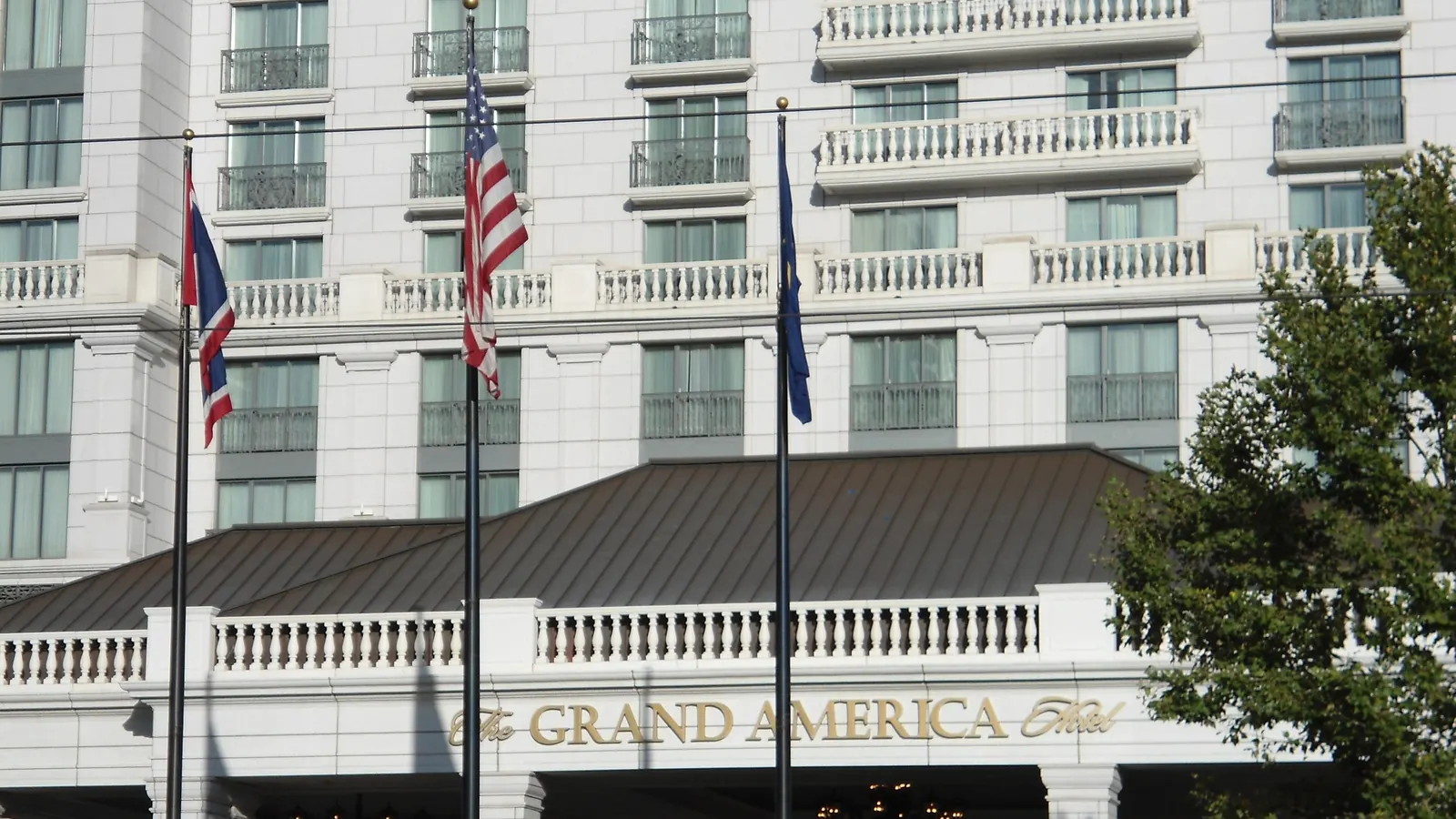
Many businesses in the United States fly the US flag, a state flag and a company flag. For a business, the rules come from the Flag Code, local zoning and sign codes, consumer protection law and workplace safety law. This guide describes what applies; the order of flags is covered in detail in the guide to flag etiquette.
The US flag and company flags
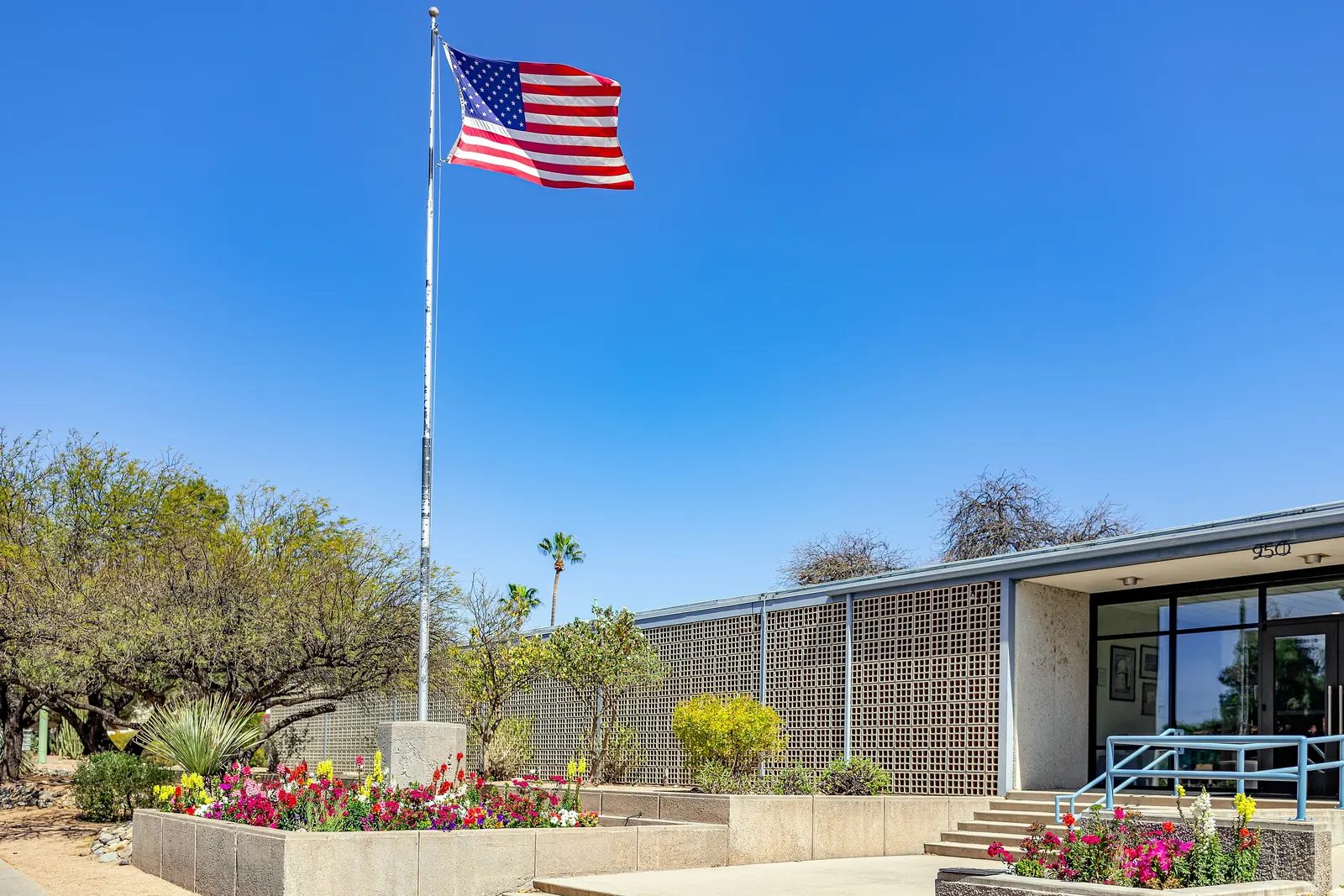
The Flag Code does not mention company flags by name; its rules for flags and pennants of societies are the closest. Under 4 U.S.C. § 7(f), when such flags are flown on the same halyard as the US flag, the US flag is always at the peak, and no such flag is placed above the US flag or to its right. On adjacent poles, the US flag is hoisted first and lowered last, and in a group of poles it stands at the center and the highest point (§ 7(e)).
| Number of poles | Common arrangement under 4 U.S.C. § 7 |
|---|---|
| One pole | US flag at the peak, company flag below |
| Two poles | US flag on its own right, the observer’s left |
| Three poles | US flag in the center and highest; state flag and company flag on either side |
Flags of other countries at an international company follow § 7(g): separate poles of the same height and flags of approximately equal size, as described in the guide to foreign flags in the United States.
Sign codes
Many cities and counties treat commercial flags as signs. In Durham, North Carolina, flags with a logo, message, statement or expression relating to commercial interests, and banners that are not flags, conform with the sign standards, and flags mounted directly on a building wall are considered signs. Durham also limits nonresidential flagpoles to the height allowed in the district or 70 ft, whichever is less, allows up to three poles per property and three flags per pole, and lifts the size and number limits on US and North Carolina holidays. Sign codes differ from place to place.
The flag and advertising
The Flag Code states that the flag is never used for advertising purposes in any manner, is not printed on items designed for temporary use and discard, and that advertising signs are not fastened to a staff or halyard from which the flag is flown (4 U.S.C. § 8(i)). It also states that nothing is placed on the flag, such as logos or words (§ 8(g)). The Code carries no penalties, but 4 U.S.C. § 3 makes it a misdemeanor in the District of Columbia to place advertising on the flag or to sell merchandise bearing a representation of the flag for advertising. According to the Congressional Research Service, the status of such restrictions cannot be taken for granted after the Supreme Court’s flag decisions of 1989 and 1990.
Made in USA claims
The flag can make a legal claim of its own. According to the Federal Trade Commission, US symbols such as US flags or outlines of US maps in advertising can, by themselves or with other phrases or images, convey a claim that a product is made in the USA. Such a claim is held to the “all or virtually all” standard, and labels are covered by the FTC’s Made in USA Labeling Rule (16 C.F.R. part 323).
Lighting and 24-hour display
The Flag Code allows the flag to fly around the clock when it is properly illuminated during the hours of darkness (4 U.S.C. § 6(a)), and local lighting ordinances can limit the lights. More in the guide to flag lighting.
Half-staff and observances
A business is not required by law to lower its flag. According to the Congressional Research Service, the half-staff provisions are a guide and do not apply as a matter of law to private organizations, and no federal restriction limits an organization from lowering its own flag. Some federal locations display the POW/MIA flag on all days on which the US flag is displayed, among them every US post office (36 U.S.C. § 902).
Employees and flagpoles
Employees who raise flags or work on a flagpole are covered by workplace safety law. OSHA’s rules keep unqualified workers and any conductive object they handle at least 10 ft from overhead lines of 50 kV or less (29 C.F.R. § 1910.333). More in the guide to flagpole safety.
Frequently asked questions
Where does a company flag go next to the US flag?
Below it on the same halyard, and to its left, the observer’s right, on a separate pole. Under 4 U.S.C. § 7(f), when flags of societies are flown on the same halyard as the US flag, the US flag is always at the peak, and no such flag is placed above the US flag or to its right. On adjacent poles, the US flag is hoisted first and lowered last.
Is a company flag a sign?
It can be under local law. In Durham, North Carolina, flags with a logo, message or statement relating to commercial interests conform with the sign standards, and flags mounted directly on a building wall are considered signs. Sign codes differ between cities and counties.
Can a business use the US flag in advertising?
The Flag Code states that the flag should never be used for advertising purposes and that advertising signs should not be fastened to a staff or halyard from which the flag is flown (4 U.S.C. § 8(i)). The Code has no penalties, but 4 U.S.C. § 3 makes certain advertising uses of the flag a misdemeanor in the District of Columbia, and the FTC notes that US flags in advertising can imply a claim that a product is made in the USA.
Does a business have to lower its flag to half-staff?
No. According to the Congressional Research Service, the half-staff provisions of the Flag Code are a guide and do not apply as a matter of law to private organizations.
Sources
This guide is based on the following sources:
- 4 U.S.C. §§ 3, 6, 7 and 8 – U.S. Government Publishing Office
- Unified Development Ordinance, Sec. 7.7 Flagpoles and Flags – City and County of Durham, North Carolina
- Complying with the Made in USA Standard – Federal Trade Commission
- The United States Flag: Federal Law Relating to Display and Associated Questions (RL30243) – Congressional Research Service
- 36 U.S.C. § 902 National League of Families POW/MIA flag – U.S. Government Publishing Office
- 29 C.F.R. § 1910.333 Selection and use of work practices – Electronic Code of Federal Regulations
Related guides
- Foreign flags in the USHow flags of other nations are flown in the United States: separate staffs of equal height, the UN flag, embassies and the two Flag Code rules that differ.
- Flag lightingWhen the US flag can fly at night under the Flag Code, what “properly illuminated” means in practice, solar and wired lights, and local and HOA lighting rules.
- Flag etiquetteWhere the American flag goes among other flags under 4 U.S.C. § 7: the position of honor, flags on one halyard, walls, windows, stages and the anthem.
- Flagpole safetyThe main risks around a US flagpole: wind speed ratings and flag size, overhead power lines under OSHA rules, buried utilities and 811, and work at height.