Flags in mourning in the United States: caskets, burial flags and honors
Published Written by Flagpole Guides
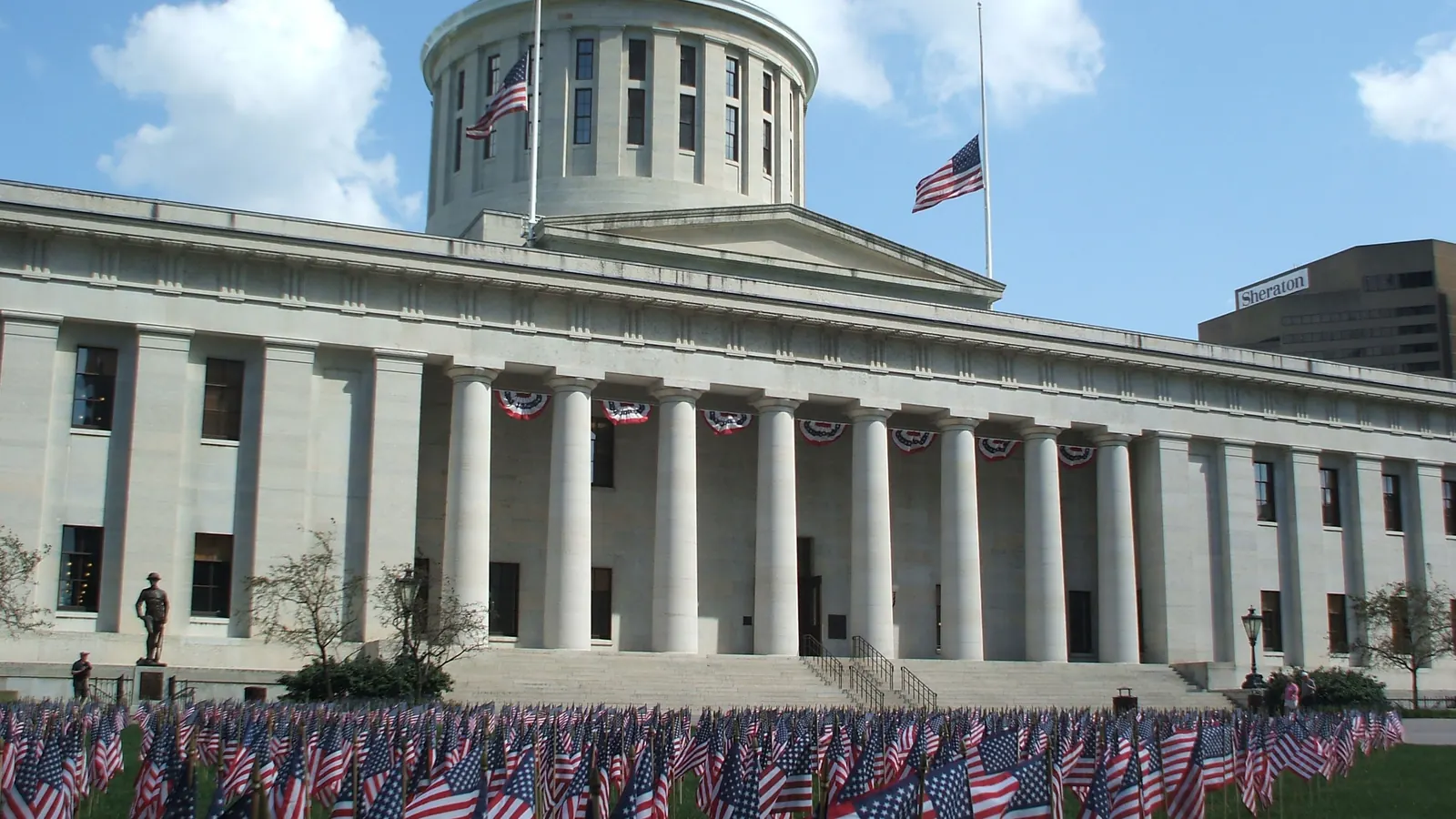
In the United States, the flag has a place of its own in mourning. It flies at half-staff after the death of national and state leaders, service members and first responders, it covers the casket of a veteran, and it is folded and handed to the family at a military funeral. The rules come from the Flag Code, veterans’ benefits law and the law on military funeral honors.
The flag on a casket
Under 4 U.S.C. § 7(n), when the flag is used to cover a casket, it is placed so that the union is at the head and over the left shoulder. The flag is not lowered into the grave and is not allowed to touch the ground. The Flag Code also states that the flag is never used as a covering for a statue or monument (§ 7(l)) or as drapery (§ 8(d)), so the casket is the one place where it is laid over an object.
The VA burial flag
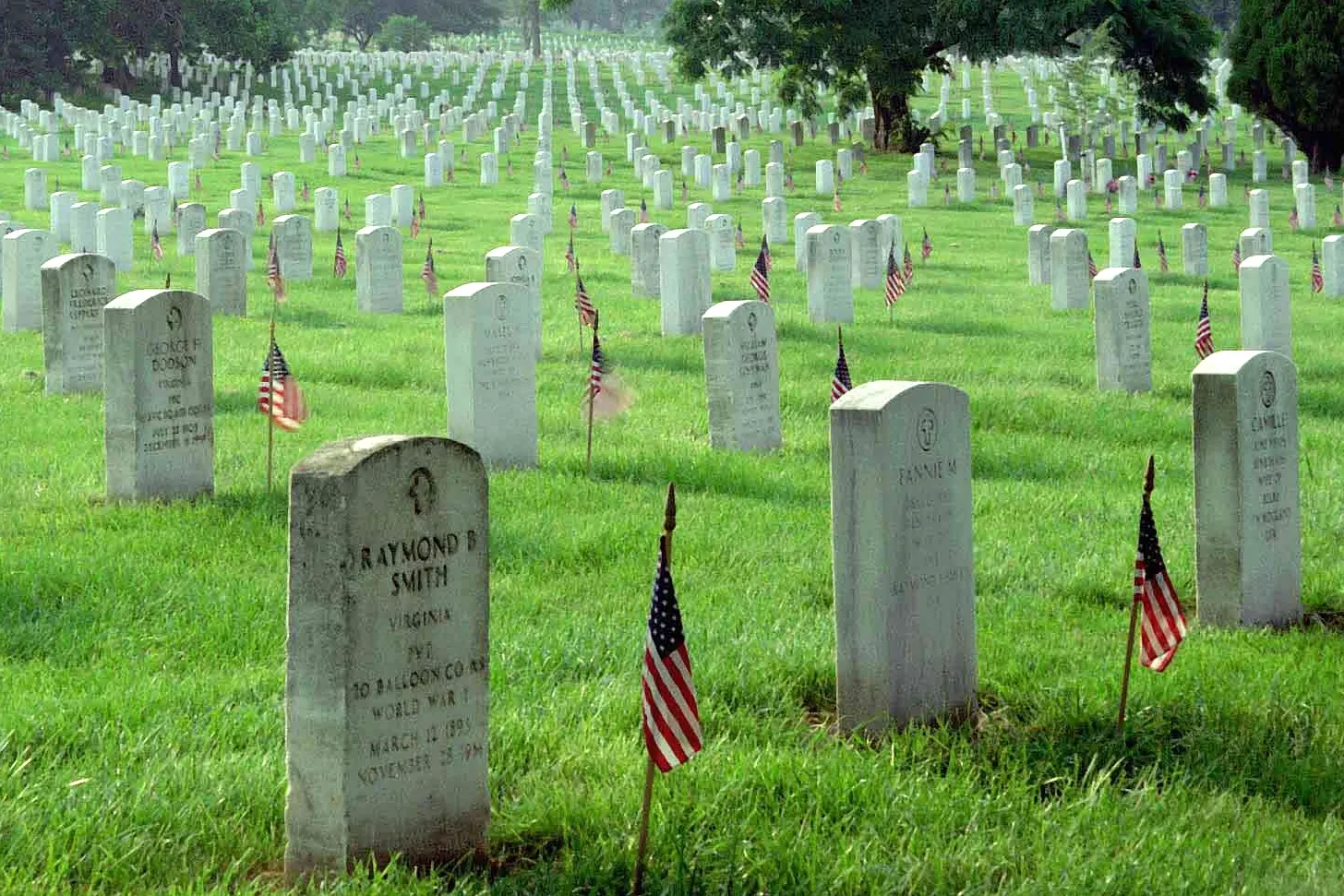
Under 38 U.S.C. § 2301, the Department of Veterans Affairs (VA) furnishes a flag to drape the casket of each eligible veteran. According to the VA:
- the flag can drape a casket or be placed with an urn
- the next of kin or a close friend of the veteran applies for it
- the application, VA Form 27-2008, is brought to a funeral director, a VA regional office or a US post office; not every post office keeps burial flags
- the VA does not replace flags that are lost, destroyed or stolen
The eligibility rules cover, among others, veterans who served in wartime, who died on active duty after May 27, 1941, and veterans who served in peacetime and left the service before June 27, 1950, after at least one enlistment or because of a service-connected disability. The flag used for this purpose is wholly produced in the United States, which the law defines as grown, processed, manufactured and assembled in the United States, according to the Congressional Research Service.
Military funeral honors
Under 10 U.S.C. § 1491, the armed forces provide funeral honors for eligible veterans on request. The funeral honors detail consists of at least two members and performs, at a minimum, a ceremony that includes the folding of a United States flag, its presentation to the veteran’s family and the playing of Taps. If no bugler is part of the detail, a recorded version of Taps is played. According to the VA, the last page of VA Form 27-2008 shows how the flag is displayed and then folded at a memorial service.
The Flag Code itself does not describe how a flag is folded. The Senate document Our Flag describes the fold used in the United States: two people hold the flag waist high, fold it twice lengthwise, and then fold it in triangles from the striped end until only the triangular blue field is visible.
Gold Star and service flags
- Gold Star Mother’s Day, the last Sunday in September, is an observance on which Congress asks the President to call for the flag to be displayed on government buildings and at homes, as a public expression of the love, sorrow and reverence of the people for Gold Star Mothers (36 U.S.C. § 111).
- A service flag approved by the Secretary of Defense may be displayed in a window of the home of the immediate family of a person serving in the Armed Forces during any period of war or hostilities (36 U.S.C. § 901). Makers need a license, and making one without a license can bring a civil penalty.
After the funeral
According to the VA, a burial flag is protected from the weather by not leaving it outside for long periods, is displayed carefully so that it cannot be damaged, and has no words, symbols or drawings added to it. A flag in good condition can be donated to a national cemetery with an Avenue of Flags, where it may be flown on patriotic holidays. A flag in any condition can be given to a veterans service organization, which retires unserviceable flags. Under the Flag Code, a flag no longer fit for display is destroyed in a dignified way, preferably by burning (4 U.S.C. § 8(k)).
Half-staff for a local death
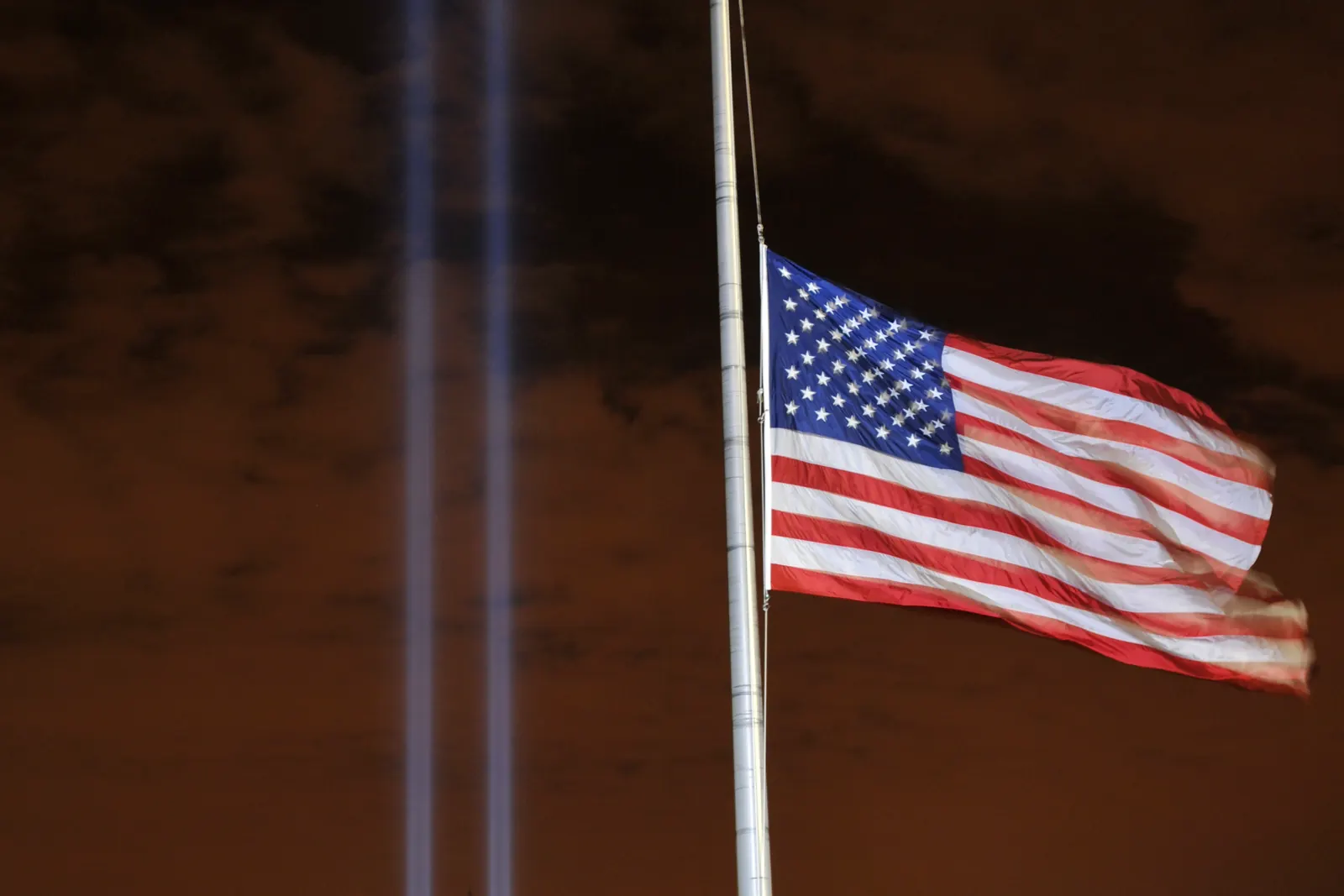
Businesses, schools and families often lower their flag after a local death. According to the Congressional Research Service, no federal restriction limits a private person from lowering their own flag. The rules for official half-staff orders are in the guide to half-staff, and the place of the flag among other flags in the guide to flag etiquette.
Frequently asked questions
How is the flag placed on a casket?
Under 4 U.S.C. § 7(n), when the flag is used to cover a casket, it is placed so that the union is at the head and over the left shoulder. The flag is not lowered into the grave or allowed to touch the ground.
Who can get a US burial flag?
Under 38 U.S.C. § 2301, the Department of Veterans Affairs furnishes a flag to drape the casket of eligible veterans, and it can also be placed with an urn. According to the VA, the next of kin or a close friend applies with VA Form 27-2008, which is brought to a funeral director, a VA regional office or a US post office.
Is the flag folded at a military funeral?
Yes. Under 10 U.S.C. § 1491, the funeral honors detail for an eligible veteran performs, at a minimum, a ceremony that includes the folding of a United States flag, its presentation to the veteran’s family and the playing of Taps.
What can be done with a burial flag that is no longer wanted?
According to the VA, a flag in good condition can be donated to a national cemetery that has an Avenue of Flags, where it may be flown on patriotic holidays. A flag in any condition can be given to a veterans service organization, which retires flags that are unserviceable.
What is a service flag?
A service flag approved by the Secretary of Defense may be displayed in a window of the home of the immediate family of a person serving in the Armed Forces during any period of war or hostilities (36 U.S.C. § 901). Manufacturing it requires a license from the Secretary.
Sources
This guide is based on the following sources:
- 4 U.S.C. § 7(n) and § 8(k) – U.S. Government Publishing Office
- Burial flags to honor Veterans and Reservists – U.S. Department of Veterans Affairs
- 38 U.S.C. § 2301 Flags – U.S. Government Publishing Office
- 10 U.S.C. § 1491 Funeral honors functions at funerals for veterans – U.S. Government Publishing Office
- 36 U.S.C. § 111 Gold Star Mother’s Day and § 901 Service flag – U.S. Government Publishing Office
- Our Flag (S. Doc. 109-18) – Folding the flag – U.S. Senate, Joint Committee on Printing
- The United States Flag: Federal Law Relating to Display and Associated Questions (RL30243) – Congressional Research Service
Related guides
- Half-staffWhy US flags fly at half-staff (half-mast): who orders it, where the orders are published, the periods set by law and the half-staff dates in 2026 and 2027.
- Flag etiquetteWhere the American flag goes among other flags under 4 U.S.C. § 7: the position of honor, flags on one halyard, walls, windows, stages and the anthem.
- Flag daysThe days on which the US Flag Code calls for the flag to be displayed in 2026 and 2027, with the half-staff days and the federal holidays.
- The Flag CodeWhat the US Flag Code says about displaying the American flag – hours, weather, lighting, respect and retiring worn flags – and why it carries no penalties.