Flagpole accessories – the parts of a US flagpole
Published Written by Flagpole Guides
A flagpole is more than a pole. The parts at the top, along the pole and at the base decide how the flag is raised, whether it can be locked, how it turns in the wind and how it is lit. This guide describes the usual parts of a US flagpole; how they work together is explained in the guide to how a flagpole works.
The parts of an in-ground flagpole
| Part | Function |
|---|---|
| Ornament (ball, eagle or finial) | Finishes the top of the pole |
| Truck | Holds the pulley for the halyard; stationary or revolving |
| Halyard | Rope or wire that raises and lowers the flag |
| Snaps | Attach the flag’s grommets to the halyard |
| Cleat | Where an external halyard is tied off |
| Access door and winch | On internal halyard poles, protect and operate the halyard |
| Collar | Covers the joint where the pole meets the ground or foundation |
| Ground sleeve or shoe base | Holds the pole in the foundation or on a base plate |
Top: truck and ornament
The truck sits at the top of the pole and carries the pulley. According to Concord American Flagpole, external halyard trucks come as single stationary, single revolving and double revolving; a revolving truck turns the flag with the wind, and a double truck flies two flags. On internal halyard poles, an internal truck encloses the pulley.
The ornament finishes the pole. Concord fits a heavy-duty ball as standard on its commercial poles and offers other balls, finials and eagles. According to the Congressional Research Service, the Flag Code is silent on ornaments, no law or regulation restricts them, and the eagle finial is used by the President, the Vice President, federal agencies, organizations and private citizens alike.
Halyard, snaps and cleat
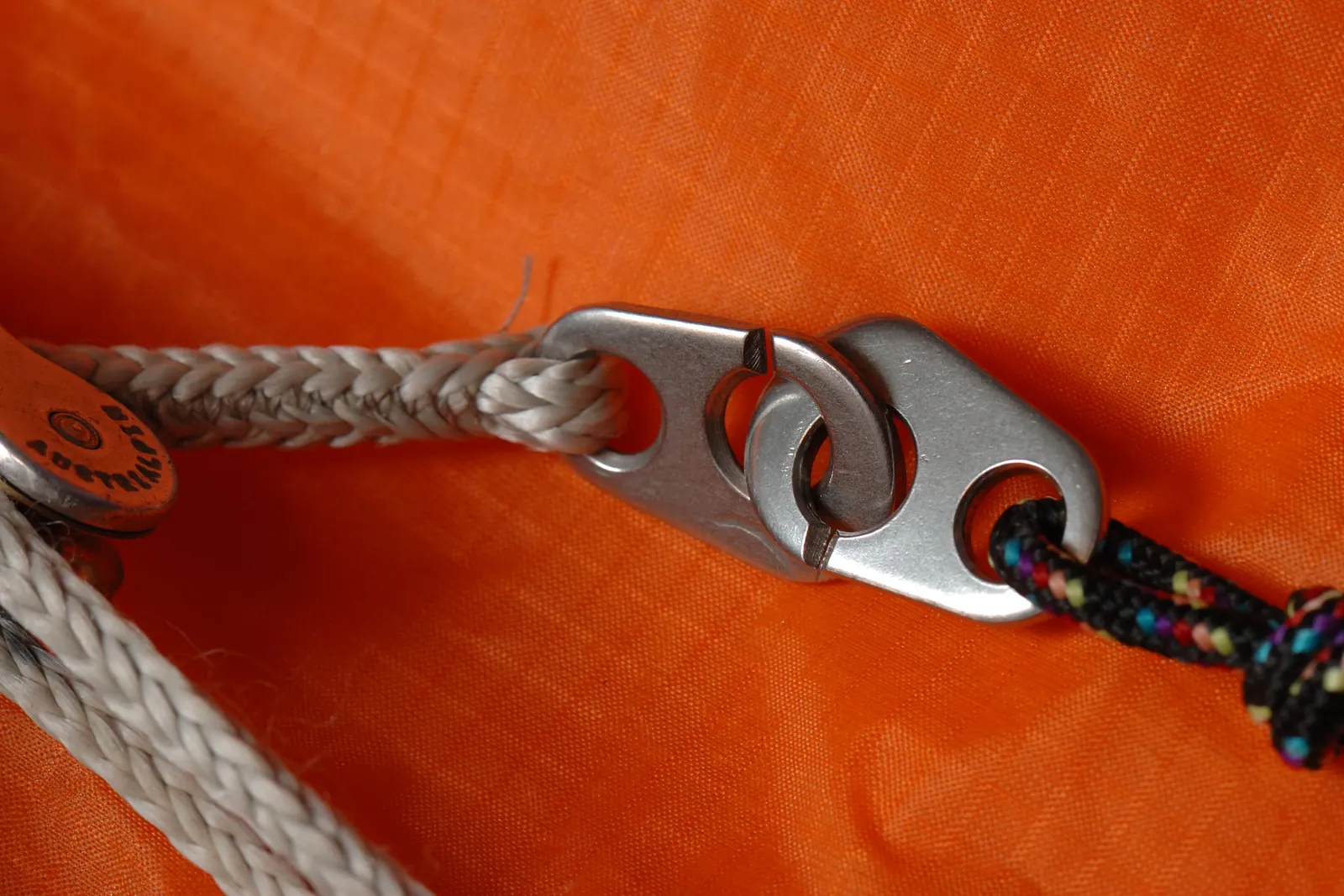
On an external halyard pole, a rope halyard runs outside the pole over the pulley and is tied off on a cleat. The flag attaches to the halyard with snaps through its grommets. On an internal halyard pole, according to Concord, a winch system uses a wire halyard with a gearless winch and a removable handle, and a cam cleat system uses a rope halyard in a heavy-duty cam-action cleat, both behind a lockable door.
An external halyard can slap against the pole in the wind. Texas law allows homeowners’ associations to adopt reasonable restrictions to abate noise caused by an external halyard (Texas Property Code § 202.012).
Security
For external halyard poles, Concord describes cleat covers, halyard covers and halyard security kits that combine the two and make the pole tamper-resistant. An internal halyard gives the same protection by design, as the rope or wire is behind a locked door.
Base: collar, sleeve and shoe base
A collar covers the gap at the base where the pole meets the foundation; Concord supplies a one-piece aluminum collar as standard on its commercial poles. Ground-set poles stand in a ground sleeve set in concrete, while a shoe base bolts the pole to an above-ground foundation. More in the guide to installing a flagpole.
House-mounted poles
For a flag on a house, the accessories are simple. According to Annin Flagmakers, a two-way mounting bracket holds the pole at 45 degrees, typical for flags, or 90 degrees, typical for banners. A flag attaches with grommets on the heading, while a banner has a sleeve that slides over the pole and a tab that clips inside. Annin also offers ornamental pole toppers, spinning rings and solar lights.
Lighting
A flag flown 24 hours a day is properly illuminated during the hours of darkness under the Flag Code. According to Annin, solar lights are an alternative to spotlights, which need an outdoor electrical outlet. More in the guide to flag lighting, and the care of the parts in the guide to flagpole maintenance.
Frequently asked questions
What is the ball on top of a flagpole called?
It is an ornament, often called a finial. Commercial poles commonly have a ball; eagles and other finials are also used. According to the Congressional Research Service, no law or regulation restricts the use of a finial, and the eagle finial is used by the President, the Vice President, federal agencies, civilian organizations and private citizens.
What is a flagpole truck?
The truck is the fitting at the top of the pole that holds the pulley for the halyard. According to Concord American Flagpole, trucks can be stationary or revolving, with a single or double pulley, and on internal halyard poles an internal truck encloses the pulley.
How can a flagpole be protected against theft and vandalism?
An internal halyard runs inside the pole behind a lockable access door. For external halyard poles, Concord American Flagpole describes cleat covers, halyard covers and halyard security kits that make the cleat and the rope tamper-resistant.
What accessories does a house-mounted flag need?
A bracket and the pole. According to Annin Flagmakers, a two-way mounting bracket holds the pole at 45 degrees, typical for flags, or 90 degrees, typical for banners. A flag attaches with grommets on the heading, and a banner has a sleeve that slides over the pole. Annin also sells ornamental pole toppers, spinning rings and solar lights.
Sources
This guide is based on the following sources:
- Halyard Options – Concord American Flagpole
- Design Options – Concord American Flagpole
- Flagpoles and Hardware – Annin Flagmakers
- Flag Materials and Sizes – Annin Flagmakers
- The United States Flag: Federal Law Relating to Display and Associated Questions (RL30243) – Congressional Research Service
- Texas Property Code § 202.012 Flag display – Texas Legislature
Related guides
- How a flagpole worksHow a US flagpole works: the halyard over the truck, external and internal systems, winch and cam cleat, revolving trucks and how the flag reaches half-staff.
- Flagpole maintenanceHow US flagpoles and flags are cared for: checks of the halyard, truck and base, cleaning aluminum, washing and storing the flag, and local rules on condition.
- Flagpole repairCommon faults on US flagpoles – broken halyard, stuck truck, slipping winch, leaning pole, corrosion – their usual causes and the rules for repairs.
- Flag lightingWhen the US flag can fly at night under the Flag Code, what “properly illuminated” means in practice, solar and wired lights, and local and HOA lighting rules.