The American flag: meaning of the stars, stripes and colors
Published Written by Flagpole Guides
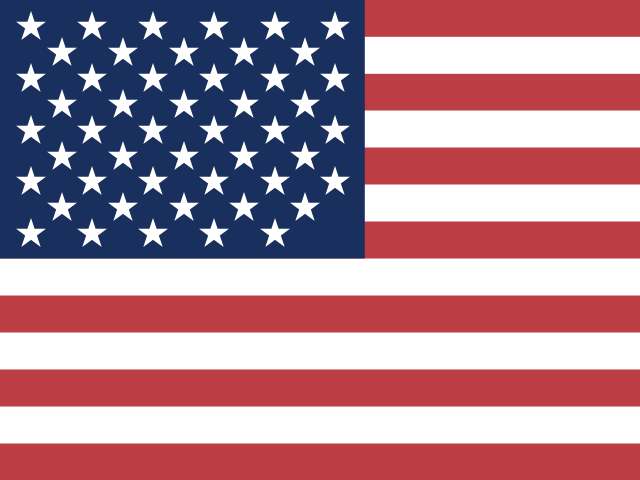
The flag of the United States is one of the most recognized national symbols in the world. Its design is simple to describe, and the law does it in one sentence: thirteen horizontal stripes, alternately red and white, and a union of white stars in a blue field (4 U.S.C. § 1). What changes is the number of stars, which follows the number of states.
The stripes and the stars
- 13 stripes, seven red and six white, starting and ending with red, stand for the 13 original colonies.
- 50 white stars on a blue field in the upper corner next to the staff, the union or canton, stand for the 50 states.
Under 4 U.S.C. § 2, a star is added when a new state is admitted, and the change takes effect on the Fourth of July after the admission. According to the Government Publishing Office’s Ben’s Guide, the 50-star flag dates from July 4, 1960, after Hawaii became the fiftieth state.
The colors
The law names the colors only as red, white and blue. According to the Senate document Our Flag, the colors “did not have meanings for the Stars and Stripes when it was adopted in 1777”. The meanings usually given come from the Great Seal of the United States: in 1782, Charles Thomson, Secretary of the Continental Congress, reported to Congress that the colors of the seal’s stripes “are those used in the flag of the United States of America”, and that:
| Color | Meaning in Thomson’s report on the Great Seal |
|---|---|
| White | Purity and innocence |
| Red | Hardiness and valor |
| Blue | Vigilance, perseverance and justice |
The proportions
Executive Order 10834 of August 21, 1959 sets the design and the proportions of the flag, with the hoist, the height of the flag, as 1.0:
| Part | Proportion |
|---|---|
| Hoist (height) of the flag | 1.0 |
| Fly (length) of the flag | 1.9 |
| Hoist of the union | 0.5385 (7/13) |
| Fly of the union | 0.76 |
| Width of each stripe | 0.0769 (1/13) |
| Diameter of each star | 0.0616 |
The union therefore covers the top seven stripes. The order applies to flags for federal agencies; according to the Congressional Research Service, the Flag Code does not set the size or proportions of flags for civilians, and commercial flags are made in sizes such as 3 × 5 ft. More in the guide to flag sizes.
From 13 stars to 50
| Year | Flag |
|---|---|
| 1777 | The Continental Congress adopts 13 stripes and 13 stars on June 14 |
| 1795 | 15 stars and 15 stripes after Vermont and Kentucky, under a resolution of January 1794 |
| 1818 | Back to 13 stripes, with 20 stars and a star for each new state on the following Fourth of July (act of April 4, 1818) |
| 1912 | 48 stars after Arizona and New Mexico |
| 1959 | 49 stars after Alaska |
| 1960 | 50 stars after Hawaii, official on July 4, 1960 |
The resolution of June 14, 1777 read: “Resolved, that the flag of the United States be thirteen stripes, alternate red and white; that the union be thirteen stars, white in a blue field, representing a new constellation.” According to Our Flag, it gave no instruction on the number of points on the stars or their arrangement, so early flags had stars scattered, in rows or in a circle, some with six or eight points. Strong evidence, according to the same document, points to Francis Hopkinson of New Jersey as responsible for the stars.
The 15-star flag of 1795 is the one that flew over Fort McHenry in 1814 and inspired “The Star-Spangled Banner”. Captain Samuel C. Reid of the Navy then suggested keeping 13 stripes and adding only stars, which the act of April 4, 1818 made law.
Betsy Ross
According to Our Flag, Betsy Ross made flags for 50 years, including for the Pennsylvania State Navy in 1777, but there is no proof that she made the first Stars and Stripes. Her grandson William J. Canby first made the story public in 1870, and the “Betsy Ross flag”, with its 13 stars in a circle, did not appear until the early 1790s.
Names of the flag
According to Ben’s Guide, the flag is also called the Stars and Stripes, Old Glory and the Star-Spangled Banner, the last also the title of the national anthem. The history of the flag in American life, from the liberty poles of the Revolution to the 50-star flag, is in the guide to flagpole history, and the other official flags in the guide to flags of the United States.
Frequently asked questions
What do the stars and stripes on the American flag mean?
The 13 horizontal stripes, seven red and six white, stand for the 13 original colonies, and the 50 white stars on the blue field stand for the 50 states, according to the Government Publishing Office’s Ben’s Guide and USAGov.
What do the colors of the American flag mean?
The colors had no official meaning when the flag was adopted in 1777. According to the Senate document Our Flag, the meanings come from the Great Seal: in 1782, Charles Thomson, Secretary of the Continental Congress, reported that white signifies purity and innocence, red hardiness and valor, and blue vigilance, perseverance and justice.
When did the flag get 50 stars?
On July 4, 1960, after Hawaii was admitted as the 50th state on August 21, 1959. Under 4 U.S.C. § 2, a star is added on the Fourth of July after a new state is admitted. The 50-star flag was first raised at 12:01 a.m. on July 4, 1960, at Fort McHenry in Baltimore.
Did Betsy Ross make the first American flag?
According to the Senate document Our Flag, there is no proof that she made the first Stars and Stripes, although she made flags for 50 years, including for the Pennsylvania State Navy in 1777. The story was first made public in 1870 by her grandson, and the flag with the stars in a circle known as the Betsy Ross flag did not appear until the early 1790s.
What are the proportions of the American flag?
Under Executive Order 10834, the flag is 1.9 times as long as it is high. The union is 7/13 of the flag’s height, covering the top seven stripes, and 0.76 of the height in length, and each stripe is 1/13 of the height.
Sources
This guide is based on the following sources:
- 4 U.S.C. §§ 1–2 and Executive Order 10834 – U.S. Government Publishing Office
- Our Flag (S. Doc. 109-18) – U.S. Senate, Joint Committee on Printing
- The American flag – Ben’s Guide to the U.S. Government, U.S. Government Publishing Office
- The United States Flag: Federal Law Relating to Display and Associated Questions (RL30243) – Congressional Research Service
- The American flag and other national symbols – USAGov, U.S. General Services Administration
- Flag Day and National Flag Week, 2026 – The White House
Related guides
- Flagpole historyHow the flag and flagpole became part of American life: the liberty pole, Fort McHenry, Flag Day, the Flag Code, night display and the 50-star flag.
- Flag typesThe flags flown in the United States: the Stars and Stripes, the union jack, state flags, the POW/MIA flag, the Medal of Honor flag and the service flag.
- Flag sizesUS flag sizes from 3 × 5 ft to 30 × 60 ft, which size suits which flagpole height, the official 1:1.9 proportions and local limits on flag size.
- Flag daysThe days on which the US Flag Code calls for the flag to be displayed in 2026 and 2027, with the half-staff days and the federal holidays.