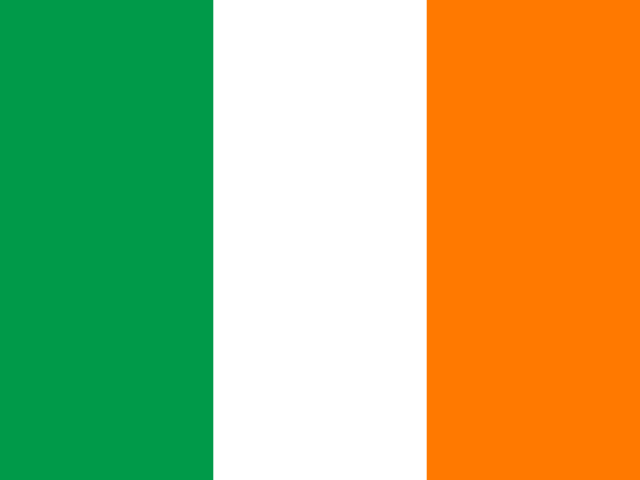
Flagpoles and flag flying in Ireland
Published Written by Flagpole Guides
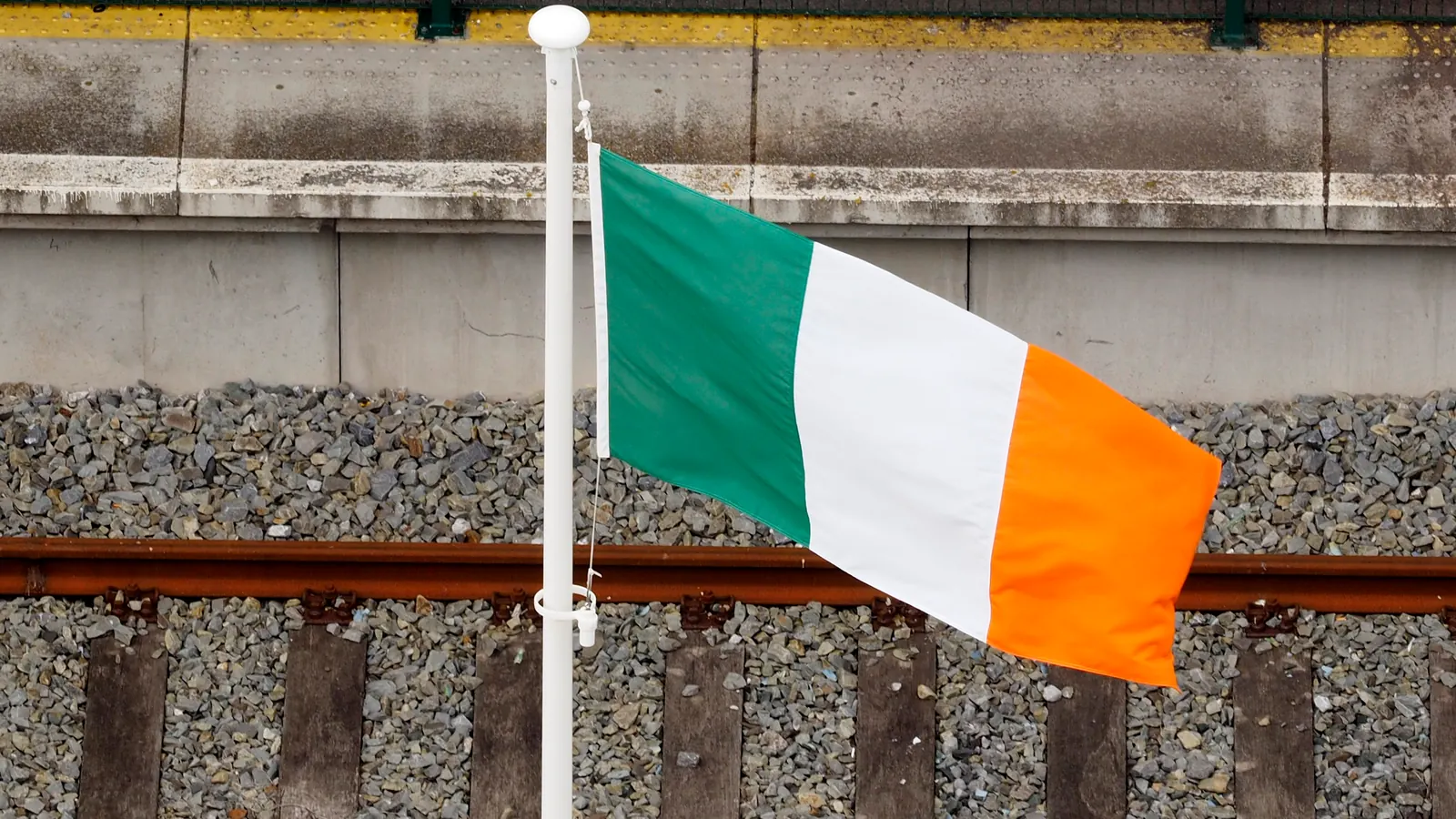
The tricolour of green, white and orange flies over Government Buildings in Dublin, over barracks, county halls and schools, from GAA grounds and at countless homes on St Patrick’s Day. Next to it come the flag of the European Union, county and provincial flags, club flags and company flags on flagpoles at business parks. The rules behind them are unusually light: the Constitution names the flag, and the Department of the Taoiseach publishes guidelines on how it is flown, but there is no flag law. Whether a flagpole may be put up is a matter for planning law and the local council. This section brings together what applies to flag flying and flagpoles in Ireland, with sources from Irish legislation and government bodies.
The essentials
- Flag days: The guidelines name five days on which the National Flag flies from all State buildings, from the St Brigid’s Day public holiday to the National Day of Commemoration. The dates are in the guide to flag days.
- Who may fly flags: Anyone can fly the tricolour, and the guidelines have no statutory force. The details are in the guide to flag flying rules.
- Half-mast: Two-thirds of the way up, with at least the depth of the flag between flag and top, never below the middle of the pole. More in the guide to half-mast.
- Size: The flag is twice as wide as it is high and may be made to any convenient size. The flag size calculator shows the size an Irish supplier lists for each pole height.
- Buying: What affects the price is explained in the guides to buying a flagpole and buying a flag.
- Planning: There is no specific exemption for flagpoles put up by individuals, and the council can give a section 5 declaration. More in the guide to installing a flagpole.
Constitution, guidelines and responsible bodies
Article 7 of Bunreacht na hÉireann, the Constitution of Ireland, states: “The national flag is the tricolour of green, white and orange.” The flag was adopted by the Irish Free State in 1922 and formally confirmed as the National Flag in the Constitution of 1937.
Beyond that article there are no statutory requirements. The Department of the Taoiseach has general responsibility for the National Flag, and its role is advisory: it publishes the guidelines “The National Flag”, most recently updated in September 2025, which cover the design of the flag, when and where it is flown, the order of flags, half-mast, funerals, hoisting and lowering, and respect for the flag. According to the Department, observing the guidelines is a matter for each person, and the flag is expected to be treated with appropriate respect at all times.
The State’s own emblem is not the flag but the harp. It appears on the seal of the President, on Irish coins and, as a gold harp with silver strings on blue, on the flag of the President.
| Level | What it covers |
|---|---|
| Constitution | Article 7 defines the National Flag |
| Department of the Taoiseach | Guidelines on the National Flag, advice on half-mast |
| Department of Enterprise | Consent to use the State emblems, such as the harp, in business |
| Local councils | Planning permission and section 5 declarations under the Planning and Development Act 2000 |
The flagpole in Ireland
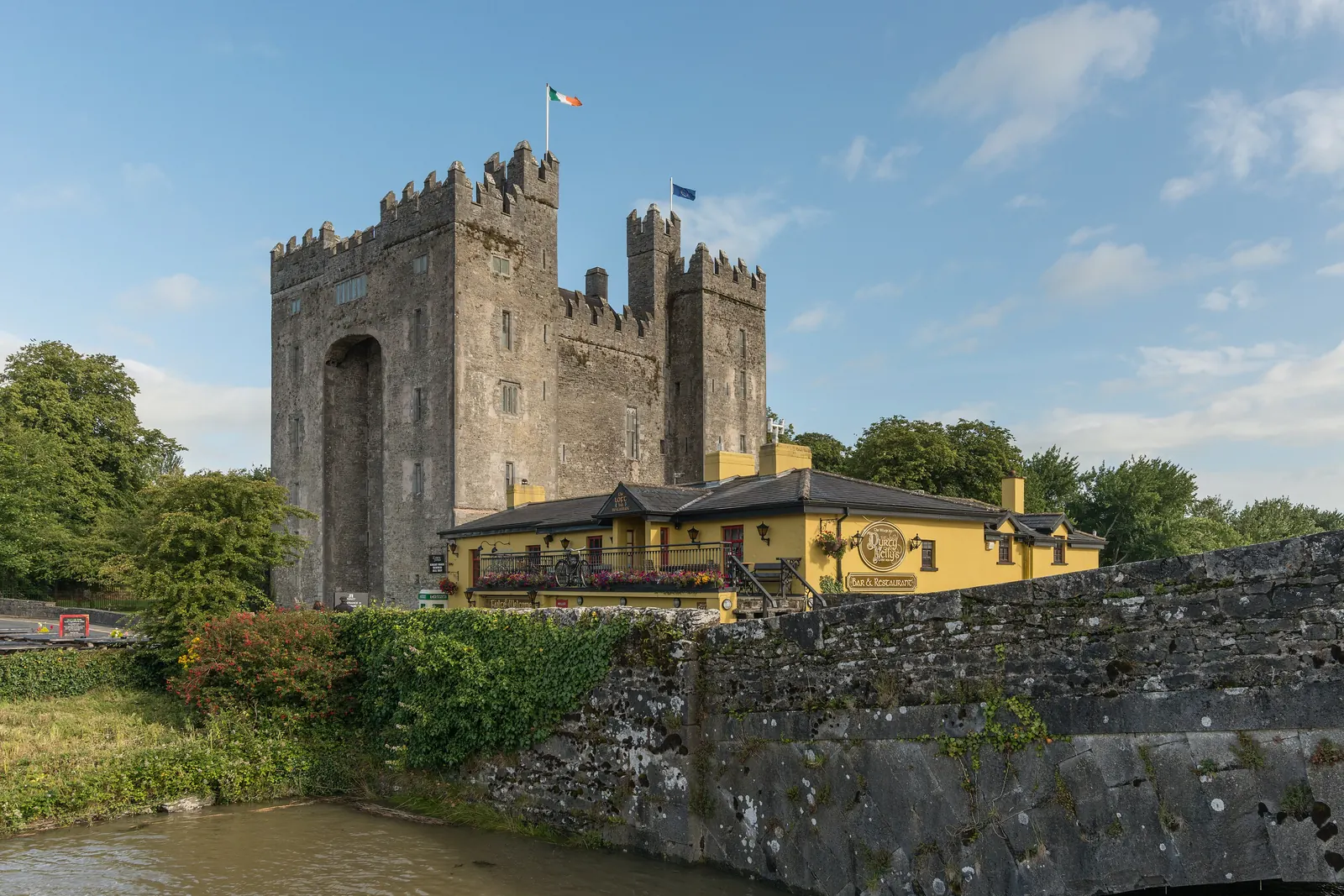
There are no national rules on what a flagpole must look like. Under the Planning and Development Act 2000, all development needs planning permission unless it is exempted, and the Planning and Development Regulations 2001 exempt flags and flagpoles of State authorities and a single roof-mounted business flag. In 2012 the Minister of State told the Dáil that there is no specific exemption for flagpoles erected by individuals. An Irish flagpole supplier lists a 900 × 1800 mm flag for poles of 2 to 7 metres and larger flags for taller poles. More in the guides to types of flagpoles and flagpole heights.
Northern Ireland is part of the United Kingdom, and its flag rules are covered in the guides to the United Kingdom.
About the guides
The guides below are sorted by topic. Each covers one subject, ends with frequently asked questions and lists its sources, and shows when it was last updated. The flag days are shown for 2026 and 2027, following the guidelines of the Department of the Taoiseach and the public holidays set by law.
All guides
Flag flying and protocol
When and how the National Flag is flown in Ireland – from St Patrick’s Day and Easter to half-mast, funerals, the place of honour and flags of other nations.
- Flag daysThe days on which the Irish National Flag flies from all State buildings in 2026 and 2027, from St Brigid’s Day and St Patrick’s Day to Easter and July.
- Flag flying rulesThe rules for flying the Irish flag: the Constitution, the Taoiseach’s guidelines, sunrise to sunset, lighting at night, respect for the flag and disposal.
- Half-mastHalf-mast in Ireland: two-thirds up the pole, at least the flag’s depth from the top, never below the middle – and who decides when the tricolour is lowered.
- Flags in mourningThe Irish flag in times of mourning: half-mast on government buildings, the flag on a coffin with the green at the head, folding the flag and dipping it.
- Flags on public holidaysIreland’s ten public holidays and the flag: which are flag days, how the dates are set, St Brigid’s Day and Easter Monday, and bank holidays in 2026 and 2027.
- Flag protocolIrish flag protocol: the place of honour, one National Flag per group, the tricolour with the EU flag, crossed staffs, platforms, parades and flags on walls.
- Foreign flagsFlying the flag of another country in Ireland: same size and height, the place of honour for the tricolour, the EU flag, embassies and Northern Ireland.
The flag
The tricolour and the other flags and emblems of the State, flag sizes, what affects the price of a flag, and a calculator for the flag size on a flagpole.
- Flags of IrelandThe flags and emblems of Ireland: the tricolour, the President’s flag with the harp, the EU flag, the historic green harp flag, county and provincial flags.
- Flag sizesFlag sizes for Irish flagpoles: the 2:1 proportions of the tricolour, a supplier’s chart from 2 to 12 metres, common sizes in mm and feet, and why size matters.
- Flag size calculatorCalculator for Irish flagpoles: the flag size an Irish supplier lists for the pole height, and the half-mast positions from the Taoiseach’s guidelines.
- The Irish flagWhat the Irish tricolour means: green, white and orange, Thomas Francis Meagher’s words of 1848, the 2:1 design, Pantone colours and why gold is not orange.
- Buying a flagWhat affects the price of a flag in Ireland: size, printed or woven polyester, finish, custom designs and VAT – and consumer rights under Irish law.
The flagpole
Types, materials, heights, accessories, lighting and what affects the price of a flagpole – and how the tricolour came to fly over Ireland.
- Types of flagpolesThe main types of flagpole in Ireland: ground-mounted, sleeved and hinged-base poles, wall-mounted poles, indoor staffs, banner poles and roof flagstaffs.
- Flagpole materialsFlagpole materials compared for Irish conditions: fibreglass, aluminium, steel and timber, with weights, maintenance, salt air and wind in mind.
- Flagpole heightsCommon flagpole heights in Ireland from 2 to 12 metres, the flag size for each, spacing between poles, and what height means for planning and safety.
- Flagpole accessoriesThe parts and accessories of a flagpole in Ireland: finials, halyards, weights, cleats, doors, base covers, fixings, banner arms and LED lighting.
- How a flagpole worksHow a flagpole works: the halyard and truck, internal and external systems, counterweights, hinged bases, hoisting to half-mast and the Irish guidelines.
- Flag lightingFlying the Irish flag at night: what the Taoiseach’s guidelines say about illumination, spotlights and pole-mounted LEDs, funerals, and planning for lit signs.
- HistoryFrom the green harp flag of the 1640s to Meagher’s tricolour in Waterford in 1848, the GPO in 1916, the Free State in 1922 and the Constitution of 1937.
- Buying a flagpoleWhat affects the price of a flagpole in Ireland: height, material, halyard system, base, installation, planning and VAT – and consumer rights when buying.
Installation, safety and care
Planning permission and exempted development, foundations, safety near power lines, maintenance and transport – for homes, schools, clubs and businesses.
- Installing a flagpoleInstalling a flagpole in Ireland: exempted development, section 5 declarations, protected structures, foundations, underground services and power lines.
- Flagpole safetyFlagpole safety in Ireland: Met Éireann wind warnings, overhead lines and ESB Networks, Dial Before You Dig, work at height rules and flagpoles at schools.
- Flagpole maintenanceFlagpole maintenance in Ireland: yearly servicing, halyards and pulleys, cleaning, flag changes, storm preparation and caring for the flag itself.
- Flagpole repairCommon flagpole faults in Ireland and their causes: jammed halyards, flags stuck at the top, worn pulleys, broken poles, loose bases – and repair services.
- LifespanHow long flagpoles and flags last in Ireland: warranties, fibreglass poles in use for 30 years, coastal wind and salt, flag wear, and consumer rights.
- Transporting a flagpoleCarrying a flagpole on Irish roads: the 3-metre rear projection limit, the red warning flag over 1 metre, side projection, weights and power lines on site.
- Flagpoles for businessesCompany flags in Ireland: advertisement rules in the planning regulations, the roof flag exemption, the harp and State emblems, protocol and safety at work.
Frequently asked questions
Is there a law on how the Irish flag is flown?
No. Article 7 of the Constitution states that the national flag is the tricolour of green, white and orange, but there are no statutory requirements on how it is flown. The Department of the Taoiseach publishes guidelines, and according to the Department, observing them is a matter for each person.
Can anyone fly the Irish flag?
Yes. The guidelines of the Department of the Taoiseach describe how the National Flag is flown by the State and note that many private individuals and businesses also fly it on the main flag days. They expect the flag to be treated at all times with appropriate respect by those who use it.
Does a flagpole need planning permission in Ireland?
Under the Planning and Development Act 2000, all development needs planning permission unless it is exempted. The Planning and Development Regulations 2001 exempt flags and flagpoles of State authorities and one roof-mounted business flag, but according to a 2012 ministerial answer there is no specific exemption for flagpoles erected by individuals. A section 5 declaration from the council settles whether a particular flagpole is exempt.
What are the Irish flag days?
According to the guidelines, the National Flag is flown from all State buildings with a flagpole on the St Brigid’s Day/Imbolc public holiday, St Patrick’s Day, Easter Sunday and Easter Monday, and the National Day of Commemoration on the Sunday closest to 11 July. It is also flown daily at all military posts and at a limited number of State buildings.
How far down is a flag at half-mast in Ireland?
The guidelines describe half-mast as two-thirds of the way up the flagpole, with at least the depth of the flag between its top and the top of the pole. The flag is never below the middle point of the staff.
Sources
This guide is based on the following sources:
- Bunreacht na hÉireann – Constitution of Ireland, Article 7 – Irish Statute Book
- The National Flag – Department of the Taoiseach
- The National Flag – Guidelines (September 2025) – Department of the Taoiseach
- The Harp – Department of the Taoiseach
- Planning and Development Regulations 2001 (S.I. No. 600 of 2001), Schedule 2 – Irish Statute Book
- Planning Issues – written answer on flagpoles, 21 March 2012 – Houses of the Oireachtas
- Public holidays – Citizens Information