Flying flags on public holidays in Ireland
Published Written by Flagpole Guides
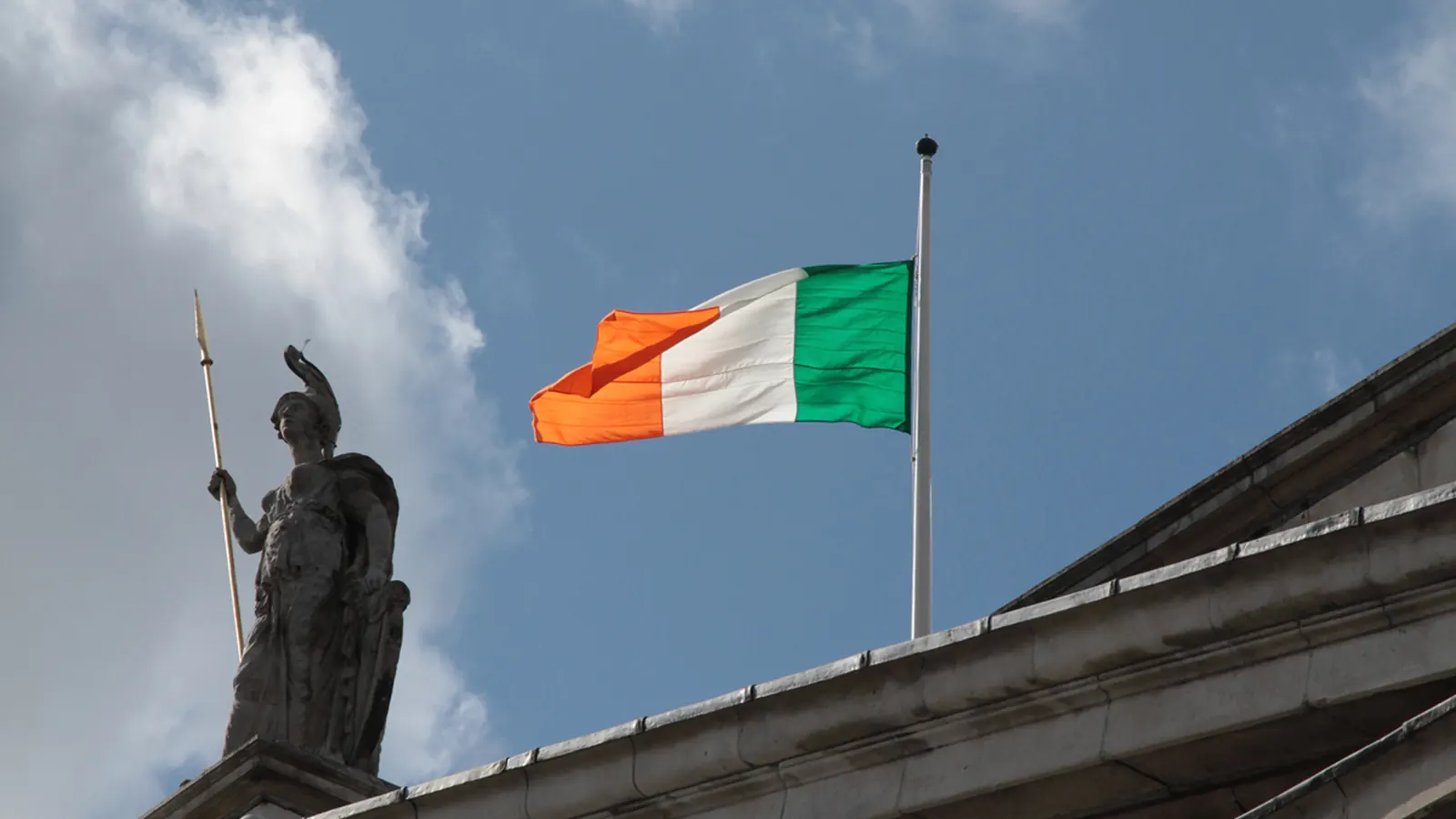
Ireland has ten public holidays a year, often called bank holidays. They are set out in the Organisation of Working Time Act 1997, which also governs employees’ entitlements on those days. Three of them are flag days on which the National Flag flies from all State buildings, according to the guidelines of the Department of the Taoiseach; on the rest, flying the flag is a matter for each owner of a flagpole.
The public holidays
| Public holiday | Date | 2026 | 2027 | Flag day under the guidelines |
|---|---|---|---|---|
| New Year’s Day | 1 January | 1 January | 1 January | No |
| St Brigid’s Day | First Monday in February, or 1 February if that is a Friday | 2 February | 1 February | Yes |
| St Patrick’s Day | 17 March | 17 March | 17 March | Yes, the National Holiday |
| Easter Monday | Monday after Easter | 6 April | 29 March | Yes, in commemoration of 1916 |
| May bank holiday | First Monday in May | 4 May | 3 May | No |
| June bank holiday | First Monday in June | 1 June | 7 June | No |
| August bank holiday | First Monday in August | 3 August | 2 August | No |
| October bank holiday | Last Monday in October | 26 October | 25 October | No |
| Christmas Day | 25 December | 25 December | 25 December | No |
| St Stephen’s Day | 26 December | 26 December | 26 December | No |
The dates are those listed by Citizens Information. Two flag days are not public holidays: Easter Sunday and the National Day of Commemoration on the Sunday closest to 11 July. All flag days are in the guide to flag days.
St Brigid’s Day
The newest public holiday marks St Brigid’s Day on 1 February. According to Citizens Information, the number of public holidays rose from nine to ten in 2022, and the holiday has been held since 2023. It falls on the first Monday in February, except when 1 February is a Friday; then the Friday itself is the public holiday. The guidelines name it as St Brigid’s Day/Imbolc (Public Holiday) among the days on which the flag flies from State buildings.
St Patrick’s Day
17 March is the National Holiday. It is the one public holiday on which the tricolour is seen almost everywhere: on State buildings, homes, shops and in parades in every town. The guidelines point out that yellow or gold instead of orange is a misrepresentation of the flag, and that slogans, logos or pictures on the flag are never used, also at festive occasions. Bunting in the national colours may be used on festive occasions, and where several National Flags fly, they are of uniform size.
Easter
Easter Sunday and Easter Monday are flag days in commemoration of the Rising of 1916. Only Easter Monday is a public holiday. Easter is the only public holiday that moves significantly from year to year: according to Citizens Information, Easter Sunday is the first Sunday after the first full moon on or after 21 March, so it falls between 22 March and 25 April. Good Friday is not a public holiday, although some schools and businesses close.
Bank holidays and Christmas
The four bank holiday Mondays in May, June, August and October, as well as New Year’s Day, Christmas Day and St Stephen’s Day, are not flag days under the guidelines. Nothing prevents flags from flying on them, and the guidelines note that the National Flag is also flown at significant national and local events such as festivals and commemorations.
Hours on a holiday
On public holidays the usual hours apply: the flag is normally flown in the open from sunrise to sunset. The guidelines give fixed times, from 08:00 to 20:00 in the summer months and from 08:30 to 15:30 in December and January. After dark, the flag may stay up if it is properly illuminated, as described in the guide to flag lighting.
When a holiday falls on a weekend
A public holiday stays on its date even when it falls on a Saturday or Sunday. According to Citizens Information, employees are still entitled to benefit for the public holiday, but there is no automatic legal right to have the next working day off. St Patrick’s Day, Christmas Day and St Stephen’s Day can fall on a weekend; St Brigid’s Day, Easter Monday and the bank holidays always fall on a Monday or, for St Brigid’s Day, sometimes a Friday.
Frequently asked questions
How many public holidays are there in Ireland?
Ten, according to Citizens Information. The number rose from nine in 2022, and the new public holiday for St Brigid’s Day has been held each year since 2023.
Which public holidays are flag days?
According to the guidelines of the Department of the Taoiseach, the National Flag is flown from all State buildings on the St Brigid’s Day/Imbolc public holiday, St Patrick’s Day and Easter Monday. The other public holidays are not named in the guidelines.
Is Good Friday a public holiday in Ireland?
No. According to Citizens Information, Good Friday is not a public holiday, although some schools and businesses close on that day. Easter Sunday is a flag day, but not a public holiday.
What happens when a public holiday falls on a weekend?
The public holiday stays on its date. According to Citizens Information, employees are still entitled to benefit for it, but there is no automatic legal right to have the next working day off.
Sources
This guide is based on the following sources:
- Public holidays – Citizens Information
- The National Flag – Guidelines (September 2025), section 5 – Department of the Taoiseach
Related guides
- Flag daysThe days on which the Irish National Flag flies from all State buildings in 2026 and 2027, from St Brigid’s Day and St Patrick’s Day to Easter and July.
- Flag flying rulesThe rules for flying the Irish flag: the Constitution, the Taoiseach’s guidelines, sunrise to sunset, lighting at night, respect for the flag and disposal.
- Flags of IrelandThe flags and emblems of Ireland: the tricolour, the President’s flag with the harp, the EU flag, the historic green harp flag, county and provincial flags.
- Flag lightingFlying the Irish flag at night: what the Taoiseach’s guidelines say about illumination, spotlights and pole-mounted LEDs, funerals, and planning for lit signs.