Flag flying rules in Ireland
Published Written by Flagpole Guides
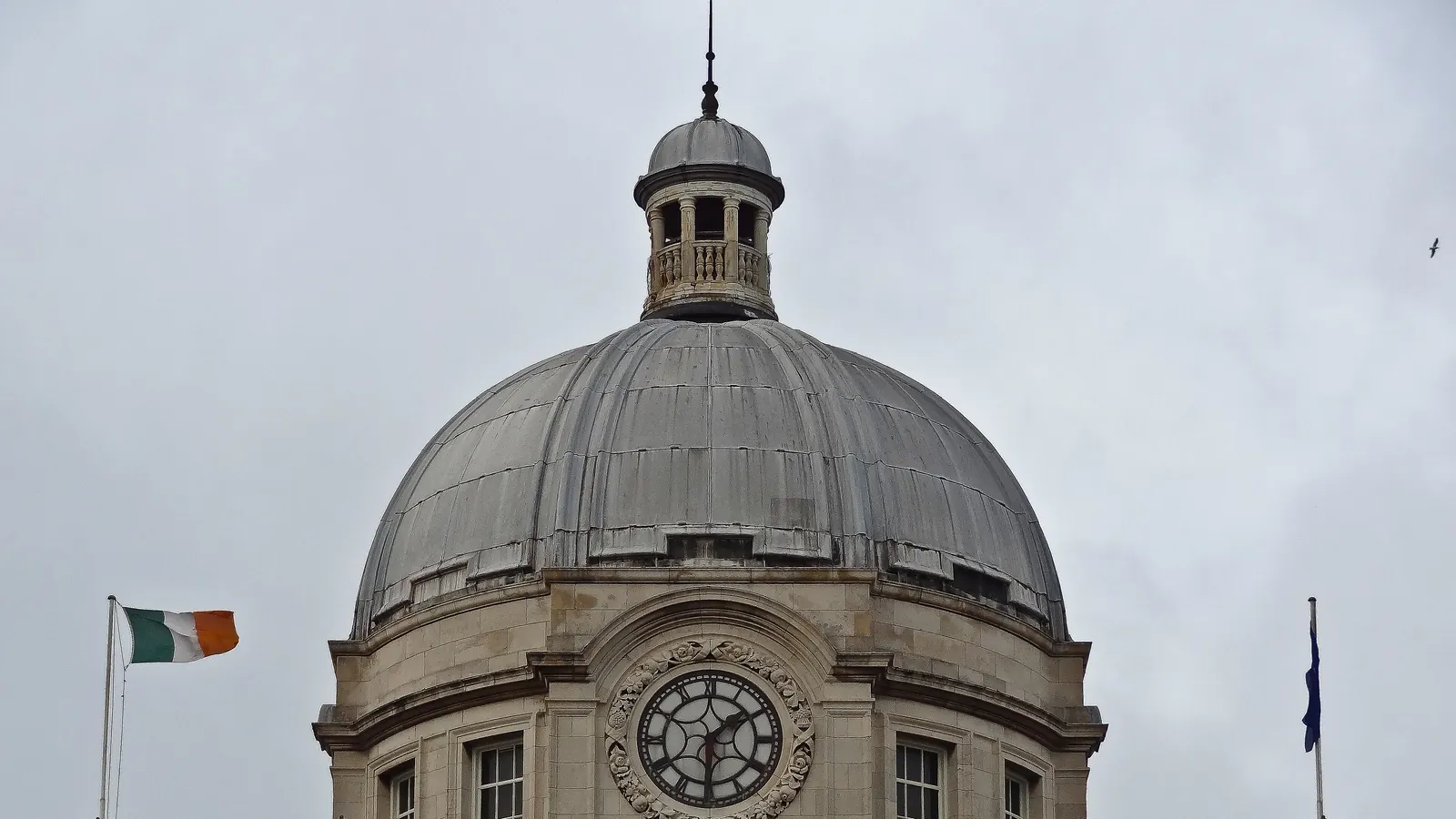
Flying the tricolour in Ireland rests on one sentence of the Constitution and a set of guidelines without force of law. Article 7 of Bunreacht na hÉireann states that the national flag is the tricolour of green, white and orange. How it is flown is described in “The National Flag”, the guidelines of the Department of the Taoiseach, which were updated in September 2025.
The guidelines say it plainly: there are no statutory requirements, so observing the guidelines is a matter for each person, and it is expected that the National Flag will be treated at all times with appropriate respect by those who use it. The Department’s role is advisory.
Who may fly the flag
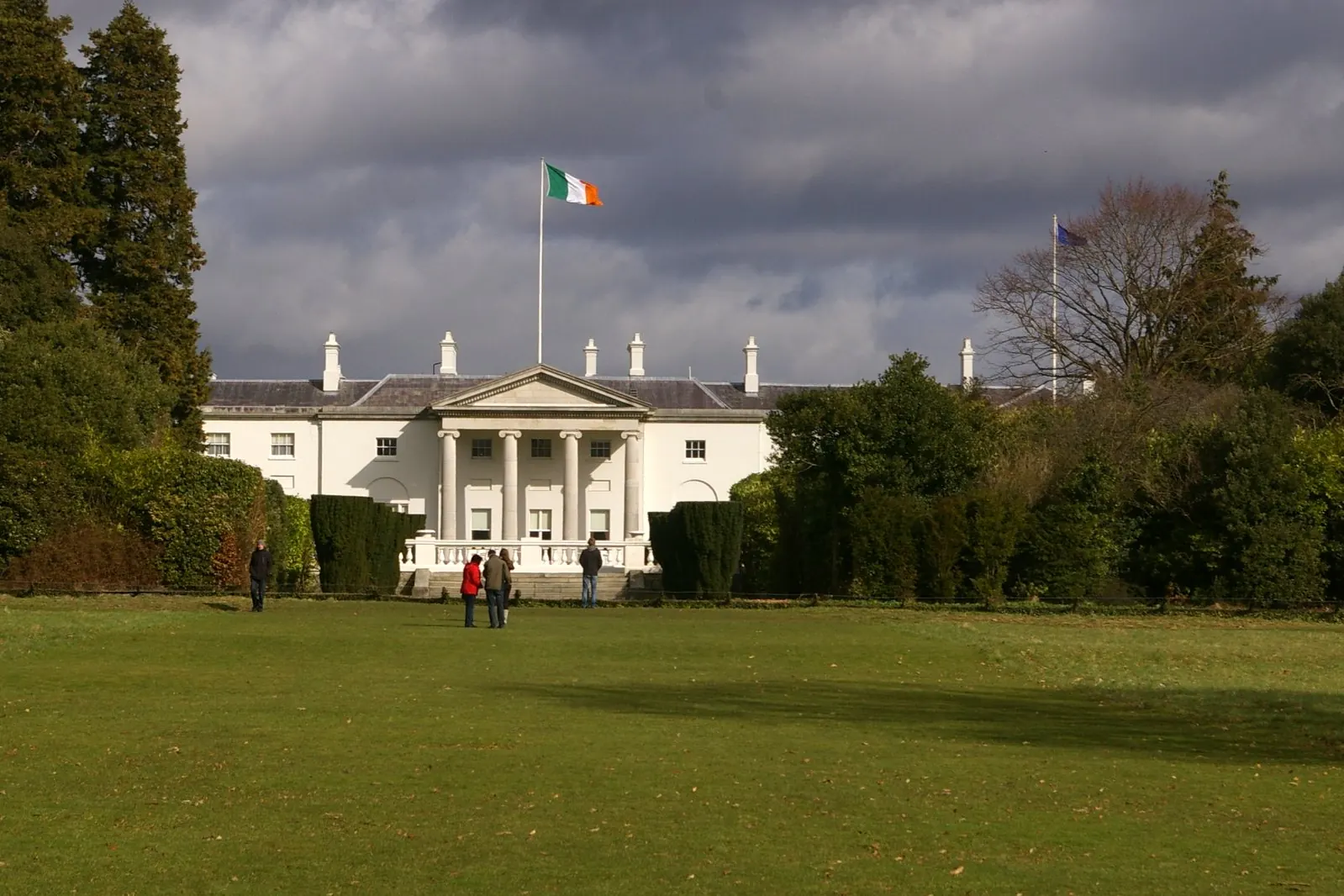
Anyone. The guidelines describe how the flag is flown at military posts and State buildings and note that many private individuals and businesses also fly it on the flag days. Homes, schools, sports clubs, churches and companies are free to fly the National Flag every day of the year; the question of whether a flagpole can be put up is a matter for planning law, covered in the guide to installing a flagpole.
The National Flag is not a State emblem. According to the Department of Enterprise, Tourism and Employment, the official State emblems are the harp and the shamrock, while the National Flag is protected under the Constitution. Using the harp in business needs ministerial consent, as described in the guide to flags of Ireland.
The design
| Rule | According to the guidelines |
|---|---|
| Shape | Rectangular, the width twice the depth (2:1) |
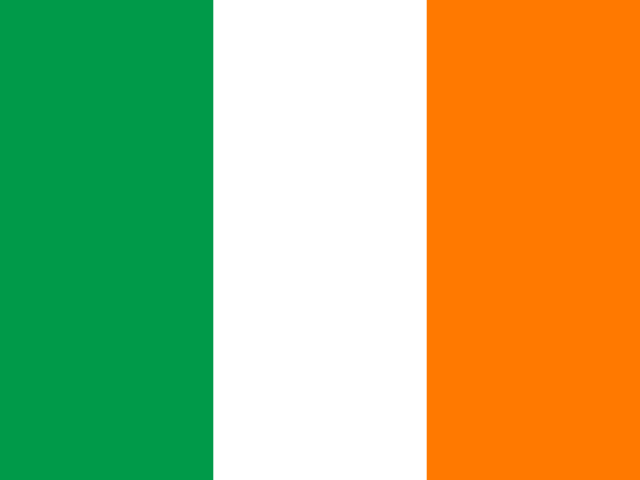
| Colours | Green, white and orange of equal size, vertically disposed |
| At the staff | Green next to the staff, white in the middle, orange farthest from it |
| Size | Any convenient size, provided the proportions are observed |
| Colour codes | Green Pantone 347, orange Pantone 151 |
Shades of yellow or gold instead of orange, sometimes seen at civilian functions, are described in the guidelines as a misrepresentation of the National Flag that is to be actively discouraged. A gold fringe or tassels are a long-standing international tradition; the fringe is not part of the flag and can be used indoors and on ceremonial occasions outdoors. More about the colours in the guide to the Irish flag and its meaning.
Sunrise to sunset
According to the guidelines, the National Flag is normally displayed in the open only from sunrise to sunset, except at public meetings, processions or funerals, when it may be displayed for the duration of the function. It may also be flown by night as long as it is properly illuminated at all times, preferably by spotlight. The guidelines give fixed times for sunrise and sunset:
| Months | Sunrise | Sunset |
|---|---|---|
| January and December | 08:30 | 15:30 |
| February and November | 08:30 | 16:30 |
| March and October | 08:00 | 17:30 |
| April | 08:00 | 18:00 |
| May and September | 08:00 | 19:00 |
| June to August | 08:00 | 20:00 |
Lighting is described in the guide to flag lighting.
Hoisting and lowering
The guidelines state that the National Flag is not allowed to touch the ground when it is raised or lowered. On ceremonial occasions when the flag is hoisted or lowered, or passes in a parade, those present face it and stand to attention; people in uniform give the hand salute and people in civilian dress salute by standing to attention. When the national anthem, Amhrán na bhFiann, is played in the presence of the flag, all present face the flag and remain at the salute until the last note.
Respect for the flag
The guidelines list several things that are not done with the National Flag:
- it does not touch the ground, trail in water or become entangled in trees or other obstacles
- it is never defaced by slogans, logos, lettering or pictures of any kind, for example at sporting events
- it is not draped on cars, trains, boats or other modes of transport
- it is not carried flat, but always aloft and free, except when it drapes a coffin
- on a platform, it is not used to cover the speaker’s desk or draped over the platform
The flag may be used as decoration with due respect: as a discreet lapel button or rosette, or in a small version as part of a table centrepiece. Where more than one National Flag is flown on festive occasions, they are of uniform size, and bunting in the national colours may also be used. The same principles of respect apply when the flag is reproduced in print or electronic form.
Worn flags
Wind and weather wear flags out, especially on exposed sites. According to the guidelines, a worn or frayed National Flag is no longer fit for display and is not used in any manner implying disrespect; it is destroyed or disposed of in a dignified way. How long a flag lasts is covered in the guide to flagpole and flag lifespan.
Other flags
When the National Flag flies with other flags, it is in the place of honour, and no flag or pennant flies above it. Only one National Flag is displayed in each group of flags or at each location. The order of flags is explained in the guide to flag protocol.
Frequently asked questions
Is it illegal to fly the Irish flag wrongly?
There is no flag law in Ireland. Article 7 of the Constitution defines the National Flag, and the Department of the Taoiseach publishes guidelines on how it is flown, but according to the Department there are no statutory requirements and observing the guidelines is a matter for each person.
Can the Irish flag be flown at night?
Yes, as long as it is lit. According to the guidelines, the National Flag is normally displayed in the open only from sunrise to sunset, but it may be flown by night as well as by day as long as it is properly illuminated at all times, preferably by a spotlight.
What times count as sunrise and sunset?
The guidelines give fixed times: sunrise at 08:00 from March to October and 08:30 from November to February, and sunset between 15:30 in December and January and 20:00 from June to August.
Can the flag be flown with a fringe?
Yes. According to the guidelines, a gold fringe or tassels are a long-standing international tradition and are not considered part of the flag, so they can be used when the flag is displayed indoors or on ceremonial occasions outdoors. Lettering or emblems on the flag are never used.
What happens to a worn Irish flag?
According to the guidelines, a worn or frayed National Flag is no longer fit for display and is not used in any manner implying disrespect. It is destroyed or disposed of in a dignified way.
Sources
This guide is based on the following sources:
- Bunreacht na hÉireann – Constitution of Ireland, Article 7 – Irish Statute Book
- The National Flag – Guidelines (September 2025) – Department of the Taoiseach
- The National Flag – Department of the Taoiseach
- Protection and use of State emblems – Department of Enterprise, Tourism and Employment
Related guides
- Flag daysThe days on which the Irish National Flag flies from all State buildings in 2026 and 2027, from St Brigid’s Day and St Patrick’s Day to Easter and July.
- Half-mastHalf-mast in Ireland: two-thirds up the pole, at least the flag’s depth from the top, never below the middle – and who decides when the tricolour is lowered.
- Flag protocolIrish flag protocol: the place of honour, one National Flag per group, the tricolour with the EU flag, crossed staffs, platforms, parades and flags on walls.
- Flag lightingFlying the Irish flag at night: what the Taoiseach’s guidelines say about illumination, spotlights and pole-mounted LEDs, funerals, and planning for lit signs.
- Flags of IrelandThe flags and emblems of Ireland: the tricolour, the President’s flag with the harp, the EU flag, the historic green harp flag, county and provincial flags.