History of the flag and flagpole in Ireland
Published Written by Flagpole Guides
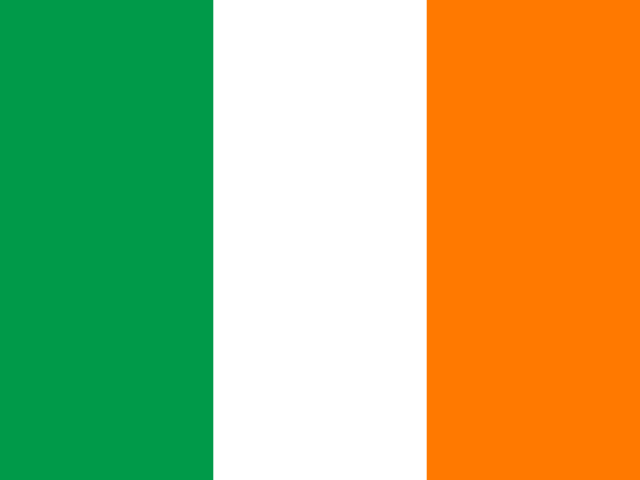
The history of the flag in Ireland is the history of two symbols: the harp, recorded as the arms of Ireland since the Middle Ages, and the tricolour, first flown in 1848 as a flag of peace between two traditions. The Department of the Taoiseach tells the story of the tricolour in the first section of its guidelines “The National Flag”.
The harp
The harp was first recorded as the arms of Ireland in medieval times. According to the Department of Enterprise, Tourism and Employment, it appears alongside the arms of a dozen or more European kingdoms on a single folio of the Wijnbergen roll of arms, a Flemish roll compiled about 1270. The model for today’s heraldic harp is the fourteenth-century Brian Boru harp, preserved in the Museum of Trinity College Dublin. Ireland is the only nation with a musical instrument as its national emblem.
The green flag with the harp
A green flag with a harp was an older symbol of Irish nationalists. According to the guidelines, it goes back at least to Confederate Ireland and Owen Roe O’Neill in the 1640s, was widely adopted by the Irish Volunteers in the 1780s and especially by the United Irishmen in the rebellion of 1798. A rival organisation, the exclusively Protestant Orange Order, was founded in 1795 in memory of King William of Orange and the “Glorious Revolution” of 1689.
1848: the first tricolour
Irish tricolours were mentioned in 1830 and 1844, but the flag was not widely recognised until 1848. From March that year, Irish tricolours appeared beside French ones at meetings all over the country celebrating the revolution that had just taken place in France.
On 7 March 1848, the Young Ireland leader Thomas Francis Meagher flew a tricolour from 33 The Mall in Waterford, where it flew continuously for a week until removed by the authorities. On the same day, a tricolour was reported carried in a parade to Vinegar Hill in Enniscorthy, County Wexford. In April, Meagher brought a tricolour from Paris to a meeting in Dublin and explained that the white in the centre signified a lasting truce between Orange and Green. John Mitchel, also of Young Ireland, said he hoped to see the flag one day waving as the national banner.
Between 1848 and 1916
The tricolour was not forgotten, but according to the guidelines it was little used between 1848 and 1916. The early flags were not standardised: orange was sometimes next to the staff, one flag had the order orange, green and white, a flag of green, orange and blue for Catholics, Protestants and Presbyterians was proposed in 1850, and a Parnellite tricolour of yellow, white and green, arranged horizontally, is recorded in 1883. Up to the eve of the Rising, the green flag with the harp held undisputed sway.
1916: the flag over the GPO
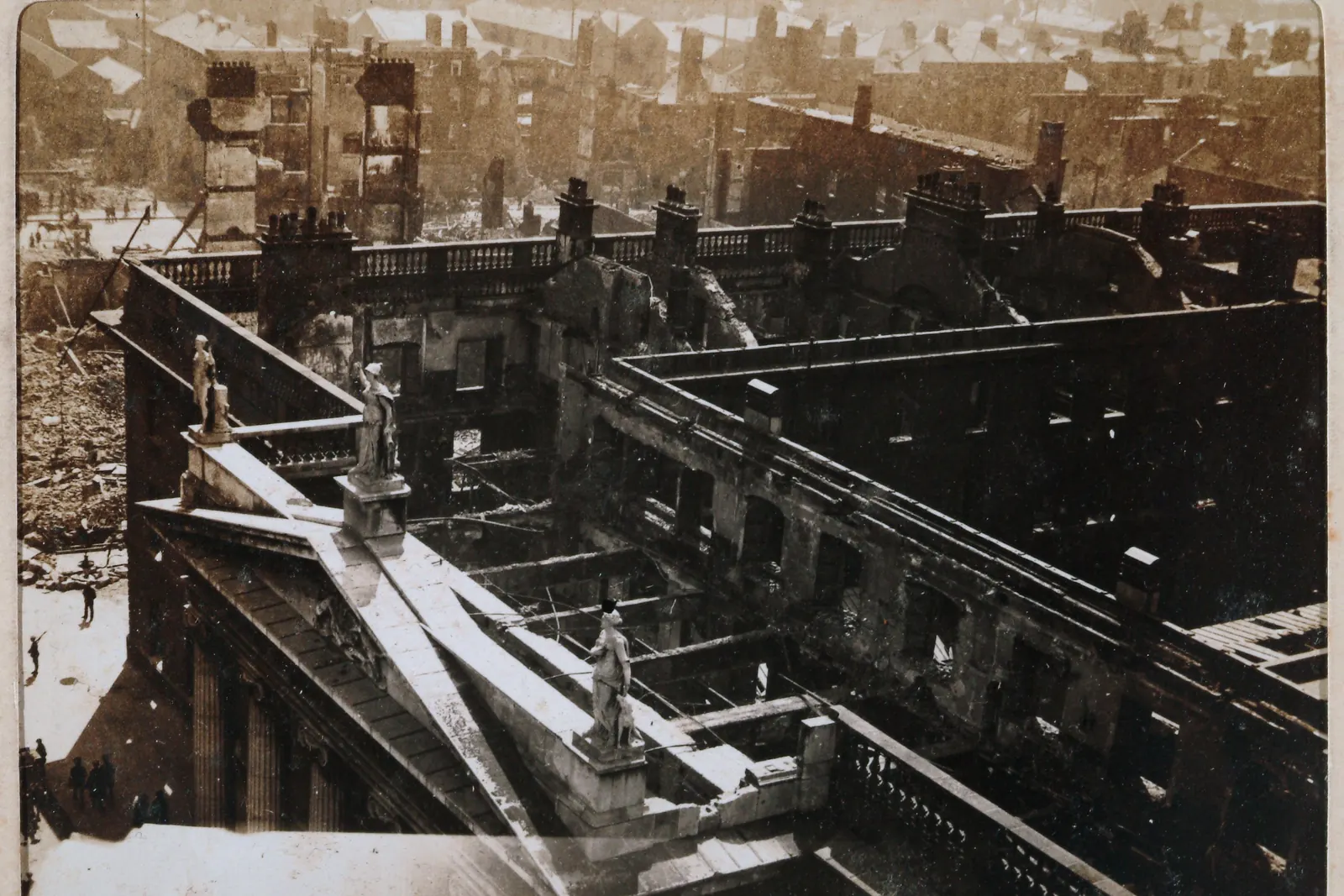
On Easter Monday 1916, the tricolour was flown over the General Post Office in Dublin, together with a large green flag inscribed “Irish Republic”. The Citizen Army flag, with a stylised plough and the stars of Ursa Major on green, flew on the Imperial Hotel on O’Connell Street. Flown during the Rising and capturing the national imagination as the banner of a new, revolutionary Ireland, the tricolour came to be accepted as the National Flag. Easter Sunday and Easter Monday are flag days in commemoration of the Rising, as described in the guide to flag days.
1922 and 1937
The tricolour was adopted as the flag of the Irish Free State in 1922 and used officially from 1922 to 1937. In 1937 the new Constitution formally confirmed its position in Article 7: “The national flag is the tricolour of green, white and orange.” The guidelines on how the flag is flown are published by the Department of the Taoiseach and were last updated in September 2025.
The flagpole
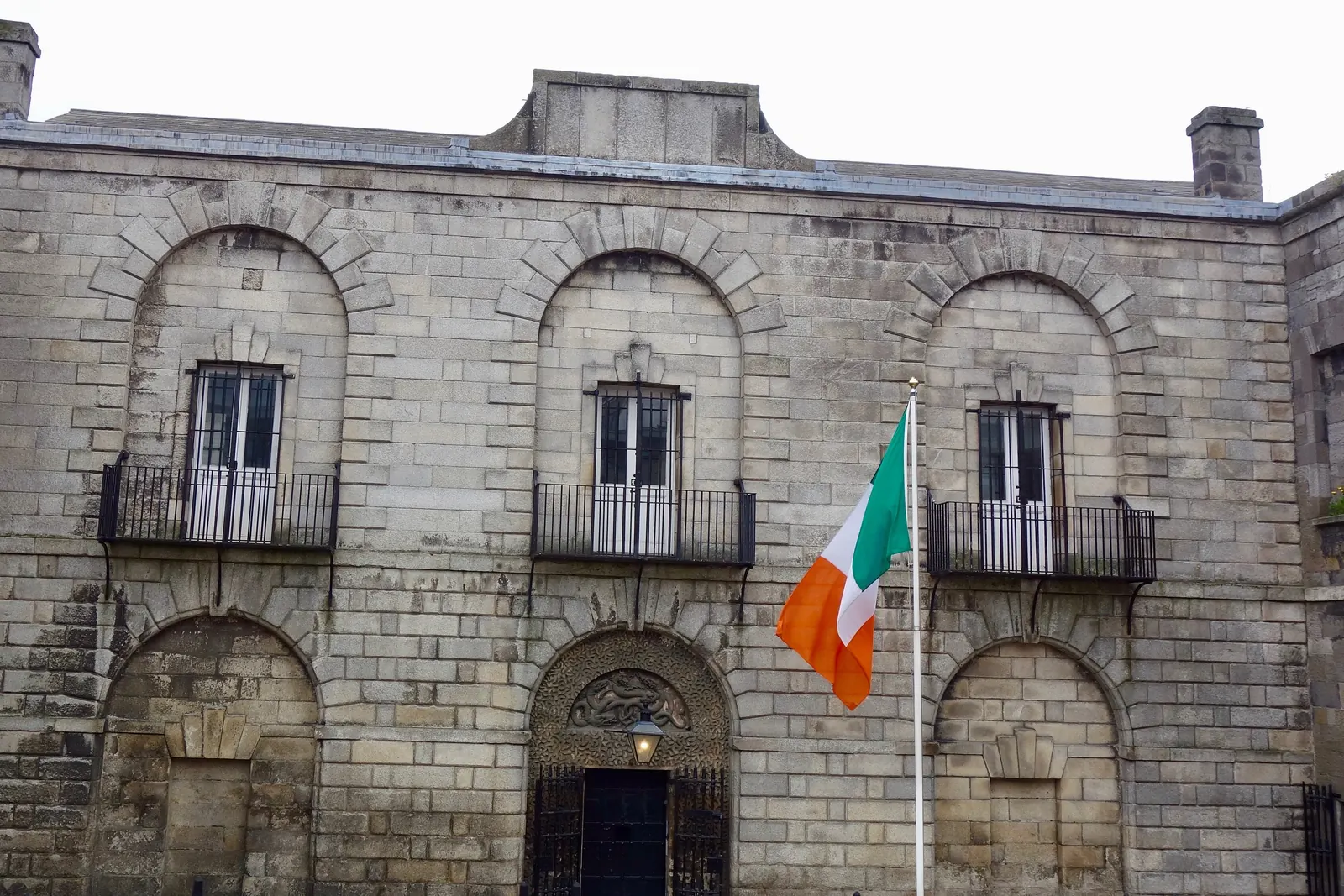
The flagstaffs of 1848 and 1916 stood on buildings: a house on The Mall in Waterford, the roof of the GPO and a hotel on O’Connell Street. Today’s free-standing poles at homes, schools, clubs and business parks are mostly fibreglass or aluminium. An Irish supplier reports that some of the first fibreglass poles it installed, nearly 30 years ago, are still in use. How materials compare is described in the guide to flagpole materials.
The meaning today
The Department of the Taoiseach describes the tricolour as intended to symbolise the inclusion of, and the aspiration for unity between, people of different traditions on the island. More in the guide to the Irish flag and its meaning.
Frequently asked questions
When was the Irish tricolour first flown?
According to the Department of the Taoiseach, the flag was first flown from 33 The Mall in Waterford on 7 March 1848 by Thomas Francis Meagher, where it flew for a week until removed by the authorities. Irish tricolours are mentioned as early as 1830 and 1844, but did not gain wide recognition until 1848.
When did the tricolour become the national flag?
It was adopted as the flag of the Irish Free State in 1922 and formally confirmed as the National Flag in Article 7 of the Constitution of 1937.
What flag was used in Ireland before the tricolour?
A green flag with a harp, used by Irish nationalists from Confederate Ireland and Owen Roe O’Neill in the 1640s, by the Irish Volunteers in the 1780s and the United Irishmen in 1798. According to the guidelines, it still held undisputed sway on the eve of the Rising in 1916.
Which flags flew over the GPO in 1916?
The tricolour and a large green flag inscribed with the words “Irish Republic”. The Citizen Army flag, with a stylised plough and the stars of Ursa Major, flew on the Imperial Hotel on O’Connell Street.
Sources
This guide is based on the following sources:
- The National Flag – Department of the Taoiseach
- The National Flag – Guidelines (September 2025), section 1 – Department of the Taoiseach
- Bunreacht na hÉireann – Constitution of Ireland, Article 7 – Irish Statute Book
- Protection and use of State emblems – Department of Enterprise, Tourism and Employment
- FAQs – FlagPoles Ireland
Related guides
- The Irish flagWhat the Irish tricolour means: green, white and orange, Thomas Francis Meagher’s words of 1848, the 2:1 design, Pantone colours and why gold is not orange.
- Flag daysThe days on which the Irish National Flag flies from all State buildings in 2026 and 2027, from St Brigid’s Day and St Patrick’s Day to Easter and July.
- Flags of IrelandThe flags and emblems of Ireland: the tricolour, the President’s flag with the harp, the EU flag, the historic green harp flag, county and provincial flags.
- Flagpole materialsFlagpole materials compared for Irish conditions: fibreglass, aluminium, steel and timber, with weights, maintenance, salt air and wind in mind.