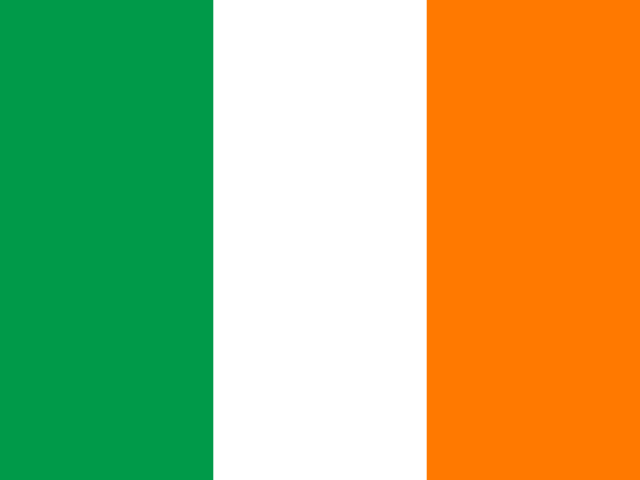
Half-mast in Ireland – position, procedure and occasions
Published Written by Flagpole Guides
Lowering the flag to half-mast is, in the words of the guidelines of the Department of the Taoiseach, a well-established procedure whereby countries bestow an honour and express a collective sense of sorrow. In Ireland the rules for it are in sections 8 and 10 of the guidelines “The National Flag”. As with the rest of the guidelines, there is no law behind them.
The position
The guidelines describe the half-mast position in three steps:
| Rule | According to the guidelines |
|---|---|
| Height | Two-thirds of the way up the flagpole |
| Space at the top | At least the depth of the flag between the top of the flag and the top of the pole |
| Lowest point | Any position below the top of the staff, but never below its middle point |
The space at the top is traditionally considered to leave room for “the invisible flag of death”. As a general guide, the guidelines take the half-mast position as that where the top of the flag is one flag depth below the top of the staff.
On a 6-metre flagpole with a 900 × 1800 mm flag, the size an Irish supplier lists for poles of that height, this means the top of the flag sits about 5.1 metres up, and the flag stays above 3 metres, the middle of the pole. The flag size calculator works out both points for other pole heights.
Hoisting and lowering
According to the guidelines, the flag is first brought to the peak of the staff and then lowered to the half-mast position. Before it is lowered for the day, it is again brought to the peak, and only then lowered. In raising or lowering, the flag does not touch the ground.
On a flagpole with a halyard, the half-mast position is set by how far the flag is lowered. How the halyard, cleat and truck work is described in the guide to how a flagpole works.
No other flags
Where the National Flag is flown at half-mast, no other flag is flown, according to the guidelines. At a business park or a hotel with a row of flagpoles, this means the company, county or foreign flags come down while the tricolour is at half-mast.
When the flag is lowered
The guidelines give three kinds of occasion:
- National or international figures: On the death of a national or international figure, the National Flag is flown at half-mast on all prominent government buildings equipped with a flagpole, under advice from the Department of the Taoiseach.
- Tragic events: The Department may also advise that the flag be flown at half-mast after other tragic events.
- Local figures: The death of a prominent local figure may be marked locally by flying the flag at half-mast.
There is no standing list of days on which the flag is at half-mast. The advice from the Department applies to government buildings; for councils, schools, clubs, businesses and private owners, following it is a matter of choice.
Day and night
A flag at half-mast follows the same hours as other flags: normally from sunrise to sunset. The guidelines allow a National Flag at half-mast to be displayed day and night for the duration of a funeral, provided the flag is illuminated. More in the guide to flag lighting.
Other signs of mourning
Half-mast is one of several ways the flag is used in mourning. The guidelines also describe how the flag drapes a coffin, with the green at the head, how it is folded after the funeral and when it is dipped during memorial ceremonies. Those customs are covered in the guide to flags in mourning.
Frequently asked questions
What does half-mast mean in Ireland?
According to the guidelines of the Department of the Taoiseach, half-mast means the flag is flown two-thirds of the way up the flagpole, with at least the depth of the flag between the top of the half-masted flag and the top of the flagpole. Traditionally, this is considered to leave space for the invisible flag of death.
How low can a flag at half-mast be?
The National Flag is at half-mast in any position below the top of the staff, but never below the middle point of the staff. As a general guide, the guidelines take the half-mast position as that where the top of the flag is the depth of the flag below the top of the staff.
Who decides when flags go to half-mast in Ireland?
On the death of a national or international figure, the National Flag is flown at half-mast on all prominent government buildings with a flagpole, under advice from the Department of the Taoiseach. The Department may also advise half-mast after other tragic events, and the death of a prominent local figure may be marked locally.
Can other flags fly while the tricolour is at half-mast?
According to the guidelines, no other flag is flown where the National Flag is flown at half-mast.
Can a flag stay at half-mast overnight?
The guidelines allow a National Flag at half-mast to be displayed day and night for the duration of a funeral, provided the flag is illuminated.
Sources
This guide is based on the following sources:
- The National Flag – Guidelines (September 2025), sections 8 and 10 – Department of the Taoiseach
- The National Flag – Department of the Taoiseach
- Flag size guideline – FlagPoles Ireland
Related guides
- Flags in mourningThe Irish flag in times of mourning: half-mast on government buildings, the flag on a coffin with the green at the head, folding the flag and dipping it.
- Flag daysThe days on which the Irish National Flag flies from all State buildings in 2026 and 2027, from St Brigid’s Day and St Patrick’s Day to Easter and July.
- Flag flying rulesThe rules for flying the Irish flag: the Constitution, the Taoiseach’s guidelines, sunrise to sunset, lighting at night, respect for the flag and disposal.
- How a flagpole worksHow a flagpole works: the halyard and truck, internal and external systems, counterweights, hinged bases, hoisting to half-mast and the Irish guidelines.