Foreign flags in Ireland
Published Written by Flagpole Guides
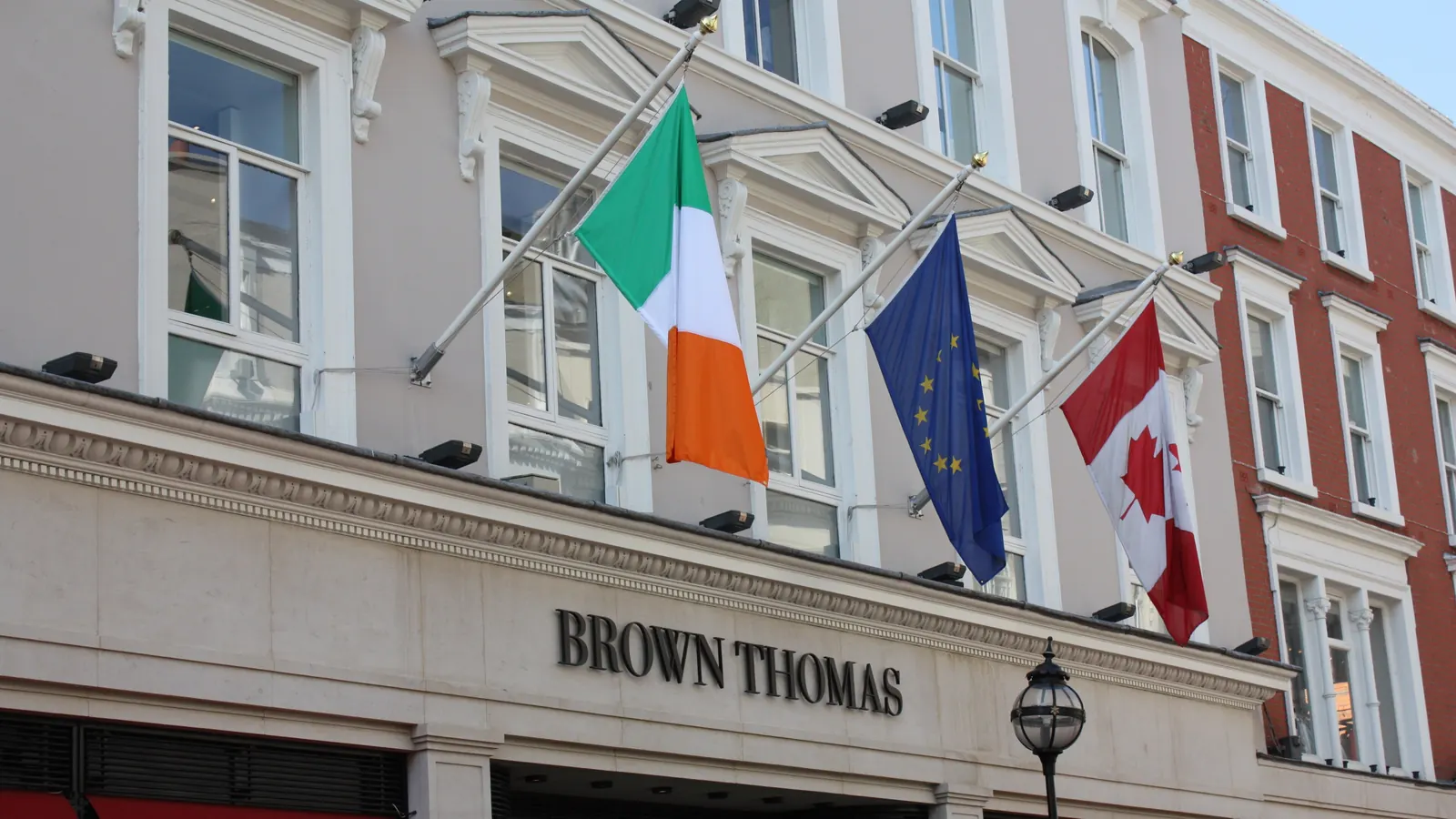
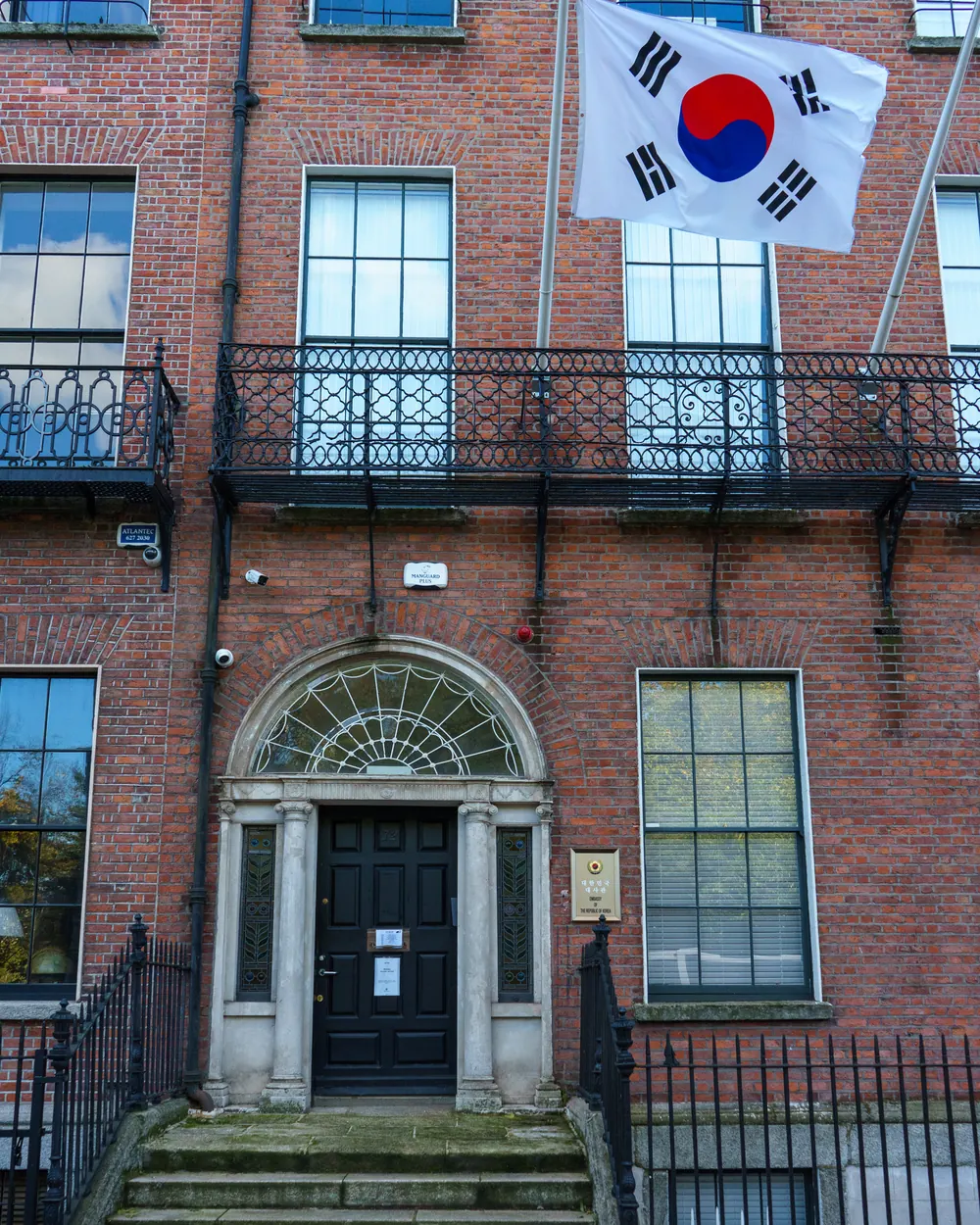
Flags of other countries are a common sight in Ireland: at embassies and consulates, at hotels and conference centres, at multinational companies with headquarters in Dublin or Cork, at sporting events and on homes with family ties abroad. There is no Irish law that restricts flying a foreign flag. The guidelines “The National Flag” of the Department of the Taoiseach describe how the tricolour and the flags of other nations are placed together.
Same size, same height
When the National Flag is flown with the flags of other nations, each flag has the same width and flies from a separate flagpole of the same height. The guidelines explain why: international protocol prohibits flying any nation’s flag higher than another in peacetime. If one flagpole happens to be higher than the rest, the National Flag is flown from that pole, and no additional National Flag can then be flown.
National flags come in different proportions. The tricolour is twice as wide as it is high, while many other flags are 3:2. Flags of the same width can therefore differ in depth. An Irish flagpole supplier notes that an oversized flag can look wrong and may cause offence to the country concerned.
The place of honour
The basic rules of Irish flag protocol also apply to foreign flags:
- no flag flies above the National Flag
- only one National Flag is displayed in each group of flags
- the National Flag is in the place of honour: first on the right of a line of flags, which is the observer’s left, or on the central staff when that staff is higher than the others
The full order of flags is explained in the guide to flag protocol.
The European Union flag
As a member of the European Union, Ireland often flies the EU flag beside the tricolour on public buildings. In a line of flags on staffs of equal height, the EU flag flies immediately to the right of the National Flag as seen by an observer. When the flags of all member states are flown, the EU flag is on the first flagstaff from the observer’s left, followed by the member states in alphabetical order of their names in their own languages, with Éire/Ireland between Eesti and Greece. An alternative order begins on the left with the National Flag and places the EU flag on the far right.
Carrying flags
In a parade, the National Flag is carried on the marching right, which is on the left of an observer towards whom the flags are approaching. With the EU flag, the EU flag is carried immediately to the right of the National Flag as seen by the observer. In a display of crossed staffs, the National Flag is to the right and to the fore, its staff in front of the others.
Half-mast and mourning
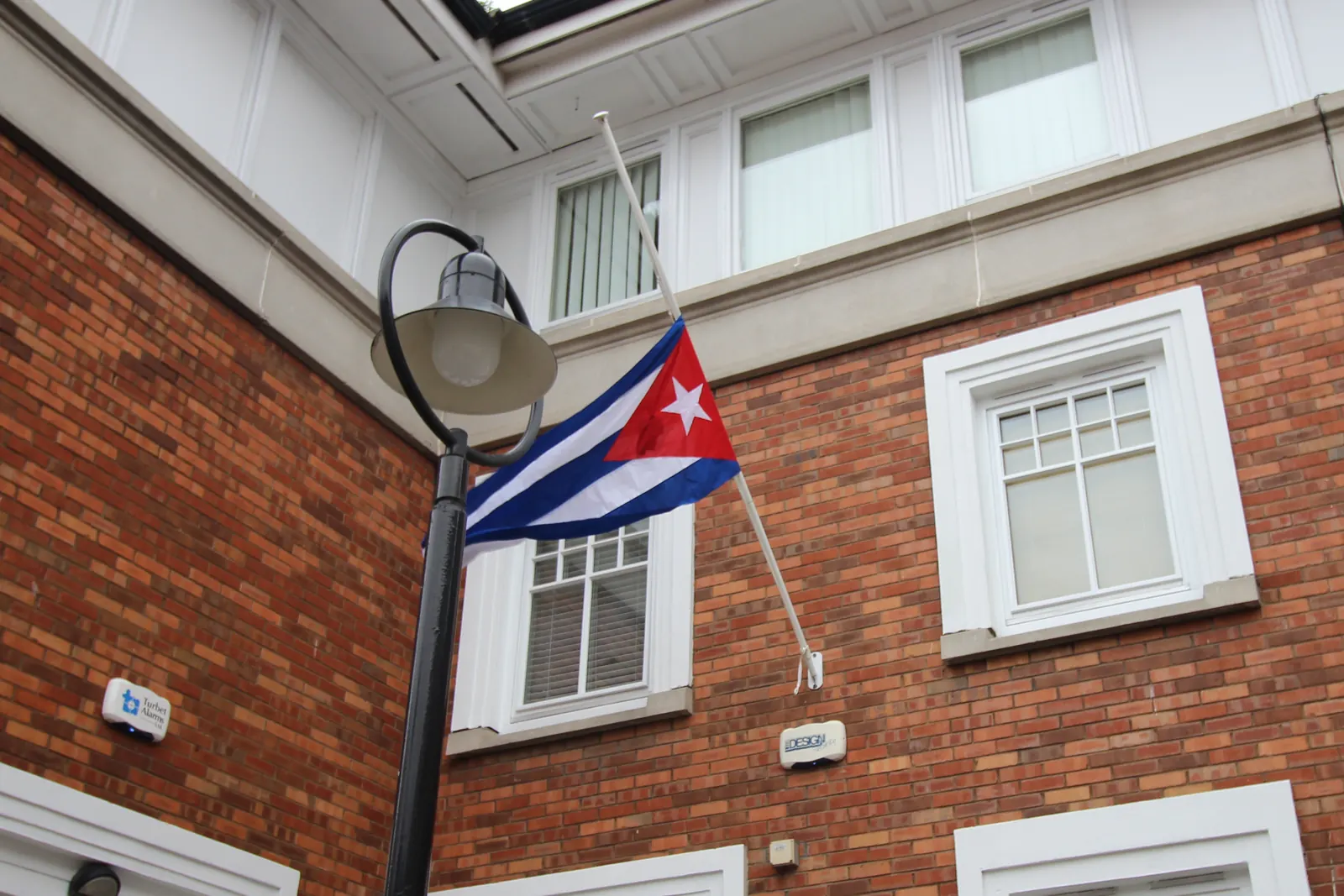
Where the National Flag is flown at half-mast, the guidelines state that no other flag is flown. On a day when State buildings lower the tricolour, the foreign flags on the same site also come down. More in the guide to half-mast.
Businesses and hotels
Hotels, conference venues and international companies often fly the flags of visiting delegations or of the countries they work with. The guidelines give the frame: separate poles of equal height, flags of equal width, and the tricolour in the place of honour when it flies in the same group. Company flags and the planning rules for business flagpoles are described in the guide to flagpoles for businesses.
Emblems of other countries
According to the Department of Enterprise, Tourism and Employment, Article 6ter of the Paris Convention for the Protection of Industrial Property aims to protect the armorial bearings, flags and other State emblems of the states party to it, and Ireland notified its own emblems – the harp, the shamrock and the heraldic arms – under it in 1985. The rule concerns trade marks and use in business, not flying a flag on a flagpole.
Northern Ireland
Northern Ireland is part of the United Kingdom, and flags on government buildings there follow UK rules. They are covered in the guides to the United Kingdom. The flag days in Ireland are listed in the guide to flag days.
Frequently asked questions
Can a foreign flag be flown in Ireland?
Yes. There is no Irish law that restricts flying the flag of another country. The guidelines of the Department of the Taoiseach describe how the National Flag and the flags of other nations are flown together: each flag of the same width, on a separate flagpole of the same height.
Can a foreign flag fly higher than the Irish flag?
No. According to the guidelines, international protocol prohibits flying any nation’s flag higher than another in peacetime. If one flagpole happens to be higher than the rest, the National Flag is flown from it.
Can a foreign flag fly alone in Ireland?
Nothing in Irish law prevents it. The guidelines deal with the National Flag and how it is placed when it flies with other flags; when the tricolour flies in the same group, it is in the place of honour.
Is the EU flag a foreign flag in Ireland?
The flag of the European Union is not a national flag, and it often flies next to the tricolour on public buildings. According to the guidelines, it flies immediately to the right of the National Flag as seen by an observer when flags are in line on staffs of equal height.
Sources
This guide is based on the following sources:
- The National Flag – Guidelines (September 2025), sections 4 and 6 and appendix – Department of the Taoiseach
- Protection and use of State emblems – Department of Enterprise, Tourism and Employment
- Flag size guideline – FlagPoles Ireland
Related guides
- Flag protocolIrish flag protocol: the place of honour, one National Flag per group, the tricolour with the EU flag, crossed staffs, platforms, parades and flags on walls.
- Flagpoles for businessesCompany flags in Ireland: advertisement rules in the planning regulations, the roof flag exemption, the harp and State emblems, protocol and safety at work.
- Flag daysThe days on which the Irish National Flag flies from all State buildings in 2026 and 2027, from St Brigid’s Day and St Patrick’s Day to Easter and July.
- Flag flying rulesThe rules for flying the Irish flag: the Constitution, the Taoiseach’s guidelines, sunrise to sunset, lighting at night, respect for the flag and disposal.