
Types of flagpoles in Ireland – an overview
Published Written by Flagpole Guides
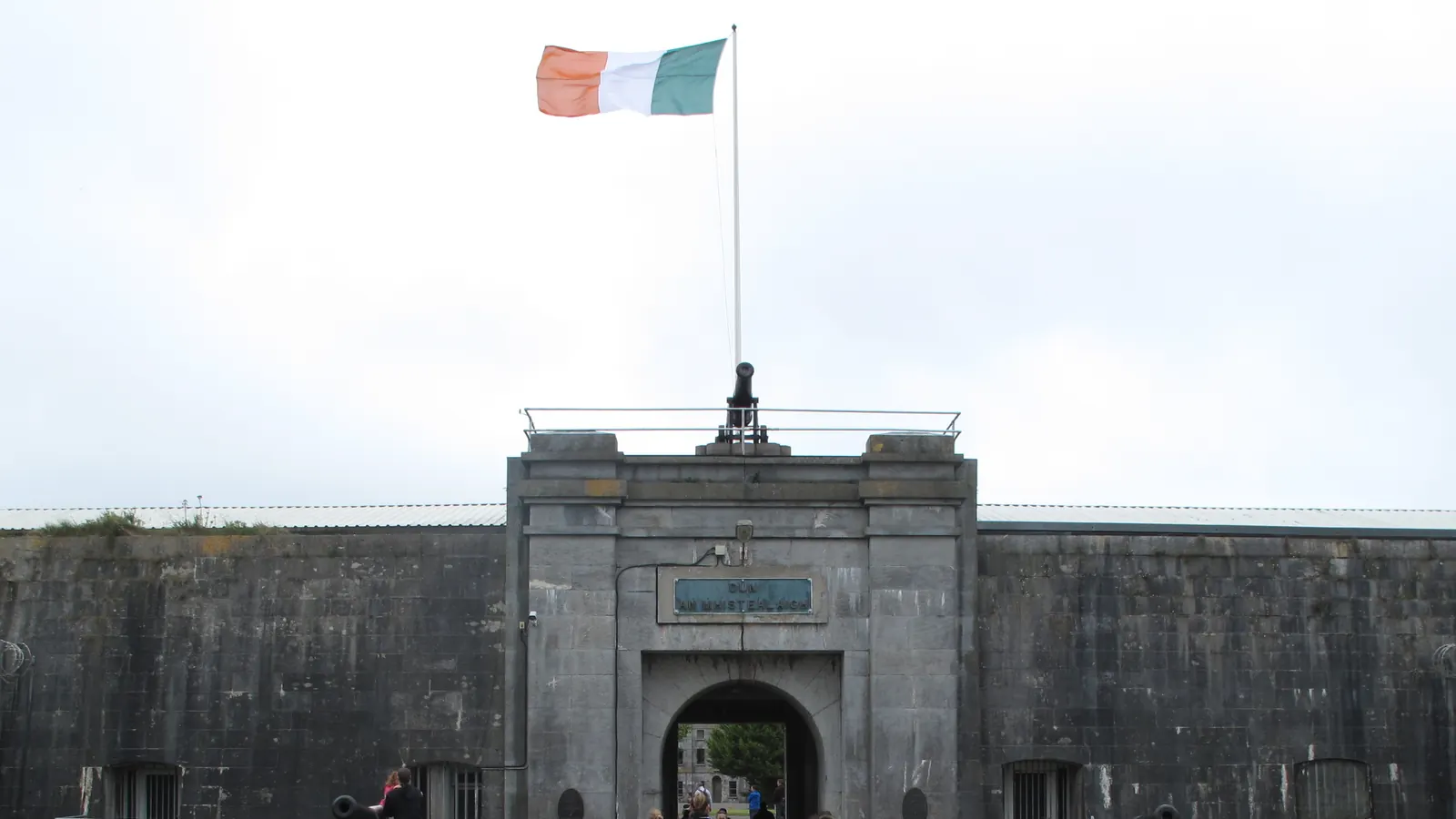
Flagpoles in Ireland range from a small wooden staff in a school hall to a row of 10-metre poles outside a hotel or county hall. The type decides how the flag is changed, how the pole is fixed and maintained, and, together with the site, whether planning permission comes into question. This guide gives an overview of the main types.
Ground-mounted flagpoles
The most common type outdoors is a ground-mounted pole set in a concrete foundation. Irish suppliers sell outdoor poles of 6, 7 and 8 metres for homes, clubs and businesses, and taller poles for public buildings. According to FlagPoles Ireland, a Dublin supplier and installer, about 90% of its installations go into a soft margin such as grass, a flowerbed or a stone yard; an existing concrete slab needs a different fixing, sometimes with a flat metal flange base.
The same supplier describes two ways of fixing a ground-mounted pole:
| Type | How it works | Typical use |
|---|---|---|
| Classic sleeved | The pole stands in a ground sleeve set in the foundation and can be lifted out | National, county and logo flags, usually 90 × 180 cm |
| Hinged base | The pole pivots down at its base, so the flag is changed with the pole lying on the ground | Also used for banner flags on rotating arms, for example at motor dealerships |
Foundations are covered in the guide to installing a flagpole.
Wall-mounted flagpoles
A wall-mounted pole is fixed with a bracket, often at an angle, on a house, shop front or club building. Irish flag makers sell short poles for this, such as 2-metre wall-mounted poles. According to FlagPoles Ireland, the wall that holds the bracket has to be strong enough to carry the weight and the extra force when the flag is wet, and the supplier does not recommend wall brackets on cladding, which is common on car showrooms.
Roof flagstaffs
A flagstaff on the roof of a building is common on older public buildings, hotels and shops. For businesses, the Planning and Development Regulations 2001 exempt one flag as an advertisement: a flag attached to a single flagstaff fixed upright on the roof of a business premises, bearing no inscription or emblem other than the name, device or logo of the business occupying it. The exemption covers the flag as an advertisement; the rules are described in the guide to flagpoles for businesses.
Indoor staffs
Indoors, the flag stands on a presentation staff in a weighted base, often with a brass or wooden finish and a finial on top. Indoor staffs are used in schools, council chambers, offices and at ceremonies. According to the guidelines of the Department of the Taoiseach, a gold fringe or tassels can be used when the flag is displayed indoors, and on a platform the National Flag stands above and behind the speaker’s desk.
Banner and feather poles
For events and business premises, suppliers sell banner poles that hold a flag on an arm, and feather or teardrop banners on portable bases. They are used for advertising rather than for national flags. A rotating banner arm at the top of a hinged-base pole is a common set-up at car dealerships in Ireland.
Internal or external halyard
The rope that raises the flag, the halyard, runs either outside the pole or inside it. FlagPoles Ireland recommends internal halyards mainly for safety and as an anti-vandal measure, for example at schools and in public areas, but notes that an external halyard can work well at homes and at business parks without children around. More in the guide to how a flagpole works.
Several flagpoles
Hotels, councils and businesses often have a row of poles. According to the guidelines, flags of different nations fly from separate flagpoles of the same height. FlagPoles Ireland recommends at least 2 metres between poles, so that the flags do not touch the pole beside them. The order of the flags is explained in the guide to flag protocol.
Choosing among types
The choice of type depends on the site, the height, how often the flag is changed and who has access to the pole. Materials are compared in the guide to flagpole materials, and heights in the guide to flagpole heights.
Frequently asked questions
What is the most common flagpole in Ireland?
For homes, clubs, schools and businesses, a ground-mounted pole of around 6 metres is common. An Irish supplier starts its range of vertical poles at 6 metres, which it calls the standard height, and describes a 90 × 180 cm flag as the usual size on its classic sleeved poles.
What is a hinged-base flagpole?
A pole that tilts down on a hinge at its base, so the flag can be changed with the pole lying on the ground. According to an Irish supplier, hinged-base poles are common at motor dealerships that use banner flags on rotating arms.
What is the difference between a sleeved and a hinged-base pole?
A sleeved pole stands in a ground sleeve set in the foundation and is lifted out of it; a hinged-base pole pivots down at its base. Both can fly national, county and logo flags.
Can a flagpole be mounted on a wall?
Yes. Wall brackets and short wall-mounted poles are sold in Ireland, for example 2-metre wall-mounted flagpoles. An Irish supplier points out that the wall has to carry the weight and wind load, especially when the flag is wet, and does not recommend brackets on cladding.
Sources
This guide is based on the following sources:
- FAQs – FlagPoles Ireland
- Flagpole installation – FlagPoles Ireland
- Flag size guideline – FlagPoles Ireland
- Flagpoles – indoor and outdoor and accessories – Flags Ireland
- Planning and Development Regulations 2001 (S.I. No. 600 of 2001), Schedule 2, Part 2, Class 4 – Irish Statute Book
- The National Flag – Guidelines (September 2025), sections 4 and 13 – Department of the Taoiseach
Related guides
- Flagpole materialsFlagpole materials compared for Irish conditions: fibreglass, aluminium, steel and timber, with weights, maintenance, salt air and wind in mind.
- Flagpole heightsCommon flagpole heights in Ireland from 2 to 12 metres, the flag size for each, spacing between poles, and what height means for planning and safety.
- How a flagpole worksHow a flagpole works: the halyard and truck, internal and external systems, counterweights, hinged bases, hoisting to half-mast and the Irish guidelines.
- Flagpole accessoriesThe parts and accessories of a flagpole in Ireland: finials, halyards, weights, cleats, doors, base covers, fixings, banner arms and LED lighting.