The Irish flag: meaning, design and colours
Published Written by Flagpole Guides
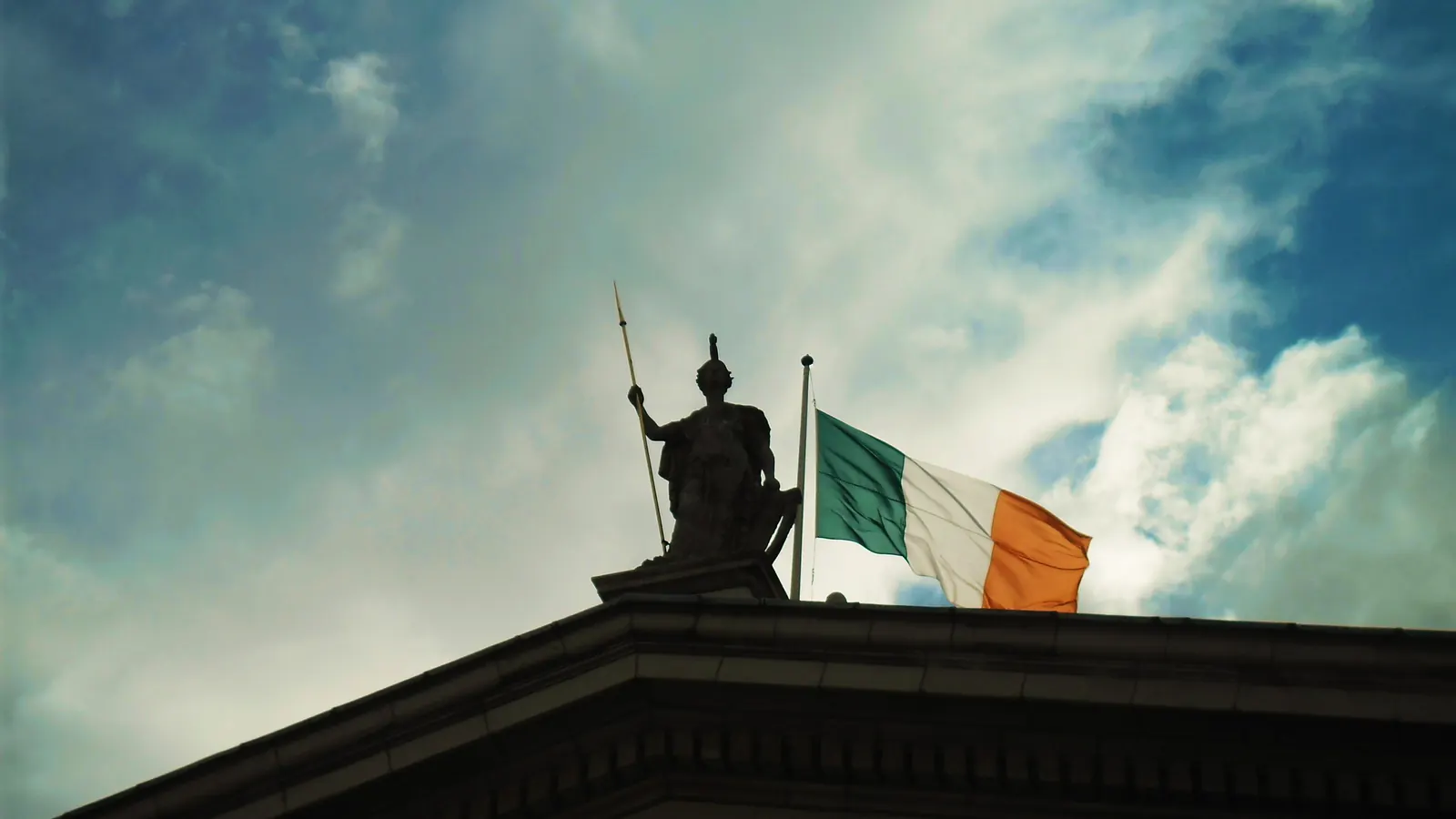
The Irish tricolour is one of the few national flags whose meaning is a message of peace between two communities. According to the Department of the Taoiseach, the flag is intended to symbolise the inclusion of, and the aspiration for unity between, people of different traditions on the island of Ireland. That idea is now expressed in the Constitution as the entitlement of every person born in the island of Ireland to be part of the Irish nation, regardless of ethnic origin, religion or political conviction.
Green, white and orange
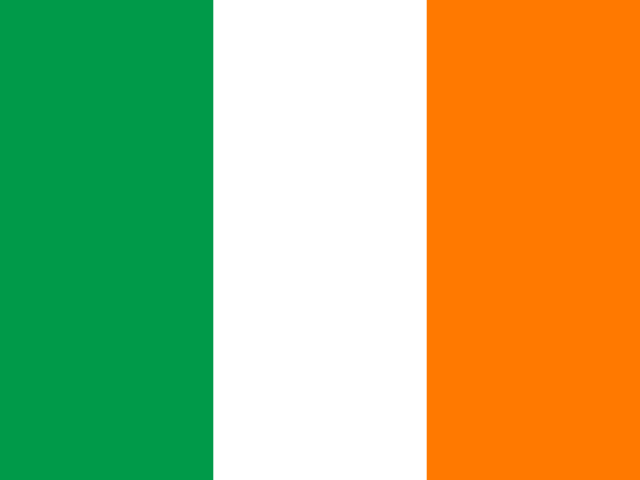
Article 7 of Bunreacht na hÉireann reads: “The national flag is the tricolour of green, white and orange.” The Irish text of the article names the colours as uaine, bán agus flannbhuí.
The guidelines explain the background of the colours:
| Colour | Background according to the guidelines |
|---|---|
| Green | The older nationalist symbol, the green flag with the harp, used from Confederate Ireland in the 1640s to the United Irishmen in 1798 |
| Orange | The Orange Order, founded in 1795 in memory of King William of Orange and the “Glorious Revolution” of 1689 |
| White | Peace between the two, in the words of Thomas Francis Meagher, “a lasting truce between Orange and Green” |
After the rebellion of 1798, the ideal of a later nationalist generation in the mid-nineteenth century was to make peace between the traditions and, if possible, to found a self-governing Ireland on that peace and union.
Meagher’s words
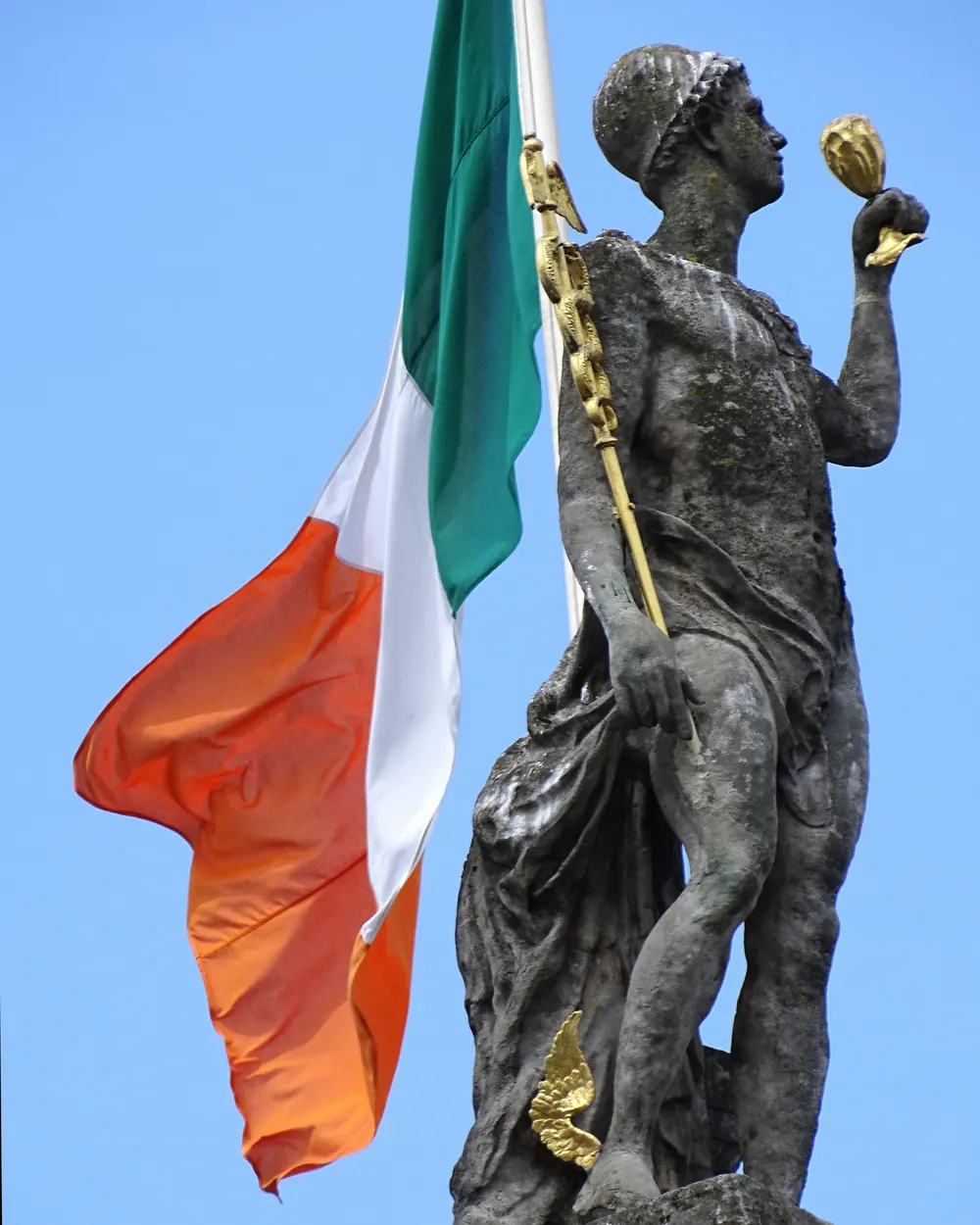
On 7 March 1848, Thomas Francis Meagher, the Young Ireland leader, flew a tricolour from 33 The Mall in Waterford, where it flew for a week until removed by the authorities. In April that year he presented a tricolour brought from Paris to a meeting in Dublin and explained the colours:
“The white in the centre signifies a lasting truce between Orange and Green and I trust that beneath its folds the hands of Irish Protestants and Irish Catholics may be clasped in generous and heroic brotherhood.”
The 1848 tricolours appeared at meetings across the country alongside French flags, celebrating the revolution that had just taken place in France. The story of the flag from 1848 to 1937 is told in the guide to the history of the flag and flagpole.
The design
| Detail | According to the guidelines |
|---|---|
| Shape | Rectangular |
| Proportions | Width twice the depth (2:1) |
| Bands | Three of equal size, each one third of the width, vertically disposed |
| Order | Green next to the staff, white in the middle, orange farthest from the staff |
| Green | Pantone 347 |
| White | White |
| Orange | Pantone 151 |
Provided the proportions are observed, the flag may be made to any convenient size. The sizes flag makers offer are described in the guide to flag sizes.
Orange, not gold
The early tricolours were not standardised. According to the guidelines, orange was sometimes put next to the staff, at least one flag had the order orange, green and white, and a Parnellite flag of 1883 had yellow, white and green arranged horizontally. Down to modern times, yellow or gold has occasionally been used instead of orange. The guidelines are clear that this substitution destroys the symbolism of the flag, since the orange represents one of the two traditions the flag unites, and describe it as a misrepresentation to be actively discouraged.
On walls and coffins
The colour order follows the flag wherever it is shown. Against a wall, the green is on the observer’s left when the flag hangs horizontally and uppermost when it hangs vertically. On a coffin, the green is at the head. More in the guides to flag protocol and flags in mourning.
The flag and the harp
The tricolour is the National Flag, but not the State emblem. That role belongs to the harp, which appears on the President’s flag, government seals and Irish coins. The flags and emblems are compared in the guide to flags of Ireland.
Frequently asked questions
What do the colours of the Irish flag mean?
According to the Department of the Taoiseach, the tricolour is intended to symbolise the inclusion of and the aspiration for unity between people of different traditions on the island. The green recalls the older nationalist flag with the harp, the orange the Orange tradition named after King William of Orange, and the white in the centre, in the words of Thomas Francis Meagher in 1848, for a lasting truce between Orange and Green.
Is the Irish flag green, white and gold?
No. The Constitution names the colours as green, white and orange. According to the guidelines of the Department of the Taoiseach, shades of yellow or gold are sometimes seen instead of orange at civilian functions, but this is a misrepresentation of the National Flag that destroys its symbolism.
What are the proportions of the Irish flag?
The flag is twice as wide as it is high (2:1), and the three colours are of equal size. The guidelines give the colours as Pantone 347 for the green and Pantone 151 for the orange.
Which colour goes next to the flagpole?
The green. According to the guidelines, the flag is normally displayed on a staff with the green next to the staff, the white in the middle and the orange farthest from the staff.
Sources
This guide is based on the following sources:
- Bunreacht na hÉireann – Constitution of Ireland, Article 7 – Irish Statute Book
- The National Flag – Department of the Taoiseach
- The National Flag – Guidelines (September 2025), sections 1 and 3 – Department of the Taoiseach
Related guides
- HistoryFrom the green harp flag of the 1640s to Meagher’s tricolour in Waterford in 1848, the GPO in 1916, the Free State in 1922 and the Constitution of 1937.
- Flags of IrelandThe flags and emblems of Ireland: the tricolour, the President’s flag with the harp, the EU flag, the historic green harp flag, county and provincial flags.
- Flag sizesFlag sizes for Irish flagpoles: the 2:1 proportions of the tricolour, a supplier’s chart from 2 to 12 metres, common sizes in mm and feet, and why size matters.
- Flag daysThe days on which the Irish National Flag flies from all State buildings in 2026 and 2027, from St Brigid’s Day and St Patrick’s Day to Easter and July.