Flag lighting in the United States: flying the flag at night
Published Written by Flagpole Guides
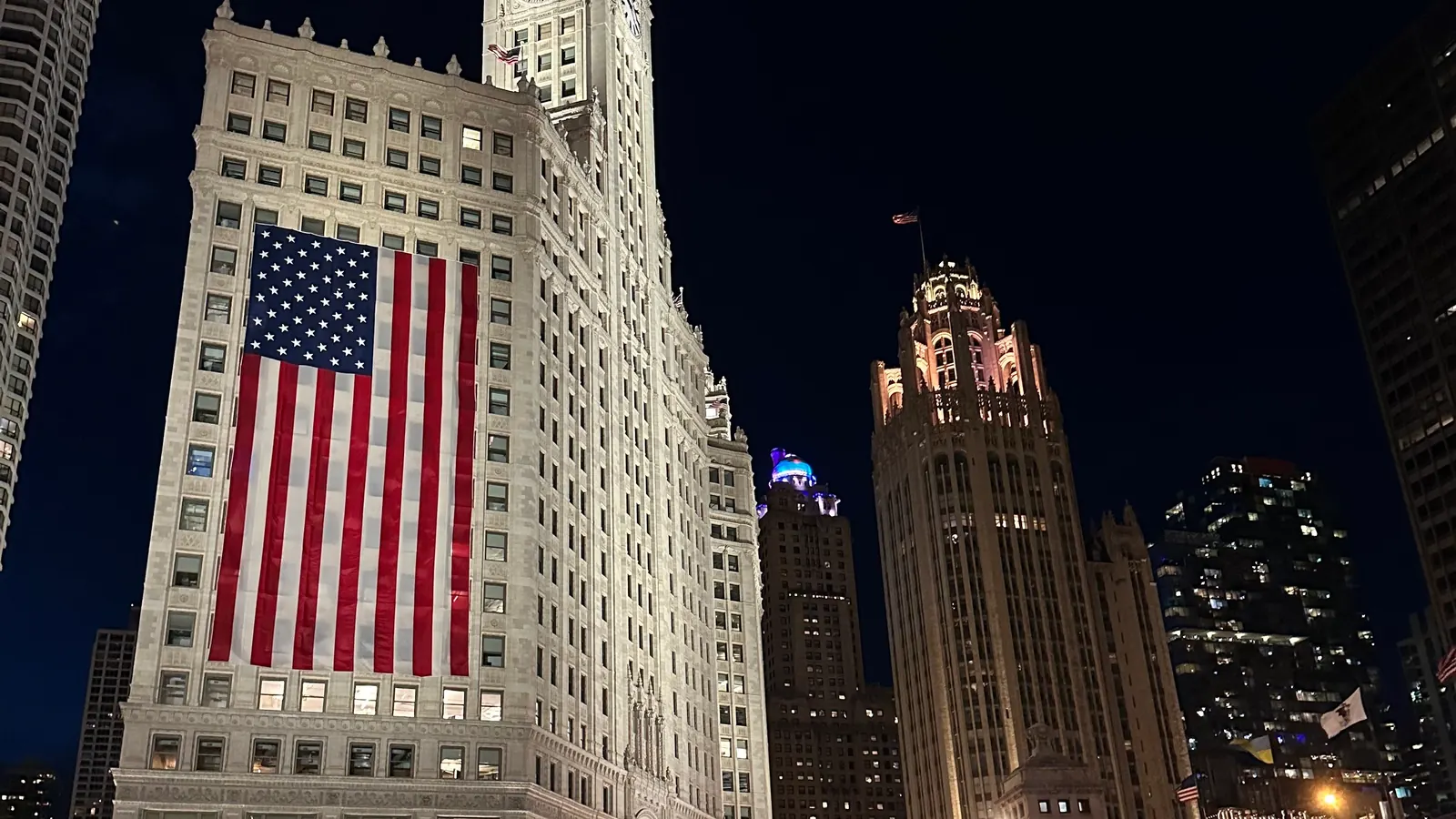
Many flags in the United States fly day and night. The Flag Code allows it on one condition: that the flag is lit in the dark. This guide describes what the Code says, how flags are lit and which local and HOA rules apply to the lights.
What the Flag Code says
Under 4 U.S.C. § 6(a), “it is the universal custom to display the flag only from sunrise to sunset on buildings and on stationary flagstaffs in the open. However, when a patriotic effect is desired, the flag may be displayed 24 hours a day if properly illuminated during the hours of darkness.”
The Code does not define “properly illuminated”. According to the Congressional Research Service (CRS), there is no absolute prohibition in federal law on flying the flag 24 hours a day, and display with appropriate lighting does not violate the spirit of the Code, since the lighting keeps the flag from being enveloped in darkness.
Where the flag flies at night by law
Presidential proclamations and laws authorize the flag day and night at eight places, among them Fort McHenry, the White House, the Washington Monument and the Marine Corps War Memorial. According to the Senate document Our Flag, many other places fly the flag at night as a patriotic gesture by custom; the CRS names the US Capitol as one of them. The full list is in the guide to flagpole history.
Ways to light a flag
| Light | Description |
|---|---|
| Ground spotlight | Aimed up at the flag from the base of the pole; needs power at the pole |
| Solar light on the pole | Mounted at the top of the pole, shines down on the flag |
| Building-mounted light | Lights a flag on a house or wall |
According to Annin Flagmakers, solar lights are an easy-to-install alternative to spotlights, which require an outdoor electrical outlet, and a way to ensure the flag is properly lit. A wired spotlight at an in-ground pole means electrical work, which can require a permit from the city or county.
Lighting and the neighbors
A bright light shining up into the sky, or onto the neighbors’ windows, can conflict with local rules:
- Texas: a property owners’ association can adopt reasonable rules that regulate the size, location and intensity of any lights used to illuminate a flag (Texas Property Code § 202.012(b)(4)).
- Florida: a flagpole protected by the HOA law remains subject to local noise and lighting ordinances (Florida Statutes § 720.304(2)(b)).
- Cities and counties: local lighting ordinances, which the Florida law refers to, set their own limits.
Weather and wear at night
A flag that flies around the clock wears faster. According to Annin, tests have shown that a flag flown 24 hours a day can last only one-fourth as long as one flown during daylight hours only. More in the guide to flagpole lifespan, and the accessories in the guide to flagpole accessories. How businesses light their flags is covered in the guide to flagpoles for businesses.
Frequently asked questions
Can the American flag fly at night?
Yes. Under 4 U.S.C. § 6(a), it is the universal custom to display the flag only from sunrise to sunset on buildings and stationary flagstaffs, but when a patriotic effect is desired, the flag may be displayed 24 hours a day if properly illuminated during the hours of darkness.
What counts as properly illuminated?
The Flag Code does not define it. According to the Congressional Research Service, display of the flag with appropriate lighting does not violate the spirit of the Code, since lighting prevents the flag from being enveloped in darkness. In practice, the flag is lit so that it can be seen at night.
Is it illegal to fly the flag at night without a light?
No penalty applies. The Flag Code is a guide for civilians and contains no penalties, according to the Congressional Research Service. An HOA can, however, require that the flag be displayed as the Flag Code describes, and the federal Freedom to Display the American Flag Act does not protect a display that is inconsistent with the Code.
Can an HOA or a city regulate flag lighting?
Yes. Texas law allows a property owners’ association to regulate the size, location and intensity of lights used to illuminate a flag, and Florida’s HOA law keeps a protected flagpole subject to local noise and lighting ordinances.
Sources
This guide is based on the following sources:
- 4 U.S.C. § 6(a) – U.S. Government Publishing Office
- The United States Flag: Federal Law Relating to Display and Associated Questions (RL30243) – Congressional Research Service
- Flagpoles and Hardware – Annin Flagmakers
- Caring for your new Annin product – Flag Pole vs Flag Size Chart – Annin Flagmakers
- Texas Property Code § 202.012 Flag display – Texas Legislature
- Florida Statutes § 720.304 Display of flags – The Florida Legislature
- Our Flag (S. Doc. 109-18) – U.S. Senate, Joint Committee on Printing
Related guides
- The Flag CodeWhat the US Flag Code says about displaying the American flag – hours, weather, lighting, respect and retiring worn flags – and why it carries no penalties.
- Flagpole accessoriesThe parts and accessories of a US flagpole: truck, finial and eagle, halyard, snaps, cleat, collar, security covers, brackets and lighting.
- Flagpoles for businessesWhen a US business flies flags: the US flag with company flags, sign codes, the Flag Code on advertising, Made in USA claims, lighting and half-staff.
- Installing a flagpoleWhat applies when a flagpole is installed in the United States: building permits and zoning, HOA rules, calling 811 before digging, foundations and wind speeds.
- Flags in HOA communitiesWhat an HOA can and cannot restrict about the American flag and flagpoles under the federal flag act and the laws of Texas, Florida, Arizona and California.