
Flagpole repair in the United States: common faults and causes
Published Written by Flagpole Guides
Most flagpole faults are small and concern the moving parts at the top and along the pole: the halyard, the truck, the snaps and the cleat or winch. Larger faults concern the pole itself or its foundation. This guide describes common faults and their usual causes; how the parts work is explained in the guide to how a flagpole works.
Common faults
| Fault | Usual cause |
|---|---|
| Flag stuck at the top | Halyard jammed in the pulley, truck seized, halyard twisted around the pole |
| Halyard broken or frayed | Wear over the pulley, sun, a flag too large for the pole |
| Flag wrapped around the pole | Wind shifts; a stationary truck does not turn with the wind |
| Revolving truck no longer turns | Dirt, corrosion or wear in the bearing |
| Winch slips or will not hold | Worn winch or wire halyard on an internal system |
| Cleat or snaps loose | Worn fastenings, vibration |
| Pole leaning | Foundation, soil or damage at the base |
| Corrosion or damaged finish | Scratches in the coating, salt air, standing water at the base |
| Stains on the flag | Rust and scale on the pole, according to the Senate document Our Flag |
The halyard system
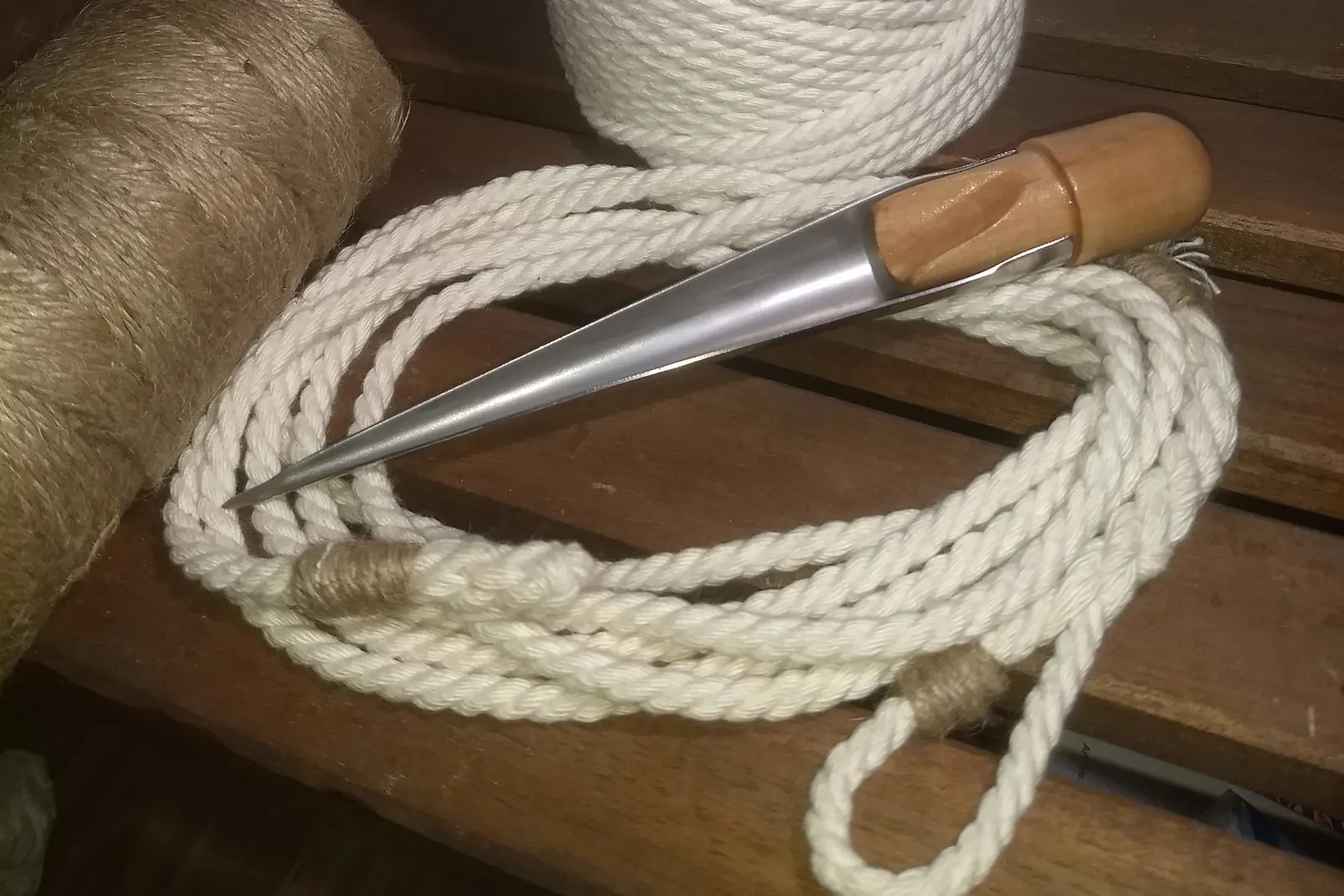
Faults in the halyard system stop the flag from being raised, lowered or held at half-staff. On an external halyard, the rope is exposed to sun and wind and wears where it runs over the pulley. On an internal halyard, according to Concord American Flagpole, a winch system uses a wire halyard with a winch and handle, and a cam cleat system a rope halyard; the parts are behind a lockable door. Some local codes set a standard: in Durham, North Carolina, a flagpole with broken halyards is not used.
Work at the top of the pole
Replacing a halyard or a truck means reaching the top of the pole, by working at height or by lowering the pole. For employers in construction, OSHA requires fall protection for employees on a walking or working surface 6 ft or more above a lower level (29 C.F.R. § 1926.501), and OSHA’s minimum distances to overhead power lines, 10 ft for lines of 50 kV or less, apply to workers near them (29 C.F.R. § 1910.333). More in the guide to flagpole safety.
Leaning poles and the foundation
A pole that leans usually has a problem at the foundation: a footing too small for the soil or the wind load, settling, water, or damage at the base. According to Concord American Flagpole, ground-set poles are buried to 10 percent of the mounting height, and foundation requirements depend on the soil and are verified by a structural engineer with knowledge of local conditions. A pole that has started to lean is a safety risk in high wind.
Corrosion and finish
Aluminum forms a protective oxide layer and can stand unfinished, according to Concord, but coatings can be scratched and bases can sit in water. According to Our Flag, rust and scale on the pole cause permanent stains on the flag, and some metallic oxides eat holes in the fabric. Care of the surface is covered in the guide to flagpole maintenance.
Repairing the flag
According to Our Flag, damaged flags can be repaired and used as long as the overall dimensions are not noticeably altered, and Annin Flagmakers describes trimming and re-hemming torn or frayed fly ends. When a flag is no longer fit for display, the Flag Code describes destroying it in a dignified way, preferably by burning (4 U.S.C. § 8(k)). How long poles and flags last is covered in the guide to flagpole lifespan.
Frequently asked questions
What is the most common flagpole fault?
Faults in the halyard system: a frayed or broken halyard, a halyard wrapped around the pole or a truck that has stopped turning. These stop the flag from being raised, lowered or held at half-staff. In Durham, North Carolina, a flagpole with broken halyards is not used under the local code.
How is a broken halyard replaced on a tall flagpole?
The new halyard has to be run over the pulley in the truck at the top of the pole, which on a tall pole means work at height or lowering the pole. For employers in construction, OSHA requires fall protection for work on a surface 6 ft or more above a lower level, and OSHA’s minimum distances to overhead power lines apply to anyone working near them.
Why does a flagpole lean?
A lean usually points to the foundation: a foundation that is too small for the soil or the wind load, settled or washed-out soil, or damage at the base. According to Concord American Flagpole, foundation requirements depend on the soil and are verified by a structural engineer with knowledge of local conditions.
Can a damaged flag be repaired?
Yes. According to the Senate document Our Flag, damaged flags can be repaired and used as long as the overall dimensions are not noticeably altered, and Annin Flagmakers describes trimming and re-hemming torn or frayed ends.
Sources
This guide is based on the following sources:
- Halyard Options – Concord American Flagpole
- Foundation Options – Concord American Flagpole
- Unified Development Ordinance, Sec. 7.7 Flagpoles and Flags – City and County of Durham, North Carolina
- 29 C.F.R. § 1926.501 Duty to have fall protection – Electronic Code of Federal Regulations
- 29 C.F.R. § 1910.333 Selection and use of work practices – Electronic Code of Federal Regulations
- Our Flag (S. Doc. 109-18) – Care of your flag – U.S. Senate, Joint Committee on Printing
- Caring for your new Annin product – Flag Pole vs Flag Size Chart – Annin Flagmakers
- 4 U.S.C. § 8(k) – U.S. Government Publishing Office
Related guides
- Flagpole maintenanceHow US flagpoles and flags are cared for: checks of the halyard, truck and base, cleaning aluminum, washing and storing the flag, and local rules on condition.
- How a flagpole worksHow a US flagpole works: the halyard over the truck, external and internal systems, winch and cam cleat, revolving trucks and how the flag reaches half-staff.
- Flagpole accessoriesThe parts and accessories of a US flagpole: truck, finial and eagle, halyard, snaps, cleat, collar, security covers, brackets and lighting.
- Lifespan and sustainabilityHow long US flagpoles and flags last: about 90 days for a flag flown daily, what shortens a flag’s life, aluminum recycling and flag retirement.