
Flagpole safety in Canada: power lines, wind, ice and digging
Published Written by Flagpole Guides
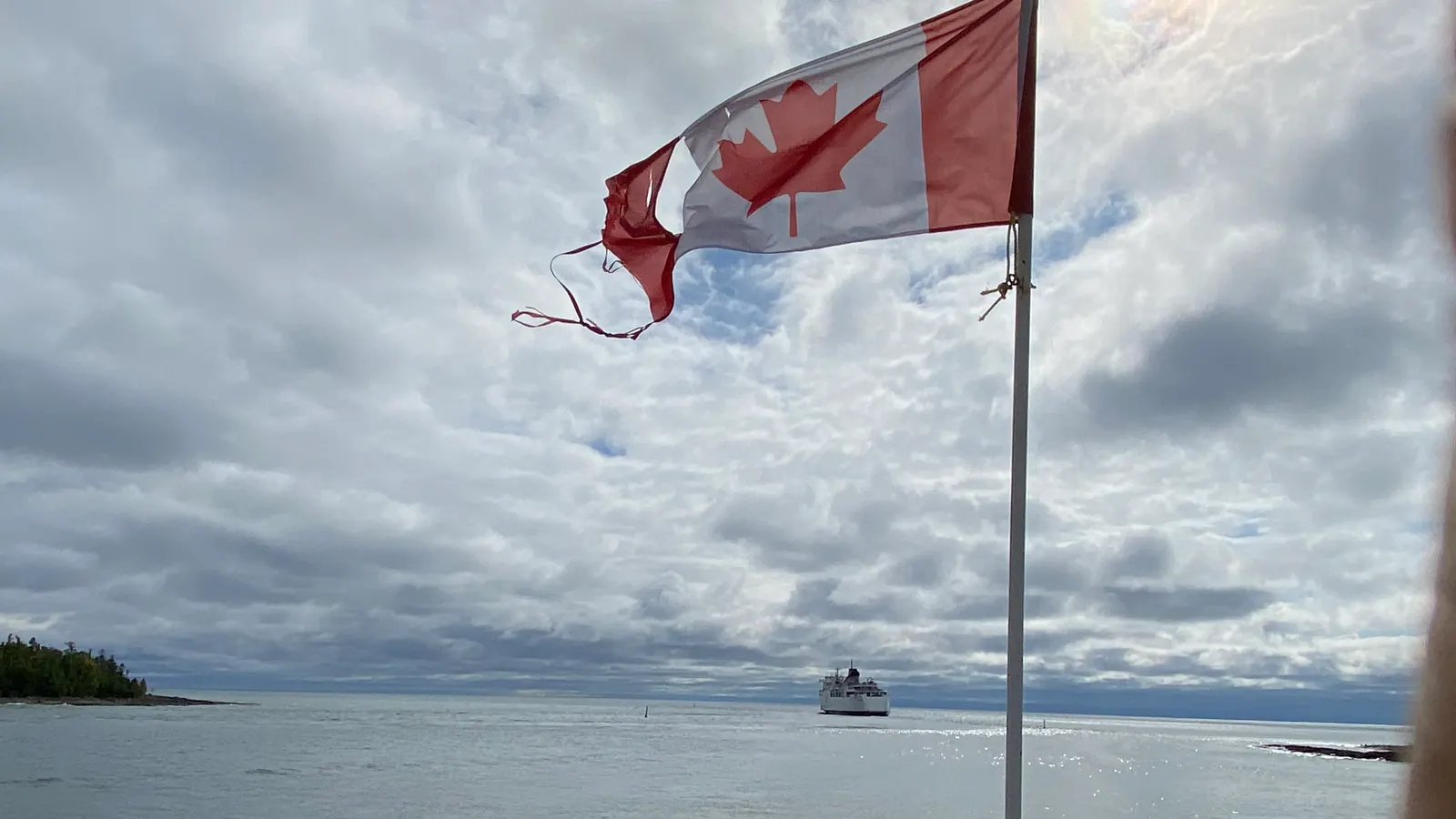
A flagpole is a tall metal structure standing in the wind, often near a house, a road or overhead lines. Much of the risk lies in the moments when a pole is carried, raised, climbed or dug in. The Canadian authorities for electricity, weather and buried utilities publish guidance that applies directly to flagpoles.
Overhead power lines
According to the Electrical Safety Authority (ESA) in Ontario, people and any high-reach tools stay at least three metres from overhead power lines, and at least ten metres from downed lines. Electricity can arc across a gap: anything within three metres of a line – a tool, a branch or a hand – can cause a shock, a burn or death. The ESA describes carrying a ladder sideways, not upright, for the same reason.
Hydro-Québec uses the same three-metre rule. Before climbing a ladder or handling long or tall equipment, such as a pole, Hydro-Québec describes looking around for power lines, which can be hidden in the top of a tree, and keeping everyone and everything at least three metres from a medium-voltage line. It mentions fibreglass or another non-conductive material for ladders and poles used near lines. A 6-metre flagpole carried upright, or tipped over while being raised, reaches far enough to touch a line, so the whole arc of the pole matters, not only where it will stand.
Buried cables and pipes
Before a footing is dug, buried lines are located. The Click Before You Dig portal links to the notification centre of each province and territory, such as Ontario One Call, Info-Excavation and BC 1 Call. In Ontario, the ESA also refers homeowners to Ontario One Call before any major digging, and locate requests are free by law. The procedure is described in the guide to installing a flagpole.
Wind and storms

According to the Canadian flagpole maker Flag Outlet, the principal load on a flagpole is wind. Wind speeds are generally higher along the coasts than inland, higher in open country than in city centres and greater with height above the ground. A flag adds to the load, and a larger flag adds more.
Environment and Climate Change Canada issues colour-coded weather alerts:
| Colour | What it means | Examples for a wind warning |
|---|---|---|
| Yellow | Hazardous weather; moderate, localized or short-term impacts; the most common | Larger tree branches broken, short power outages, risk of injury from flying debris |
| Orange | Severe weather likely to cause significant damage; uncommon | Widespread outages, some roof damage, small to medium trees snapped |
| Red | Very dangerous, possibly life-threatening weather; rare | Extensive damage, structural damage to buildings |
The alerts are based on Environment Canada’s Impact Guides, which replaced the former fixed criteria. On Parliament Hill, the flags are not changed during snowstorms or high winds, for safety reasons, according to Canadian Heritage.
Ice and cold
In winter, ice can form on the halyard, the truck and the flag, making the halyard hard to move and adding weight to the flag. Work at the top of a pole in icy conditions adds to the risk of a fall; a pole with a tilt base can be lowered and serviced on the ground instead. Frost in the ground can heave a footing that is not deep enough, which leaves the pole leaning. More in the guide to installing a flagpole.
Working at height
Changing a pulley, a truck or a halyard on a standing pole means working at height. Canadian flagpole companies raise and lower poles with a crane or a crew, and a pole with a tilt base can be lowered to the ground for this work. More about the moving parts is in the guide to how a flagpole works.
Lightning
A flagpole is often the tallest object on a property. Flag Outlet’s installation instructions list an optional lightning kit, a grounding pin and cable set into the side of the footing before the concrete is poured.
Vandalism and theft
External halyards can be cut and flags stolen. The Gouvernement du Québec suggests an internal halyard with a locking device wherever a flagpole is accessible to the public, to protect the mechanism and prevent vandalism. Flag Outlet notes that on a pole with a tilt base, the flag can be attached directly to the pole to prevent theft. Regular checks are described in the guide to flagpole maintenance.
Frequently asked questions
What distance from power lines applies when a flagpole is handled?
Both the Electrical Safety Authority in Ontario and Hydro-Québec describe a distance of at least three metres between overhead power lines and people, tools and equipment, because electricity can arc across a gap without direct contact. The ESA adds at least ten metres from downed power lines.
What do Environment Canada’s wind warning colours mean?
Weather alerts are yellow, orange or red as the risk increases. According to Environment and Climate Change Canada, a yellow wind warning can mean broken branches and short power outages, an orange one widespread outages, some roof damage and snapped trees, and red very dangerous, possibly life-threatening weather.
Are flags taken down in storms?
On Parliament Hill, the flags are not changed during poor weather such as snowstorms or high winds, for safety reasons, according to Canadian Heritage. For a private pole, a flag left up in a storm wears faster and puts more load on the pole.
Why do flagpoles at public buildings have locked halyards?
To prevent vandalism and protect the mechanism. The Gouvernement du Québec’s guidance for public buildings suggests an internal halyard with a locking device wherever a flagpole is accessible to the public.
Sources
This guide is based on the following sources:
- Outdoor Safety – Electrical Safety Authority
- Dangerous activities near power lines – Hydro-Québec
- New: Colour-coded weather alerts – Environment and Climate Change Canada
- Weather Impact Guides – Environment and Climate Change Canada
- Parliament Hill flags – Canadian Heritage
- Click Before You Dig – Canadian One-Call Centres Committee and Canadian Common Ground Alliance
- Ontario Underground Infrastructure Notification System Act, 2012 – Government of Ontario, e-Laws
- 25’ Flagpole Installation Instructions – Flag Outlet Ltd.
- About Flag Outlet – Flag Outlet Ltd.
- Déploiement du drapeau à l’extérieur d’un édifice – Gouvernement du Québec
Related guides
- Installing a flagpoleInstalling a flagpole in Canada: provincial building codes, municipal zoning bylaws, utility locates before digging, frost and footings.
- Flagpole maintenanceMaintaining a flagpole and flag in Canada: checks of pulleys, halyards and base bolts, cleaning aluminum, flag care and disposal of worn flags.
- How a flagpole worksHow a flagpole works: raising the flag with a halyard and pulley, internal and external halyards, half-masting, yardarms and tilt bases.
- Flagpoles for businessesCompany flags at Canadian businesses: the order beside national and provincial flags, sign bylaws for flag signs and the Trademarks Act.