
Flagpole accessories – the parts of a flagpole in Canada
Published Written by Flagpole Guides
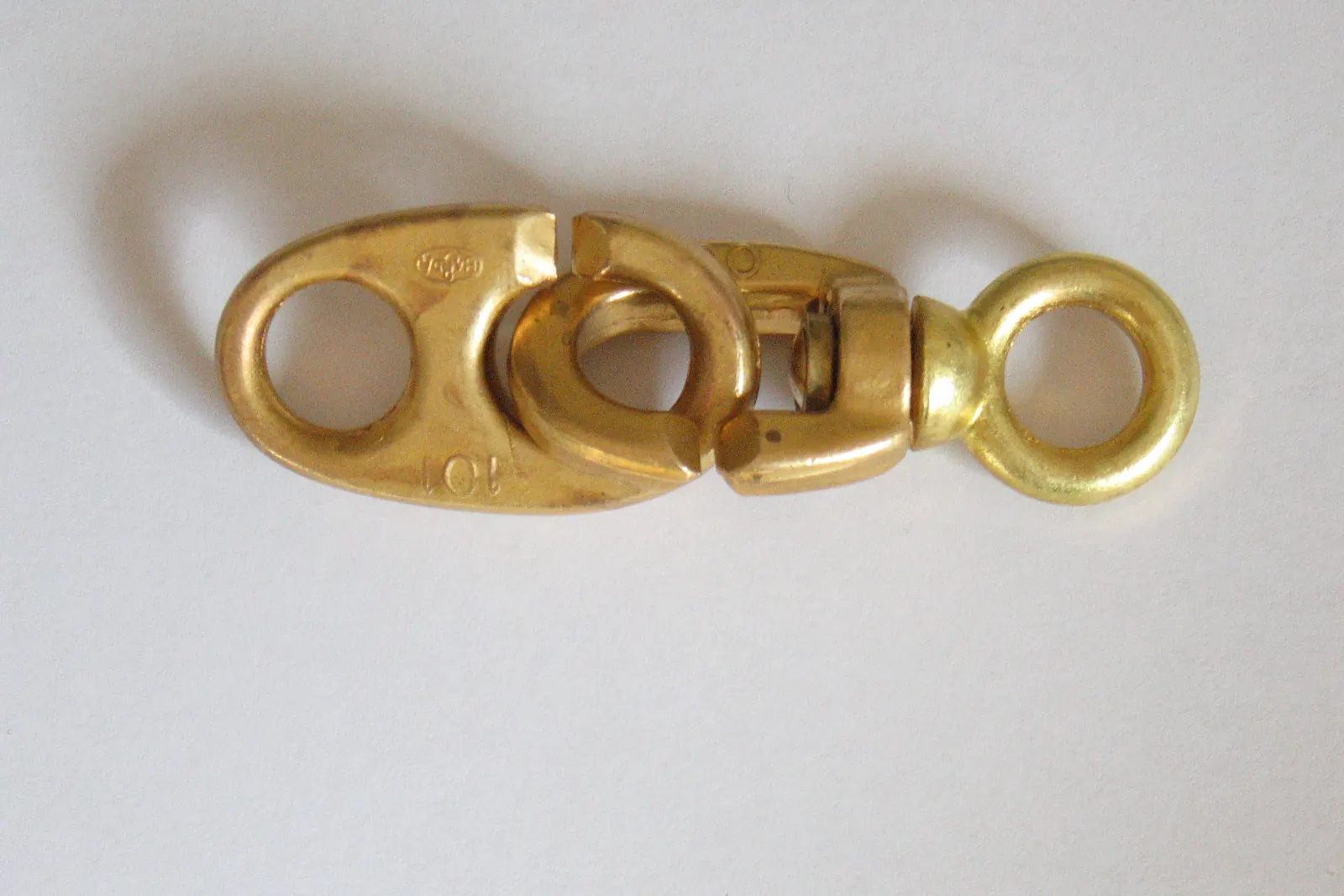
A flagpole is more than a pole. At the top sits a finial and a truck with a pulley; along the pole run the halyard and its snaps; at the base are a cleat or a locked door and the sleeve or anchor that holds it in the ground. In Canada, one of these parts – the finial – also has a protocol of its own, set out by Canadian Heritage.
Finials
A finial is the ornament at the top of a pole, pike or staff. According to Canadian Heritage:
- Outdoor flagpoles typically have a ball-shaped finial, which prevents the flag from becoming tangled at the top of the pole in strong updrafts.
- Indoor flagpoles are topped by a finial in the form of a sphere or ball, a maple leaf, an acorn or a spear point. The National Flag, the provincial and territorial flags and the flags of the Governor General, the lieutenant governors and the territorial commissioners can be on poles with any of these.
- Foreign flags on indoor poles are mounted with a spear point or acorn rather than a maple leaf, and it is not appropriate to fly a sovereign nation’s flag from a pole with a maple leaf finial. In a display of Canadian and foreign flags, all poles preferably have the same finial.
- A three-dimensional gold crown or the crest of the Coat of Arms of Canada is reserved for the colours of military regiments. Staffs on His Majesty’s Canadian Ships carry a large painted crown, a naval tradition.
- Organizations can have their own finials, such as the fleur-de-lys of Scouts Canada or the Maltese cross of St. John Ambulance; poles with them are reserved for that organization’s flag.
For public buildings in Québec, the Gouvernement du Québec describes a gold ball or finial of about 150 mm (6 in) on a dark mast.
Truck and pulley
Under the finial sits the truck, which carries the pulley through which the halyard runs. A stationary truck does not turn; a revolving truck turns with the wind, so that the flag does not wrap around the pole. Canadian flagpole makers such as Flag Outlet sell stationary caps with pulleys and revolving trucks in sizes to match the pole’s top diameter. Canadian Heritage’s glossary describes the pulley as the grooved wheel over which the halyard passes.
Halyard
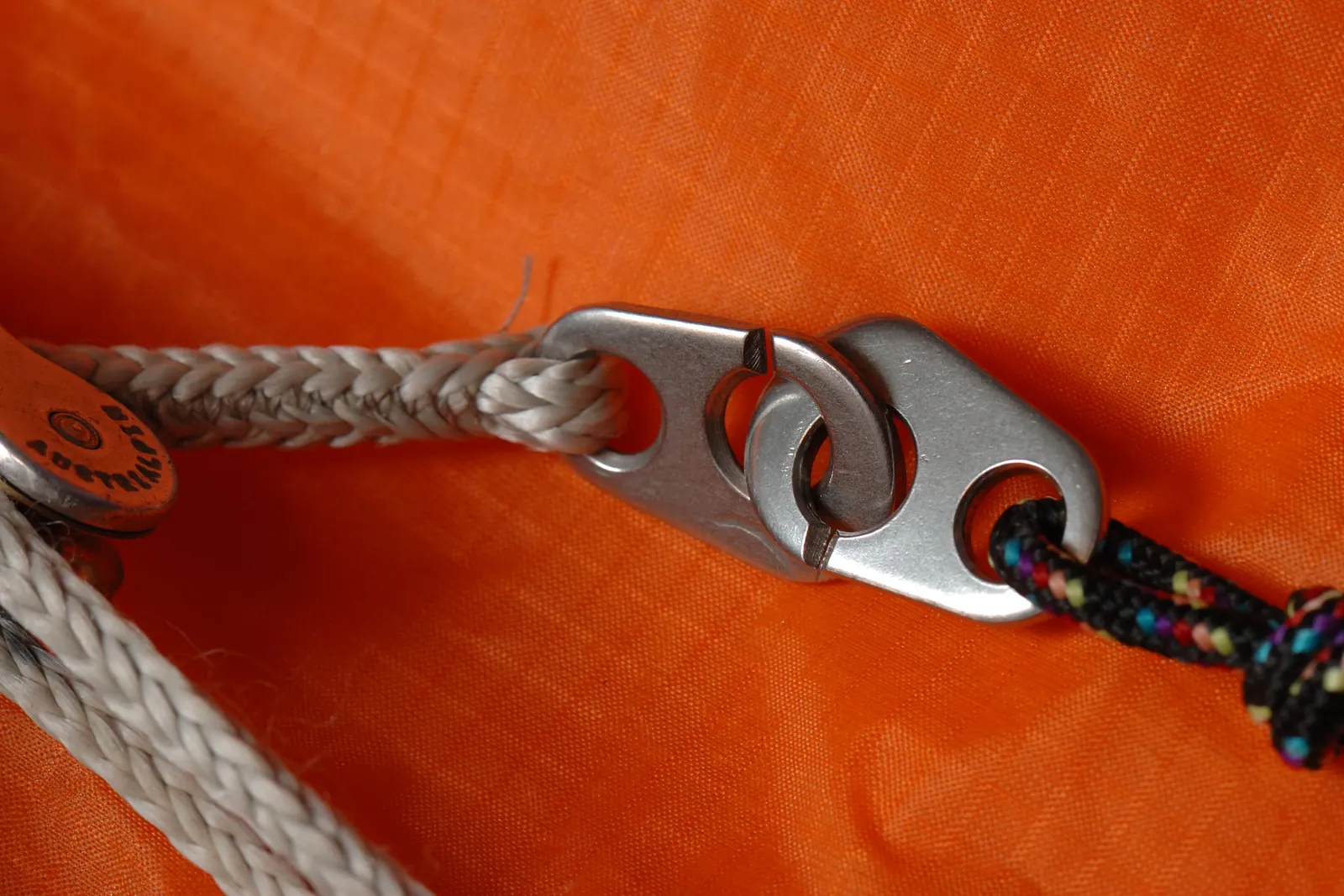
The halyard is the rope or cable that raises and lowers the flag. On an external halyard, a rope runs outside the pole and is tied to a cleat. On an internal halyard, a cable runs inside the pole; according to Flag Outlet’s instructions, it is reached through a door opened with a key and has a counterweight and a ring that keeps the cable close to the pole. The Gouvernement du Québec’s guidance suggests an internal halyard with a locking device where a pole is accessible to the public.
Attaching the flag
- Snaps or clips fasten the flag’s grommets to the halyard.
- A running eye and toggle, described in Canadian Heritage’s glossary, uses a rope sewn into the flag’s heading with a wooden toggle at the top and a loop at the bottom, which fasten to their opposites on the halyard.
- A sleeve is a tube of material along the hoist through which a staff or halyard passes, as on indoor flags.
At the base
- Cleat: the fitting on which an external halyard is tied off.
- Ground sleeve or anchor base: holds the pole in its concrete footing, or lets it be bolted down. Flag Outlet sells poles with a shoe and anchor bolt assembly and with tilt bases.
- Flash collar or shield: a trim piece that covers the joint between pole and footing.
- Lightning kit: Flag Outlet’s instructions mention an optional grounding pin and cable set into the footing.
Indoor accessories
Indoor flags hang from their pole rather than fly. Flag spreaders can spread them out; according to Canadian Heritage, they are optional and have no effect on protocol. Ceremonial flags carry a gold fringe, which Canadian Heritage describes as purely decorative; they are never flown on an exterior pole, and in a group of flags, either all or none have a fringe. A black cravat can be tied at the finial of an indoor flag in mourning, but never on the National Flag.
Lights
A spotlight at the base, or a light at the top of the pole, keeps the flag visible at night. The National Flag does not need to be lit after sundown, according to Canadian Heritage; the options are described in the guide to flag lighting. How the parts work together is explained in the guide to how a flagpole works.
Frequently asked questions
What is the ball on top of a flagpole for?
It is the finial. According to Canadian Heritage, outdoor flagpoles typically have a ball-shaped finial, which prevents the flag from becoming tangled at the top of the pole in strong updrafts. Indoor flagpoles can have a ball, a maple leaf, an acorn or a spear point.
Can any finial be used with any flag?
Not quite. According to Canadian Heritage, it is not appropriate to fly the flag of a sovereign nation from a pole with a maple leaf finial, and a gold crown or the crest of the Coat of Arms of Canada is reserved for the colours of military regiments. Organizational finials, such as the Scouts Canada fleur-de-lys, are reserved for that organization’s flag.
What is a flag spreader?
A device that spreads out a flag hanging on an indoor pole, to improve its appearance. According to Canadian Heritage, spreaders are not required and have no effect on the protocol of flag display.
What is a running eye and toggle?
A traditional way of attaching a flag. According to Canadian Heritage’s glossary, a rope sewn into the flag’s heading has a wooden toggle at the top and a loop at the bottom, which fasten to their opposites at the ends of the halyard.
Sources
This guide is based on the following sources:
- Rules for flying the National Flag of Canada – Flagpole finials and flag spreaders – Canadian Heritage
- Glossary of flag-related terms – Canadian Heritage
- Half-masting and flag etiquette in times of mourning – Canadian Heritage
- Déploiement du drapeau à l’extérieur d’un édifice – Gouvernement du Québec
- 25’ Flagpole Installation Instructions – Flag Outlet Ltd.
- Finials & Internal Halyard Components – Flag Outlet Ltd.
Related guides
- How a flagpole worksHow a flagpole works: raising the flag with a halyard and pulley, internal and external halyards, half-masting, yardarms and tilt bases.
- Flagpole maintenanceMaintaining a flagpole and flag in Canada: checks of pulleys, halyards and base bolts, cleaning aluminum, flag care and disposal of worn flags.
- Flagpole repairCommon flagpole faults in Canada and their causes: a pole leaning after frost heave, a jammed pulley, a frozen or frayed halyard and worn finishes.
- Flag lightingCan the Canadian flag fly at night without lights? What Canadian Heritage and Québec say, and who may do outdoor electrical work in Ontario and Québec.