Flag sizes in Canada: what size flag for a flagpole?
Published Written by Flagpole Guides
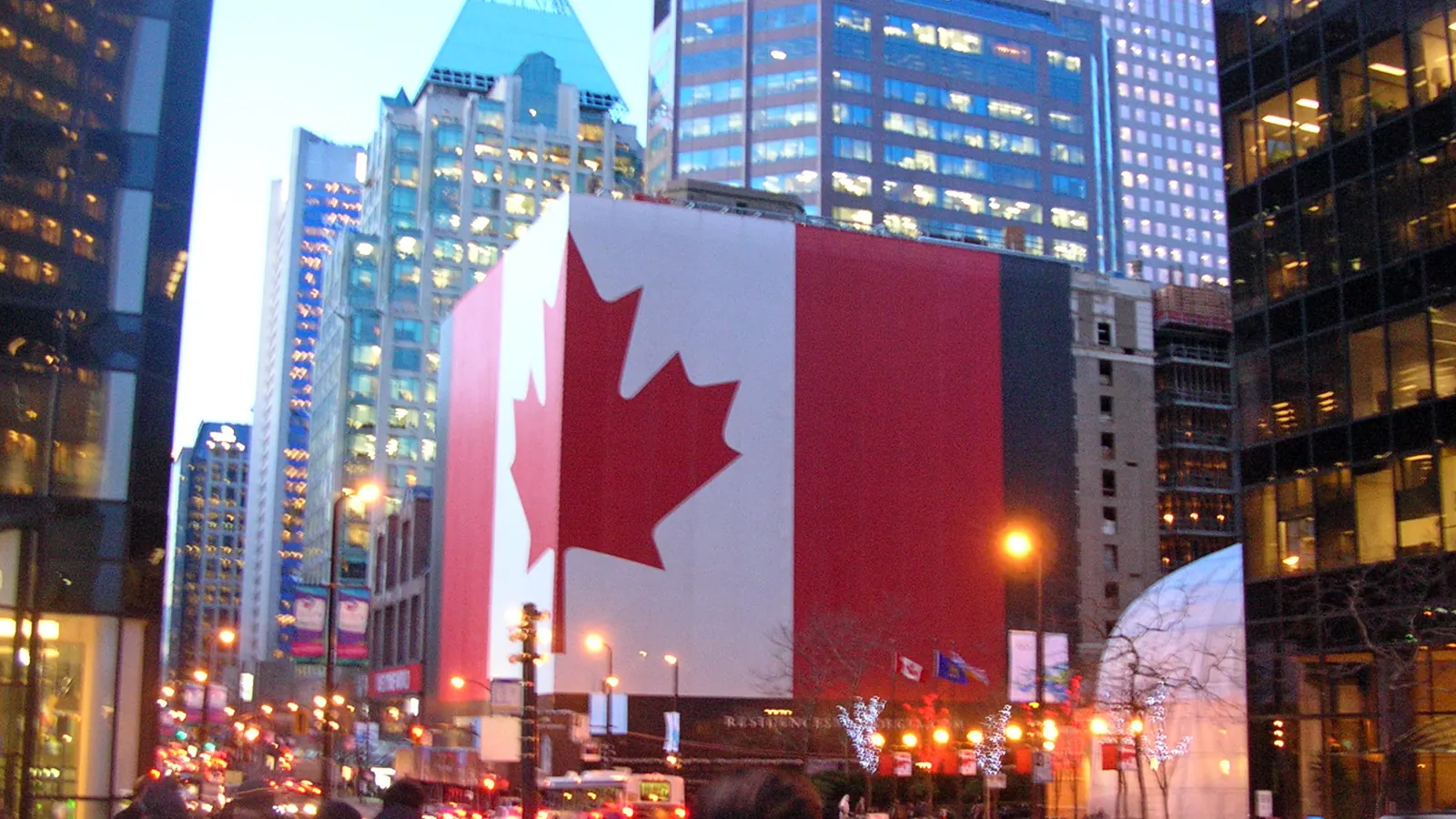
A flag that is too small looks lost on a tall pole; one that is too large strains the pole and wears quickly. In Canada, the federal government publishes a table that matches flag sizes to flagpole lengths: Canadian Heritage includes one in its rules for flying the National Flag. The Gouvernement du Québec gives similar guidance for the flag of Québec. Flags in Canada are sold in both metric and imperial sizes, often described in feet.
The federal table
According to Canadian Heritage, the length of the flagpole and the size of the flag on exterior permanent poles correspond to these dimensions:
| Flag | Pole |
|---|---|
| 0.90 × 1.80 m (3 × 6 ft) | 5.10 to 6 m (17 to 20 ft) |
| 1.40 × 2.80 m (4½ × 9 ft) | 9 to 10.50 m (30 to 35 ft) |
| 1.80 × 3.60 m (6 × 12 ft) | 12 to 13.50 m (40 to 45 ft) |
| 2.30 × 4.60 m (7½ × 15 ft) | 15 m (50 ft) |
The table follows the National Flag’s proportions of 2:1. Compared with the pole, the flag’s height is roughly one sixth to one seventh of the pole’s length. For poles between the rows, such as 7.5 metres, the table gives no size; the flag size calculator shows the nearest row. The flag on the Peace Tower, which flies from a 10.7-metre flagpole above the tower, is about 2.3 × 4.6 m.
The proportions of the Canadian flag
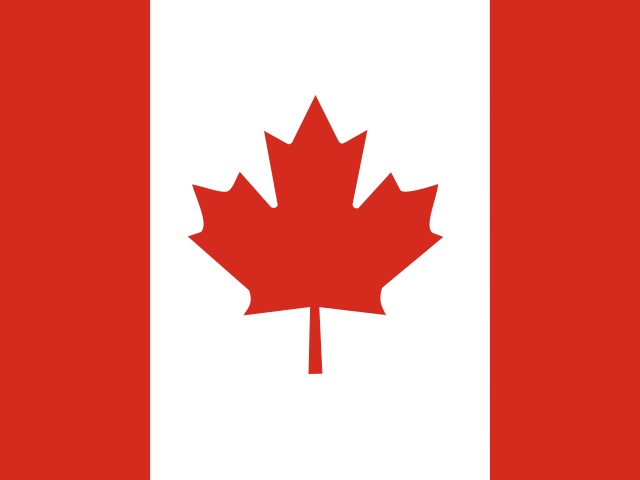
The National Flag of Canada is twice as long as it is wide, 64 units by 32 in the technical description, with a white square in the centre as wide as the flag is high. Canadian Heritage points out that depictions of the flag respect the 2:1 proportions, the red and white colours and the 11-point maple leaf to be proper representations of the National Flag.
The flag of Québec: 2:3 and the 1:7 rule
The flag of Québec is 2:3, a format chosen in 1948. The Gouvernement du Québec’s guidance for public buildings gives a rule it describes as generally observed in all countries: a flag height to pole height of about 1 to 7. A flag of 120 × 180 cm (4 × 6 ft), the size most often used by public institutions, goes on a pole of about 9 metres (30 ft), and a 15-metre (50 ft) pole takes a flag of 180 × 270 cm (6 × 9 ft). On the roof of a large building, the guidance gives 180 × 270 cm on a 9-metre pole or 120 × 180 cm on a 7.6-metre pole, and on an angled staff over the entrance of a small building, 60 × 90 cm or 90 × 135 cm.
| Common sizes of the flag of Québec | In feet |
|---|---|
| 60 × 90 cm | 2 × 3 ft |
| 90 × 135 cm | 3 × 4½ ft |
| 120 × 180 cm | 4 × 6 ft |
| 180 × 270 cm | 6 × 9 ft |
Flags flown together
When flags are displayed together, Canadian Heritage describes them as being about the same size, without changing their proportions. A 2:1 Canadian flag beside a 2:3 flag of Québec with the same height is therefore longer. The Gouvernement du Québec’s rules also have flags in a display of the same dimensions and on identical poles and finials.
Indoor flags and other uses

Indoor flags hang from a pole rather than fly, so they are sized to the room. Flags carried in a procession are on poles of 2.10 to 2.40 m (7 to 8 ft), according to Canadian Heritage, and a flag to drape a standard adult casket is 1.4 × 2.8 m (4.5 × 9 ft). Ceremonial flags with a gold fringe are never flown from an exterior flagpole.
Wind and weather
A larger flag catches more wind and puts more load on the pole, and flagpole manufacturers state the largest flag each of their poles is designed to carry. In exposed places, on the coast or on the open prairie, the wind load is higher than in a sheltered garden. How pole heights are chosen is described in the guide to flagpole heights.
Frequently asked questions
What size flag goes on a 6-metre (20-foot) flagpole?
Canadian Heritage’s table for exterior permanent flagpoles gives a flag of 0.90 × 1.80 m, or 3 × 6 feet, for a pole of 5.10 to 6 metres (17 to 20 feet).
What size flag goes on a 9-metre (30-foot) flagpole?
According to Canadian Heritage’s table, a pole of 9 to 10.50 metres (30 to 35 feet) takes a flag of 1.40 × 2.80 m, or 4½ × 9 feet. The Gouvernement du Québec’s guidance for the flag of Québec pairs a 9-metre pole with a flag of 120 × 180 cm.
What are the proportions of the Canadian flag?
The National Flag of Canada is twice as long as it is wide, 2:1, or 64 units by 32 in the official description. The white square in the centre is as wide as the flag is high.
Why is a flag of Québec not the same shape as the Canadian flag?
In 1948, Québec gave its flag a common international format of 2:3 rather than the 1:2 of British-inspired flags such as the flag of Canada, according to the Gouvernement du Québec. Flying the two side by side, flags of about the same height keep their own proportions.
What size flag is used on a casket?
According to Canadian Heritage, the proper size to drape a standard adult casket is 1.4 × 2.8 m (4.5 × 9 feet).
Sources
This guide is based on the following sources:
- Rules for flying the National Flag of Canada – On a flagpole – Canadian Heritage
- Description of the National Flag of Canada – Canadian Heritage
- Position of honour of the National Flag of Canada – Canadian Heritage
- Déploiement du drapeau à l’extérieur d’un édifice – Gouvernement du Québec
- Format légal et dimensions courantes – Gouvernement du Québec
- Parliament Hill flags – Public Services and Procurement Canada
- Parliament Hill flags (archived page, 2016) – Library and Archives Canada, Government of Canada Web Archive
Related guides
- Flag size calculatorFor a flagpole length in metres, the calculator shows the flag size in Canadian Heritage’s table and the size of a flag of Québec by the 1:7 guideline.
- Flagpole heightsCommon flagpole heights in Canada in metres and feet, the federal table of pole lengths and flag sizes, and examples of municipal height limits.
- Flag typesThe flags of Canada: the maple leaf flag, the ten provincial and three territorial flags with years and proportions, royal and historical flags.
- Half-mastHow the Canadian flag flies at half-mast: the position on the pole, raising and lowering, flags in the same group, and when flags are half-masted.