History of flags and flagpoles in Canada
Published Written by Flagpole Guides
According to Canadian Heritage, flags are thought to have first been used as rallying points for troops in battle, and today they identify countries, groups and organizations. Canada’s own history can be told through the flags that have flown over it – from the banners of New France to a maple leaf chosen in 1964 – and through the flagpoles that carried them, from ships’ masts to the pole on the Peace Tower.
New France
Since the first days of the European presence on Canadian soil, the flags of the European homelands were displayed. The Gouvernement du Québec traces the elements of its own flag to that period: from the moment Jacques Cartier used the fleur-de-lis as an emblem in America until the cession of New France to Great Britain, many standards and banners succeeded each other, and the king’s representatives and the militia flew flags with one, two or even three of the elements that would appear in Québec’s flag some three hundred years later. The fleur-de-lis itself is one of the oldest emblems in the world.
British North America
After New France, the flags of British North America showed the ties to the British Empire. Before and after Confederation in 1867, Canada used the United Kingdom’s Royal Union Flag, the Union Jack. It remained in use until 1965, and it lives on in the provincial flags of Ontario, Manitoba and British Columbia.
The Canadian Red Ensign
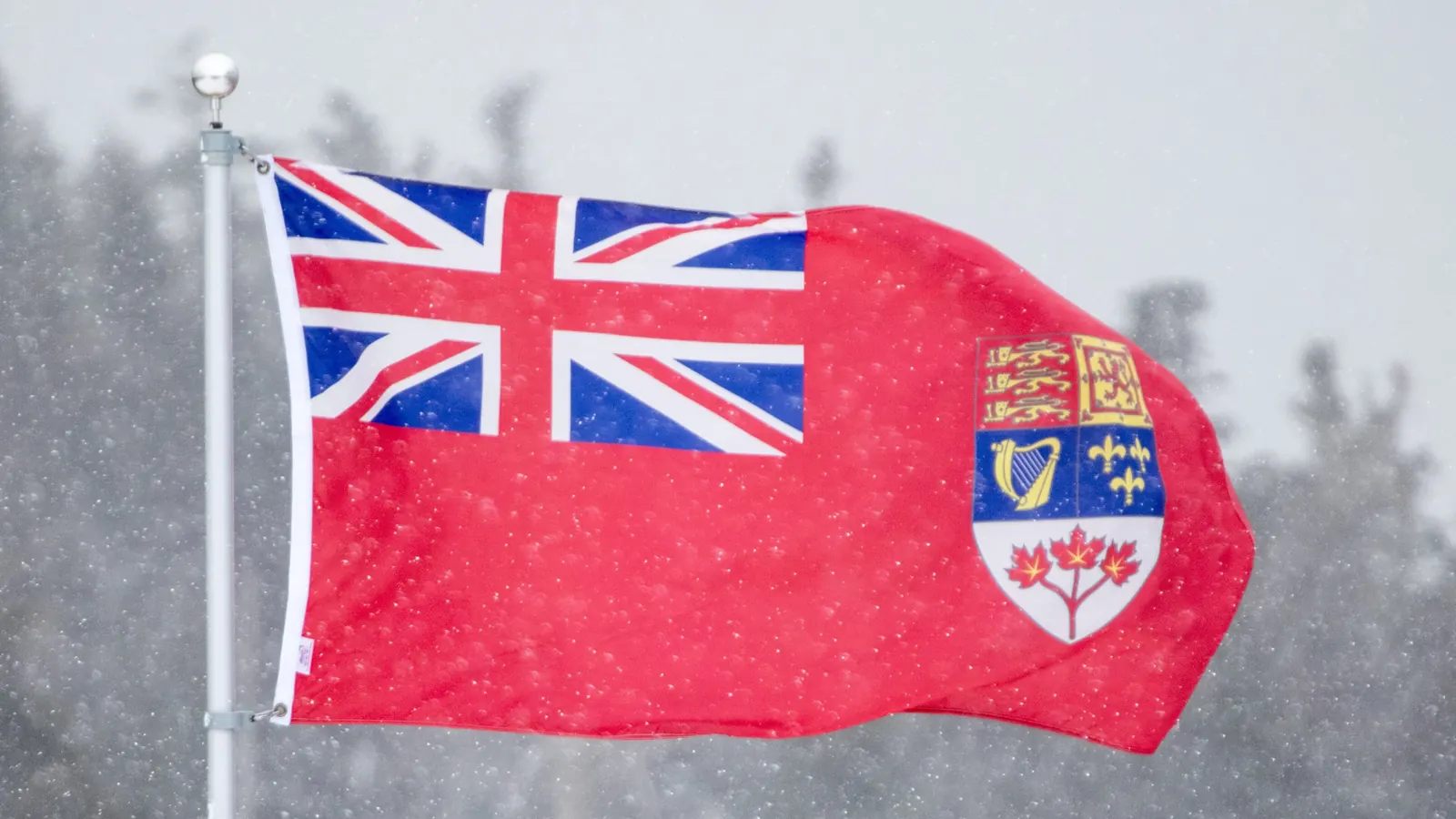
The Canadian Red Ensign – a red flag with the Union Jack in the canton and the shield of Canada on the fly – was officially a flag for Canadian ships from the 1890s, but it had been used unofficially at sea and on land since the 1870s and was widely recognized as a national symbol. Its shield changed as provinces joined Confederation, and there were many versions with wreaths of maple leaves, crowns and beavers. During the First World War it became a popular patriotic emblem, and after King George V granted arms to Canada in 1921, the new shield appeared on it; this version represented Canada in the Second World War. Attempts to adopt a distinctive flag in 1925 and 1946 were shelved, and as a compromise the Red Ensign flew from government buildings.
1948: the fleurdelisé
On 21 January 1948, the fleurdelisé replaced the Union Jack at the top of the central tower of the Hôtel du Parlement in Québec City. That morning, the Government of Québec had given it the status of official flag of Québec by decree. The Gouvernement du Québec marks the anniversary each year as the Jour du Drapeau.
1965: the maple leaf on Parliament Hill
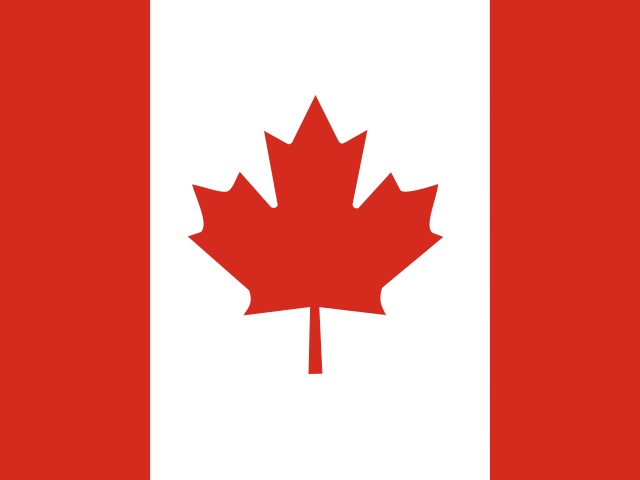
After the Great Flag Debate of 1964, the new flag was proclaimed by Queen Elizabeth II on 28 January 1965. On 15 February 1965, thousands gathered on Parliament Hill as the Red Ensign was lowered and, at the stroke of noon, the maple leaf flag was raised. The National Film Board of Canada filmed the ceremony. The story of the flag’s design is told in the guide to the Canadian flag.
The Peace Tower flag
The flag on the Peace Tower is Canada’s best-known flag. According to Public Services and Procurement Canada, it flies from a 10.7-metre flagpole and is replaced every working day, except on statutory holidays and in poor weather, and whenever it is half-masted. The employee who changes it takes the elevator to the observation deck and climbs 33 metres of stairs and ladders; throughout the 20 to 30 minutes it takes, the flag never touches the ground. Canadian residents can ask for a flag that has flown on Parliament Hill; the wait is now more than 100 years.
Flags at sea and on land
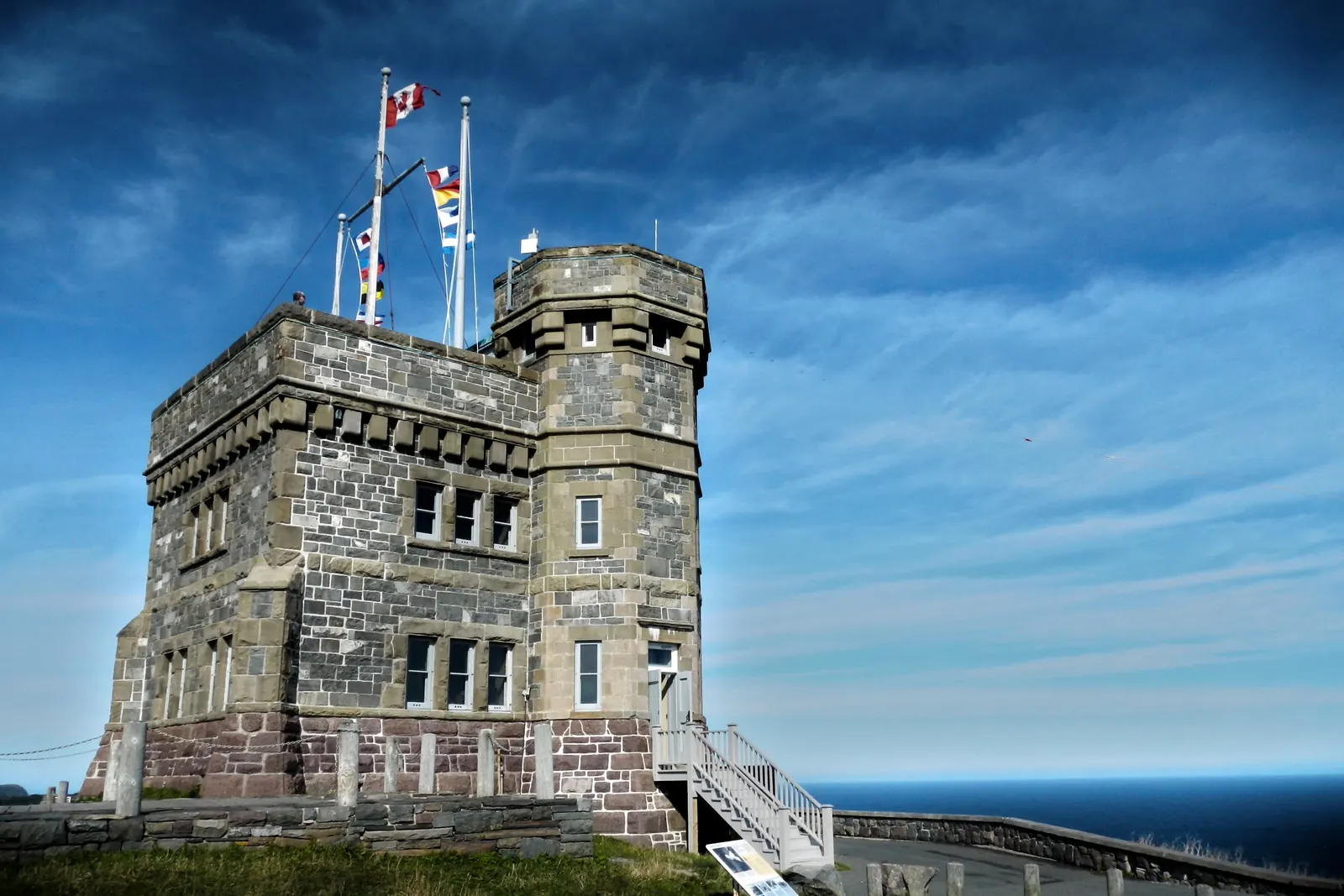
Many flag customs come from the sea. According to Canadian Heritage, the yardarm and gaff on a flagpole, used by naval establishments on land, are inspired by the display of flags on board ships, and the expression “to show one’s true colours” may come from warships that flew the colours of friendly nations before hoisting their own at the moment of attack. The staffs on His Majesty’s Canadian Ships still carry a painted crown finial, a naval tradition.
Newer flags
Most provincial and territorial flags are younger than Confederation: Ontario, Manitoba and New Brunswick adopted theirs in 1965, Yukon in 1967, Alberta in 1968, Saskatchewan and the Northwest Territories in 1969, and Newfoundland and Labrador in 1980. The newest is the flag of Nunavut, granted by the Governor General on 1 April 1999, designed by the Canadian Heraldic Authority with input from Inuit communities and artists. The Canadian Heraldic Authority itself was created in 1988 to administer official heraldry in Canada.
Historical flags today
Canadian Heritage has a policy on historical flags, used by the federal government and available as a guide to others. Historical flags may be flown where research shows a meaningful link with the place, where their design is well documented and where the public can learn why they are displayed. They fly on their own poles, lower than and away from the National Flag, whose lower edge the top of a historical flag never exceeds. More in the guide to flag types.
Frequently asked questions
Which flags flew in Canada before 1965?
The flags of the European homelands, such as France, from the first days of European presence; the Royal Union Flag, used in British North America and in Canada before and after Confederation until 1965; and the Canadian Red Ensign, used unofficially from the 1870s and flown from government buildings, according to Canadian Heritage.
When was the maple leaf flag first raised?
At noon on 15 February 1965, on Parliament Hill in Ottawa, as the Canadian Red Ensign was lowered, in front of thousands of people. The National Film Board of Canada filmed the ceremony.
When was the flag of Québec first raised?
On 21 January 1948, the fleurdelisé replaced the Union Jack at the top of the central tower of the Hôtel du Parlement in Québec City, after the government had made it the official flag of Québec by decree that morning.
Can historical flags still be flown?
Yes, under Canadian Heritage’s historical flag policy: always together with the National Flag of Canada, on a separate pole, lower than and away from it, and preferably where research shows a meaningful link between the flag and the place, with information for the public.
Sources
This guide is based on the following sources:
- The history of the National Flag of Canada – Canadian Heritage
- Historical flags of Canada – Canadian Heritage
- About National Flag of Canada etiquette – Canadian Heritage
- Foreign flags in Canada – Canadian Heritage
- Histoire du drapeau du Québec – Gouvernement du Québec
- Parliament Hill flags – Public Services and Procurement Canada
- Position of honour of the National Flag of Canada – Canadian Heritage
- Provincial and territorial symbols – Canadian Heritage
- Nunavut – Provincial and territorial symbols – Canadian Heritage
Related guides
- The Canadian flagWhat the maple leaf flag means, how it was chosen in the Great Flag Debate of 1964, why the leaf has 11 points, and the flag’s colours and proportions.
- Flag daysThe days on which the Canadian flag flies at half-mast, beside the Royal Union Flag or on its own anniversary in 2026 and 2027, with the rules behind each date.
- Flag typesThe flags of Canada: the maple leaf flag, the ten provincial and three territorial flags with years and proportions, royal and historical flags.
- Flagpole materialsFlagpole materials in Canada – aluminum, fibreglass, steel and wood – how they differ, which finishes exist and what the Canadian climate means.