
Flagpole repair in New Zealand: common faults and causes
Published Written by Flagpole Guides
Most flagpole faults have a simple cause: a rope that has worn out, a pulley that no longer turns, or a flag that has wrapped itself around the pole. More serious damage comes from corrosion, a loose mount or a storm. This guide describes the common faults and what usually causes them; how the parts work is explained in the guide to how a flagpole works.
Common faults
| Fault | Usual causes |
|---|---|
| Broken halyard | Sun damage, wear against the pole or pulley, age |
| Flag stuck at the top | Halyard off the pulley, seized pulley, flag wrapped around the pole |
| Flag wrapped around the pole | Changing wind direction, fixed truck, slack halyard |
| Halyard hard to pull | Dirty or worn pulley, knotted or swollen rope |
| Rattling or slapping noise | Loose external halyard in the wind |
| Torn or frayed flag | Strong wind, a flag too large for the pole, sharp edges |
| Corrosion at the base | Water and salt collecting at the foot of the pole or in the ground tube |
| Loose or leaning pole | Loose base mount bolts, cracked footing, worn spigot or ground tube |
| Jammed internal halyard | Rope twisted or caught inside the pole |
Halyard and pulley
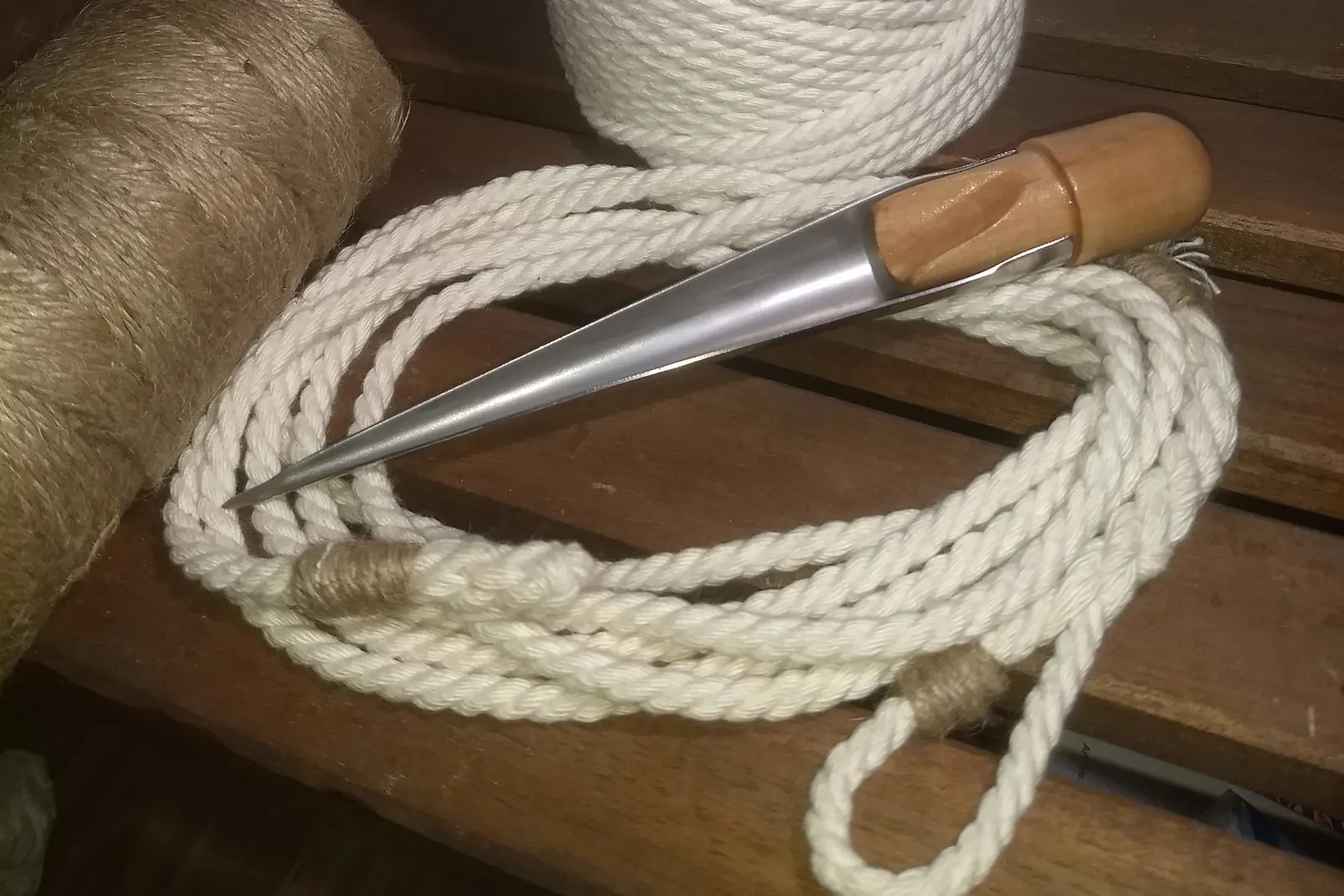
The halyard is the part that fails most often. Strong UV makes synthetic rope brittle, and wind makes it rub against the pole and the pulley. When the halyard breaks, the flag either drops or stays at the top. New Zealand flag makers such as Flagmakers sell halyard kits for their poles. Replacing a halyard on a fixed pole means reaching the truck at the top; on a pole with a folding spigot, the pole is lowered and the work is done on the ground. A seized pulley is usually a sign of dirt, corrosion or wear and can be replaced together with the truck.
Flags that wrap or tear
A flag that winds around the pole is often caught by gusty, changing winds. A revolving truck, fittings that turn freely and a tight halyard reduce the problem. Tears and frayed edges come from strong wind and long exposure. According to Manatū Taonga – Ministry for Culture and Heritage, large flags are more suitable for calm days, smaller storm flags can be used when wind speeds are expected to exceed 48 knots, and a flag in a dilapidated condition should not be flown. More in the guide to flagpole maintenance.
Corrosion and damage to the finish
Aluminium poles are usually powder-coated or anodised; according to the Flag & Banner Company, uncoated mill-finish aluminium turns black with weathering. Scratches and chips in the coating, and water collecting at the base, let corrosion start, and salt spray near the coast speeds it up. Steel fittings on an aluminium pole, such as a galvanised ground tube, can also corrode where the two metals meet. Small damage to the finish can be touched up; deep corrosion at the base weakens the pole.
Mount and footing
A pole that leans or moves has a problem at the base: loose bolts on a base mount or parapet mount, a cracked concrete footing or wear in the spigot or ground tube. After a storm, such a pole is at risk of falling. On a folding spigot, the hinge and its locking bolts are checked for wear.
Repair or replace?
Replaceable parts, such as the halyard, clips, pulley, truck and internal halyard access, are usually repaired or swapped. A pole that is bent, cracked or corroded through at the base is usually replaced, because its strength in the wind can no longer be relied on. If a new pole or part fails early, the guarantees under the Consumer Guarantees Act 1993 apply: products are of acceptable quality and last a reasonable time, and services such as installation are carried out with reasonable care and skill, according to Consumer Protection.
Safety during repairs
Most repairs involve the top of the pole. According to WorkSafe New Zealand, a fall from a height is likely to result in a serious injury, and WorkSafe publishes guidance on working safely at height and on ladders, scaffolding and elevating work platforms. Work near overhead power lines has minimum approach distances of its own. More in the guide to flagpole safety, and replacement parts in the guide to flagpole accessories.
Frequently asked questions
Why does a flag get stuck at the top of the pole?
Usually because the halyard has come off the pulley, the pulley in the truck has seized, or the flag has wrapped around the pole. Freeing it means reaching the top of the pole, unless the pole has a folding spigot and can be lowered.
Can a broken halyard be replaced?
Yes. The halyard is a replaceable part, and New Zealand flag makers sell halyard kits. On a fixed pole, the new halyard is threaded over the pulley at the top, which is work at height; on a pole with a folding spigot it can be done on the ground.
When is a flagpole replaced rather than repaired?
A pole that is bent, cracked or corroded through at the base is usually replaced, because its strength in the wind can no longer be relied on. Parts such as the halyard, clips, pulley and truck are usually repaired or swapped.
What if a new flagpole fails early?
Under the Consumer Guarantees Act 1993, products sold by businesses are of acceptable quality and last a reasonable time, according to Consumer Protection. If a new pole or part fails, the business can repair, replace or refund, and installation is covered by the guarantee of reasonable care and skill.
Sources
This guide is based on the following sources:
- Working at height – WorkSafe New Zealand
- Flagpoles – Flag & Banner Company
- Supreme flag pole – marine-grade aluminium – Flagmakers
- New Zealand flag – Flags in poor condition – Manatū Taonga – Ministry for Culture and Heritage
- Consumer Guarantees Act – Consumer Protection, Ministry of Business, Innovation and Employment
Related guides
- Flagpole maintenanceFlagpole and flag maintenance in New Zealand conditions: checking the pole, mount and halyard, UV and sea spray, folding, storing and disposing of flags.
- How a flagpole worksHow a flagpole works: the halyard and truck, internal and external halyards, breaking a flag at the top, half-masting, yardarms and gaffs, and folding spigots.
- Flagpole accessoriesThe parts of a flagpole explained: truck and pulley, halyard, toggles and sister clips, cleat, lockable halyard access, yardarm, gaff, spigot and lighting.
- Lifespan and sustainabilityHow long flagpoles and flags last in New Zealand sun, wind and sea spray, what shortens their life, storm flags, and how old flags and poles are disposed of.