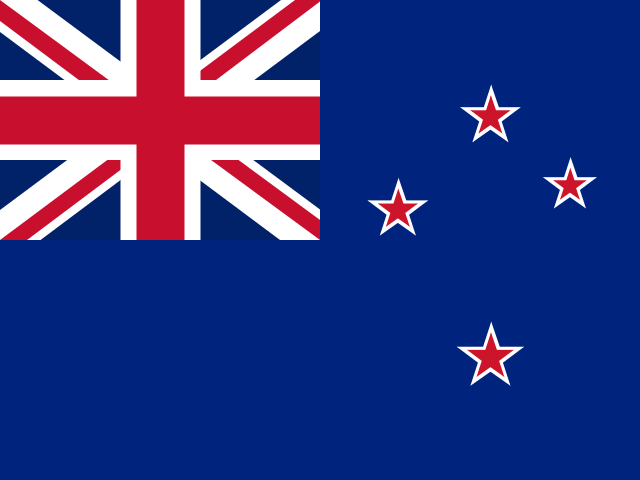
Flagpoles for businesses in New Zealand: company flags and the rules
Published Written by Flagpole Guides
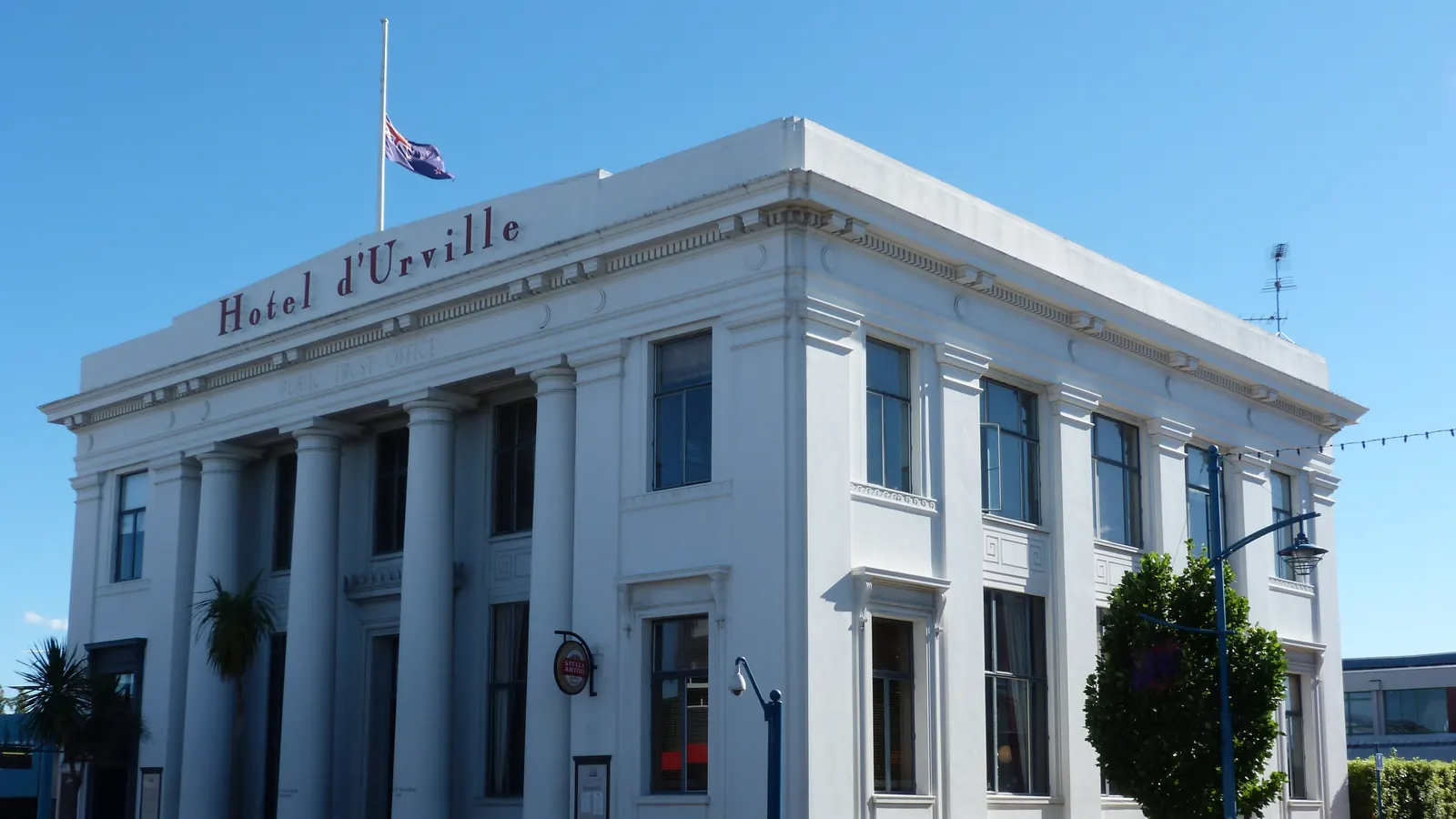
A flagpole at a business carries more than a flag. It shows the company’s name, marks national days, welcomes international visitors and, at half-mast, joins in public mourning. For New Zealand businesses, the rules come from the display rules of Manatū Taonga – Ministry for Culture and Heritage (MCH), the Flags, Emblems, and Names Protection Act 1981, the council’s district plan and the Health and Safety at Work Act 2015.
House flags beside the New Zealand flag
MCH’s glossary calls the flags of companies, clubs and other organisations house flags. In MCH’s display rules, the New Zealand flag takes precedence over all other national flags and house flags. In a line of flags, the order from left to right, as seen by a person facing them, is:
- the New Zealand flag
- flags of other countries, in alphabetical order
- house flags.
A house flag may fly beneath the New Zealand flag on the same flagpole. With two or more poles parallel to the building line, the New Zealand flag is the first on the left as seen by a person looking at the main entrance. More in the guide to flag protocol.
Several flagpoles
A business with several poles often flies the New Zealand flag, a company flag and, on occasion, the Tino Rangatiratanga flag or the flags of visiting countries. When the New Zealand flag flies with the flags of other countries, each flag is the same size and flies from a separate pole of the same height, according to MCH. More in the guide to foreign flags in New Zealand.
The flag in advertising and products
According to MCH, any person or organisation may use the New Zealand flag in advertising. The guidelines are that the flag is reproduced in its true form and colours, and that letters or designs are not added to it unless they appear in a different dimension and are clearly separate from its design. MCH can be contacted about using the flag in advertisements or for commercial purposes.
The Act sets the limits:
- Altering the flag: under section 11, placing any letter, emblem or representation on the New Zealand flag without lawful authority is an offence.
- State emblems: under section 13, using the Coat of Arms of New Zealand or a government department’s emblem in a way likely to suggest government authority or approval is an offence, unless the Minister has given written consent.
- Words: under section 14, using words such as “Royal” or “Government” in connection with a business in a way that implies royal or government patronage is an offence, unless authorised.
Under section 24, the maximum fine for a body corporate is $50,000.
Flags as signs
A company flag used to advertise the business can bring in the district plan’s rules for signs. In the Auckland Unitary Plan, a sign is a visual device that can be seen from a public open space or an adjoining property and attracts attention by giving directions, information or advertising, and the definition expressly includes banners and flags. The plan also refers to the Auckland Transport and Auckland Council Signage Bylaw 2015, and other councils have their own rules. The rules on flagpoles themselves are in the guide to installing a flagpole.
Half-mast and mourning
According to MCH, the etiquette for local authorities also applies to the house flag of a company or organisation: it can be flown at half-mast after the death of a prominent local citizen, appropriately on the day or part of the day of the funeral, while the New Zealand flag remains at full mast. Businesses can follow the government’s half-masting directives for the New Zealand flag but are not required to. MCH notifies subscribers by email whenever the flag is to be half-masted. More in the guide to flags in mourning.
Lighting
Businesses often light their flags so that they can fly around the clock. Under the New Zealand Flag Notice 2024, the flag is not flown at night on a government building unless it is floodlit, and district plans limit light spill onto neighbouring sites. More in the guide to flag lighting.
Health and safety
A flagpole at a business is part of the workplace. Under the Health and Safety at Work Act 2015, a person conducting a business or undertaking manages the risks to workers and others so far as is reasonably practicable, including those who raise the flag and those who maintain the pole. According to WorkSafe New Zealand, a fall from a height is likely to result in a serious injury, and minimum approach distances apply near overhead power lines. More in the guide to flagpole safety.
Frequently asked questions
Where does a company flag fly beside the New Zealand flag?
According to Manatū Taonga, the New Zealand flag takes precedence over house flags, the flags of companies and organisations. In a line of flags, the order from left to right as seen by a viewer is the New Zealand flag, flags of other countries in alphabetical order and house flags. A house flag may also fly beneath the New Zealand flag on the same flagpole.
Can a business use the New Zealand flag in advertising?
Yes. According to Manatū Taonga, any person or organisation may use the New Zealand flag in advertising, provided it is reproduced in its true form and colours and letters or designs are not added to it, unless they appear in a different dimension and are clearly separate from the flag’s design.
Can a company lower its flag for a death?
Yes. According to Manatū Taonga, the same etiquette as for local authorities applies to the house flag of a company or organisation: it can be flown at half-mast on the day or part of the day of the funeral of a prominent local citizen, while the New Zealand flag remains at full mast.
Is a company flag a sign under the district plan?
It can be. In the Auckland Unitary Plan, a sign is a visual device seen from a public space or a neighbouring property that attracts attention by giving information or advertising, and it expressly includes flags. The council can say which rules apply to a particular flag.
Sources
This guide is based on the following sources:
- Display rules for the New Zealand flag – Manatū Taonga – Ministry for Culture and Heritage
- New Zealand flag – Use of the New Zealand flag in advertising – Manatū Taonga – Ministry for Culture and Heritage
- Flags, Emblems, and Names Protection Act 1981, sections 11, 13, 14 and 24 – New Zealand Legislation
- Auckland Unitary Plan, Chapter J1 Definitions – Sign – Auckland Council
- Health and Safety at Work Act 2015, section 36 – New Zealand Legislation
- Working at height – WorkSafe New Zealand
Related guides
- Foreign flags in New ZealandFlying the flag of another country in New Zealand: position beside the New Zealand flag, the order of several national flags, the Union Jack and flag hire.
- Flag lightingWhen the New Zealand flag flies at night, how flags are lit, light spill and district plan lighting rules, and who may do the electrical work on a flagpole.
- Flag protocolThe position of honour for the New Zealand flag: a line of flags, buildings, circles, yardarms and gaffs, and flying it with the Tino Rangatiratanga flag.
- Flagpole safetyFlagpole safety in New Zealand: wind zones, storm flags, overhead power lines and NZECP 34, underground services, work at height and duties under HSWA.