Buying a flag in New Zealand: price, size and quality
Published Written by Flagpole Guides
A flag can look the same in two online shops and still differ a lot in price. The differences usually come from size, fabric, manufacture and finish. This guide does not list prices, as they vary between makers and retailers and change over time. Instead it explains what affects the price of a flag in New Zealand, what to look for in the details and which consumer rights apply.
What affects the price of a flag?
| Factor | How it affects the price |
|---|---|
| Size | More fabric, more printing or sewing, a stronger finish |
| Fabric | Polyester knit and heavier woven polyester bunting differ in weight and durability |
| Printed or sewn | Sewn flags take more work than printed ones |
| Finish | Heavy-duty header, rope and toggle or sister clips, reinforced fly edge |
| Design | Standard flags cost less than custom designs made to order |
| Printing method | Screen printing has set-up costs; digital printing suits single flags and fine detail |
Flag price and size
Size is usually the biggest single factor. According to Manatū Taonga – Ministry for Culture and Heritage (MCH), New Zealand flags are made commercially in five sizes from one to three yards, and the two-yard size, 1800 × 900 mm, is the most common. A larger flag takes more material and a stronger finish, and it wears the halyard and pole harder in the wind. Which size suits a pole is explained in the guide to flag sizes and worked out by the flag size calculator.
Fabric and manufacture
According to MCH, sewn or printed flags are made in durable polyester bunting, while cheaper printed flags are made in a polyester knit fabric. The Flag & Banner Company describes two printing methods:
- Screen printing lays down more dye and gives equal colour on both sides, but a screen is made for each colour, so it suits larger quantities and national flags.
- Digital printing gives finer detail and quicker delivery, but for full colour on both sides both sides are printed, which has cost implications.
Finish and fittings
Traditionally, flags are hemmed all round, with a heavy-duty heading at the end next to the flagpole into which a cord is sewn for the fittings, according to the Flag & Banner Company. The most common fittings are rope and toggle and sister clips; other methods include eyelets, a closed sleeve and soft loops. A reinforced fly edge makes a flag more resistant to fraying. The halyard system of the flagpole decides which fitting is needed, as explained in the guide to how a flagpole works.
The official design
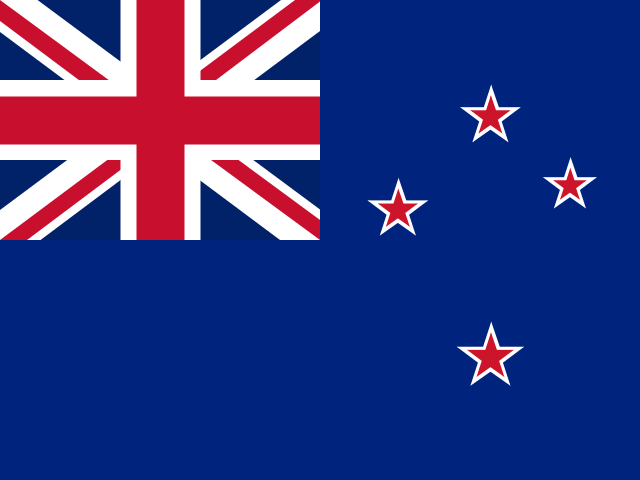
The New Zealand flag’s design is set out in Schedule 1 of the Flags, Emblems, and Names Protection Act 1981, and MCH gives its colours as PANTONE 186C red and PANTONE 280C blue on white. Under section 11 of the Act, altering the flag by placing a letter, emblem or representation on it without lawful authority is an offence. MCH lists New Zealand flag manufacturers on its website and does not supply flags itself. More in the guide to the New Zealand flag.
Sizes and tolerances
With flags, sizing is nominal, according to the Flag & Banner Company: a two-yard flag at 1800 × 900 mm plus or minus 5 to 10 percent is normal and acceptable. When comparing offers, the exact size in millimetres is more useful than the name of the size.
Consumer rights when buying
- Consumer guarantees: under the Consumer Guarantees Act 1993, products sold by businesses are of acceptable quality, fit for a particular purpose, match their description and are delivered on time and in good condition, according to Consumer Protection at the Ministry of Business, Innovation and Employment.
- Remedies: the business can repair, replace or refund. Where the failure is of a substantial character, the buyer can return the product or keep it with compensation for the drop in value.
- Not covered: a change of mind, faults the buyer was told about before buying, damage caused by misuse, and goods bought privately, including through Trade Me or Marketplace from someone who is not in trade.
- Fair trading: under the Fair Trading Act 1986, businesses must not mislead about prices, discounts or products, and claims have to be backed up.
- Overseas sellers: the Fair Trading Act still applies to goods bought online from an overseas seller, but it can be difficult to enforce, according to Consumer Protection.
Comparing offers
Offers are easier to compare when the details are clear: the exact size in millimetres, the fabric, printed or sewn, the fittings, and the colours of an official flag. The halyard and flagpole are covered in the guide to buying a flagpole.
Frequently asked questions
What affects the price of a flag?
The price of a flag depends mainly on its size, the fabric, whether it is printed or sewn, the finish at the header and fly, and whether it is a standard flag or a custom design. A larger flag takes more material and a stronger finish.
Why are no prices listed here?
Prices differ between flag makers and retailers and change over time. This guide explains what affects the price of a flag, which makes it easier to compare offers on the same basis.
Which size is most common?
The two-yard flag, 1800 × 900 mm. According to Manatū Taonga, New Zealand flags are made commercially in five sizes from one to three yards, and the two-yard size is the most common.
What are my rights if a flag is faulty?
Under the Consumer Guarantees Act 1993, products sold by businesses must be of acceptable quality, fit for a particular purpose and match their description, according to Consumer Protection. If they are not, the business can repair, replace or refund. The Act does not cover a change of mind or goods bought privately.
Sources
This guide is based on the following sources:
- New Zealand flag – Buying or hiring New Zealand flags – Manatū Taonga – Ministry for Culture and Heritage
- Flag & Banner Company – FAQ – Flag & Banner Company
- Heavy-duty New Zealand flag – FlagSeller
- Consumer Guarantees Act – Consumer Protection, Ministry of Business, Innovation and Employment
- Fair Trading Act – Consumer Protection, Ministry of Business, Innovation and Employment
- Flags, Emblems, and Names Protection Act 1981, section 11 – New Zealand Legislation
Related guides
- Flag sizesThe five standard New Zealand flag sizes from 1 to 3 yards, the 1:2 proportions of the national flag and Manatū Taonga’s guide for matching flag and pole.
- Flag size calculatorThe flag size calculator shows the flag length for a flagpole by Manatū Taonga’s guide, the size at 1:2 and the nearest of the five New Zealand flag sizes.
- Flag typesThe official flags of New Zealand: the national flag, the red and white ensigns, the air ensigns, the Governor-General’s flag and the Tino Rangatiratanga flag.
- The New Zealand flagWhat the New Zealand flag means: the royal blue, the Union Jack and the Southern Cross, the official colours, the 1902 star positions and the flag referendums.
- Buying a flagpoleBuying a flagpole in New Zealand: what affects the price – height, finish, halyard, mounting, delivery and installation – plus consents and consumer rights.
- Flag flying rulesThe rules for flying the New Zealand flag: who may fly it, flying at night, the flag’s condition and disposal, advertising and the offences in the Flags Act.