History of flags and flagpoles in New Zealand
Published Written by Flagpole Guides
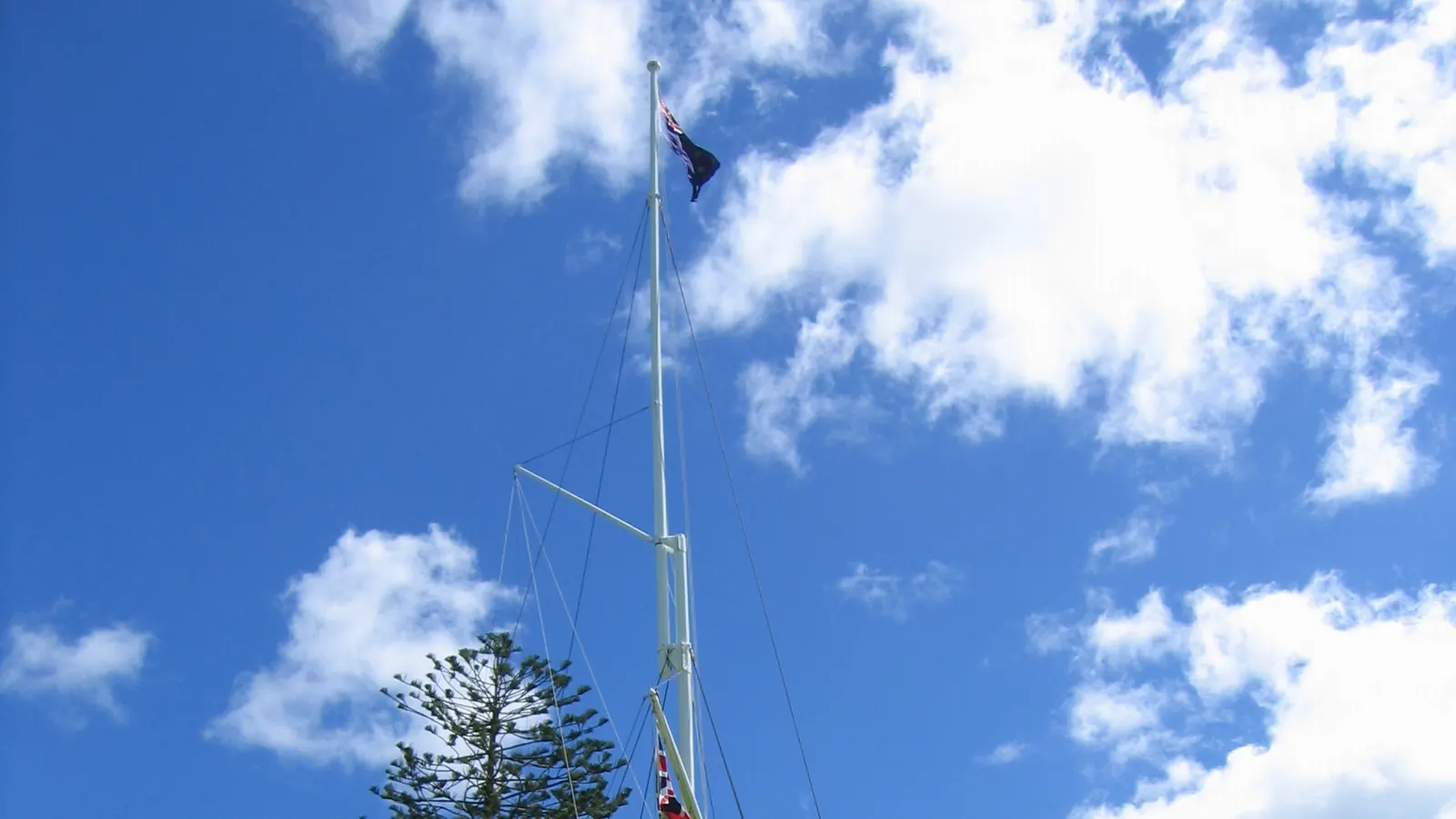
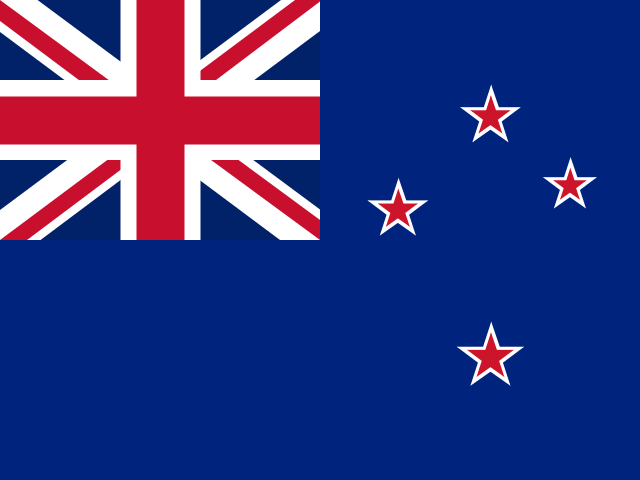
Flags came to New Zealand on ships, and for a long time the question of which flag flew from a flagpole was a question of trade, sovereignty and mana. The history runs from a flag chosen by Māori chiefs in 1834, through the Union Jack and a flagstaff felled again and again, to a naval ensign that became the national flag in 1902, the recognition of a national Māori flag in 2009 and two referendums on the flag in 2015 and 2016. The account below follows NZHistory, published by Manatū Taonga – Ministry for Culture and Heritage.
A flag for trade: the United Tribes flag
The need for a flag was first raised in 1830, when the Hokianga-built trading ship Sir George Murray was seized in Sydney: as New Zealand was not a British colony, its ships could not sail under a British flag or register, and without a flag they were liable to seizure. The British Resident, James Busby, suggested a New Zealand flag and saw it also as a way to encourage Māori chiefs to work together. The missionary Henry Williams drew three designs.
On 20 March 1834, 25 Far North chiefs gathered at Busby’s residence at Waitangi to choose a flag. The most popular design, already used by the Church Missionary Society, received 12 votes. Busby declared it the national flag of New Zealand and had it hoisted on a flagpole to a 21-gun salute from HMS Alligator. King William IV approved it, and it became known as the Flag of the United Tribes of New Zealand. According to NZHistory, it remains important to northern Māori.
The Union Jack and the flagstaff at Kororāreka
After the signing of the Treaty of Waitangi on 6 February 1840, the Union Jack replaced the United Tribes flag as the official flag. Lieutenant-Governor William Hobson removed the United Tribes flag from the Bay of Islands and had the New Zealand Company’s version hauled down at Port Nicholson, Wellington.
Some Māori, including the Ngāpuhi chief Hōne Heke, believed Māori should have the right to fly the United Tribes flag alongside the Union Jack, in recognition of their equal status with the government. Heke’s repeated felling of the flagstaff at Kororāreka in 1844–45 was, in NZHistory’s words, a vivid rejection of the Union Jack as a symbol of British power over Māori. The Ngāi Tahu chief Tūhawhaiki’s hoisting of the United Tribes flag on Ruapuke Island in the 1840s also symbolised Māori independence.
From ship’s ensign to national flag
| Year | Event |
|---|---|
| 1865 | The Colonial Naval Defence Act requires colonial government ships to fly the Blue Ensign with the colony’s badge |
| 1867 | The letters “NZ” in red with a white border are placed on the Blue Ensign |
| 1869 | The Southern Cross of four red stars replaces the letters |
| 1899 | A signalling flag with the stars in a white disc comes into use and spreads to land |
| 1902 | King Edward VII approves the New Zealand Ensign Act on 24 March; the proclamation appears in the Gazette on 12 June |
| 1903 | The New Zealand Red Ensign is adopted for merchant ships |
| 1968 | The New Zealand White Ensign replaces the British White Ensign in the navy |
| 1982 | The Flags, Emblems, and Names Protection Act 1981 comes into force |
According to NZHistory, the Union Jack remained in regular use in New Zealand well into the 1950s, instead of or together with the New Zealand flag.
The national Māori flag
The Tino Rangatiratanga flag was developed in 1989 by members of the Te Kawariki group and designed by the artists Hiraina Marsden, Jan Dobson and Linda Munn. It was unveiled at Waitangi on 6 February 1990. After a nationwide consultation in 2009, with 21 public hui and more than 1200 submissions, Cabinet recognised it on 14 December 2009 as the preferred national Māori flag. On Waitangi Day 2010 it flew for the first time on the Auckland Harbour Bridge, at Parliament and on other government buildings.
The referendums of 2015 and 2016
In 2014, Prime Minister John Key announced a two-stage referendum on the flag. The public suggested 10,292 designs. In a postal referendum in November 2015, voters chose Kyle Lockwood’s Silver Fern (Black, White and Blue) from five alternatives. In March 2016, they chose between that design and the current flag, and nearly 57 percent preferred the current flag.
From timber flagstaffs to aluminium poles
The flagstaffs of the 19th century, like the one at Kororāreka, were made of timber, and much of the vocabulary of flagpoles, such as yardarm, gaff and halyard, comes from sailing ships. Today New Zealand flag makers make their poles from marine-grade aluminium. The materials are compared in the guide to flagpole materials, the meaning of the flag in the guide to the New Zealand flag, and the other official flags in the guide to flag types.
Frequently asked questions
What was New Zealand’s first flag?
The Flag of the United Tribes of New Zealand, chosen by 25 northern chiefs at Waitangi on 20 March 1834 and hoisted on a flagpole to a 21-gun salute from HMS Alligator. According to NZHistory, it was recognised as New Zealand’s first national flag until 1840.
Why did Hōne Heke cut down the flagstaff at Kororāreka?
According to NZHistory, Hōne Heke and others believed that Māori should have the right to fly the United Tribes flag alongside the Union Jack. His repeated felling of the flagstaff at Kororāreka in 1844–45 was a vivid rejection of the Union Jack as a symbol of British power over Māori.
When did the current flag become official?
The Southern Cross was added to the blue ensign of colonial government ships in 1869, and the flag came to be used on land. The New Zealand Ensign Act made it the national flag in 1902: King Edward VII approved the Act on 24 March 1902, and the Governor’s proclamation was published in the New Zealand Gazette on 12 June 1902.
Has New Zealand considered changing its flag?
Yes. In two referendums in 2015 and 2016, voters first chose a silver fern design as the preferred alternative and then chose between it and the current flag. Nearly 57 percent preferred the current flag, according to NZHistory.
Sources
This guide is based on the following sources:
- Flags of New Zealand – NZHistory, Manatū Taonga – Ministry for Culture and Heritage
- Flags of New Zealand – United Tribes flag – NZHistory, Manatū Taonga – Ministry for Culture and Heritage
- Flags of New Zealand – Union Jack – NZHistory, Manatū Taonga – Ministry for Culture and Heritage
- Flags of New Zealand – The NZ flag – NZHistory, Manatū Taonga – Ministry for Culture and Heritage
- Flags of New Zealand – The national Māori flag – NZHistory, Manatū Taonga – Ministry for Culture and Heritage
- Flags of New Zealand – Flag referenda – NZHistory, Manatū Taonga – Ministry for Culture and Heritage
- Tino rangatiratanga flag – Manatū Taonga – Ministry for Culture and Heritage
Related guides
- The New Zealand flagWhat the New Zealand flag means: the royal blue, the Union Jack and the Southern Cross, the official colours, the 1902 star positions and the flag referendums.
- Flag daysAll days of national commemoration on which the New Zealand flag is flown in 2026 and 2027, from Waitangi Day and Anzac Day to Matariki and Labour Day.
- Flag typesThe official flags of New Zealand: the national flag, the red and white ensigns, the air ensigns, the Governor-General’s flag and the Tino Rangatiratanga flag.
- Flagpole materialsFlagpole materials compared for New Zealand conditions: marine-grade aluminium, powder coating and anodising, fibreglass, steel and timber, sea spray and wind.