Flags of New Zealand: national flag, ensigns and the Māori flag
Published Written by Flagpole Guides
New Zealand has one national flag and several other official flags, most of them ensigns for ships and aircraft. The Flags, Emblems, and Names Protection Act 1981 declares the national flag and names the red and white ensigns and the air force ensign, and Manatū Taonga – Ministry for Culture and Heritage (MCH) describes six further flags that can be displayed for official purposes. This guide gives an overview; the meaning of the national flag is covered in the guide to the New Zealand flag.
The New Zealand flag
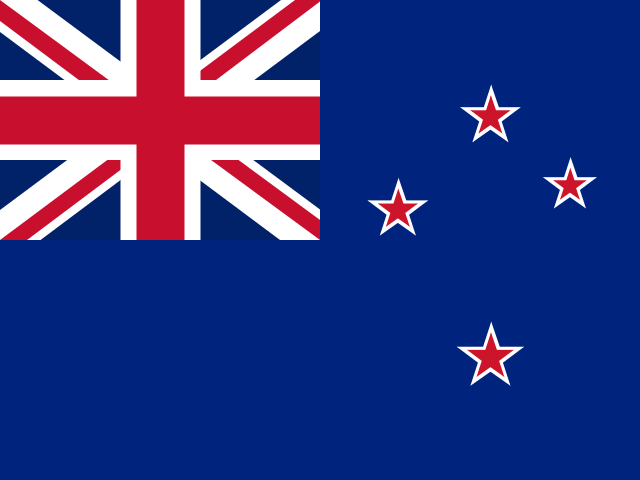
The national flag is the New Zealand Ensign depicted in Schedule 1 of the Act: a royal blue background with the Union Jack in the first quarter and four five-pointed red stars with white borders in the fly, representing the Southern Cross. Under section 5 of the Act, it is the national flag for general use on land within New Zealand and the national colours of New Zealand government ships. Anyone may fly it, on any day.
The New Zealand Red Ensign
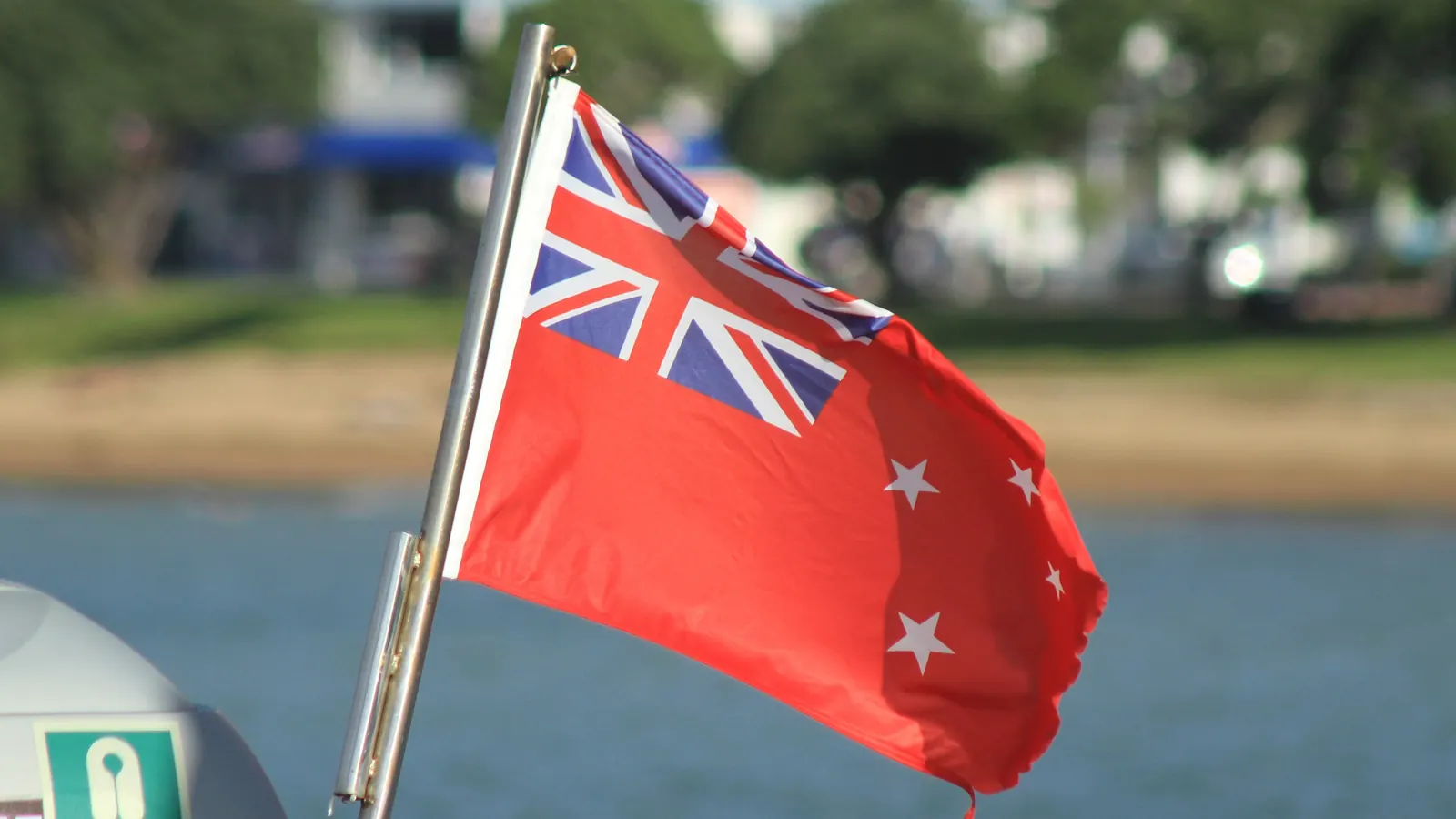
The New Zealand Red Ensign has the Union Jack in the first quarter and the Southern Cross as four white stars on a red field. It is based on the red ensign of British merchant ships and was adopted in 1903, according to NZHistory. Non-government New Zealand ships may fly the New Zealand flag, the red ensign or any other authorised flag. On land, the red ensign may be flown in places or on occasions of Māori significance, a traditional practice that section 9 of the Act allows to continue, with or without letters or emblems on it.
The New Zealand White Ensign
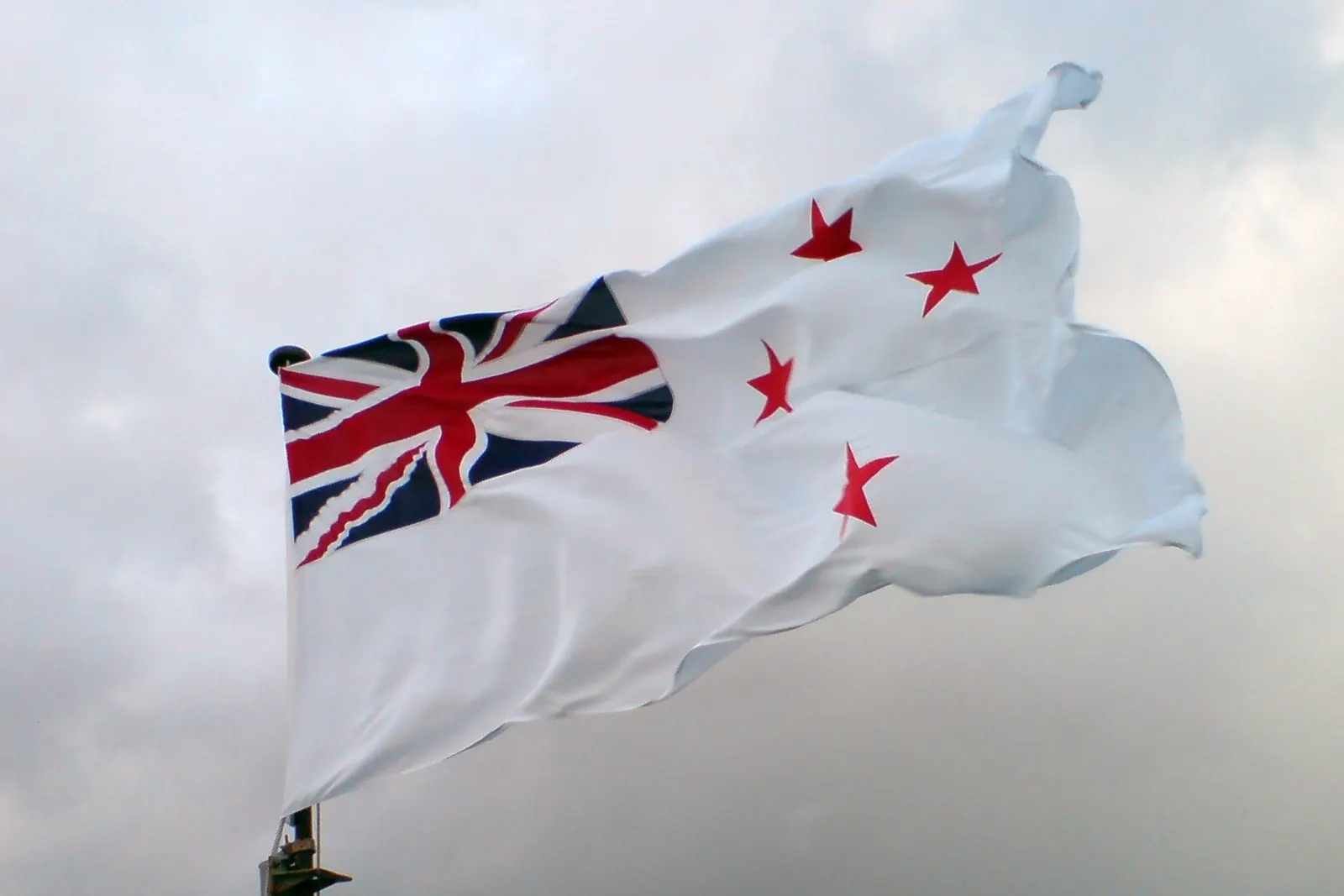
The New Zealand White Ensign has the Union Jack on a white background and four red stars in the fly. It has been used by ships of the Royal New Zealand Navy since 1968, when it replaced the British White Ensign, and is flown by ships and commissioned shore establishments, usually only during daylight hours, according to MCH.
The air ensigns
| Ensign | Design | Use |
|---|---|---|
| Royal New Zealand Air Force Ensign | Light blue with the Union Jack and the RNZAF roundel | Hoisted daily at air force premises; approved in 1939 |
| New Zealand Civil Air Ensign | Light blue with a dark blue cross edged in white, the Union Jack and four red stars | New Zealand aircraft, licensed aerodromes and airline offices, with written permission from the Director of Civil Aviation; instituted in 1938 |
The Governor-General’s flag
The Governor-General’s flag is flown on all occasions when the Governor-General is present and takes precedence over the New Zealand flag. It flies continuously over Government House when the Governor-General is in residence and on vehicles used for official occasions. The current design was introduced in 2008, according to NZHistory. The Queen’s personal flag for New Zealand, adopted in 1962, ceased to be used after the death of Queen Elizabeth II in 2022.
The Union Jack
The Union Flag is the British national flag. According to MCH, it is of equal rank with other national flags, and it is only appropriate to fly it where a direct link exists with the United Kingdom or to recognise a distinguished British visitor.
The Tino Rangatiratanga flag
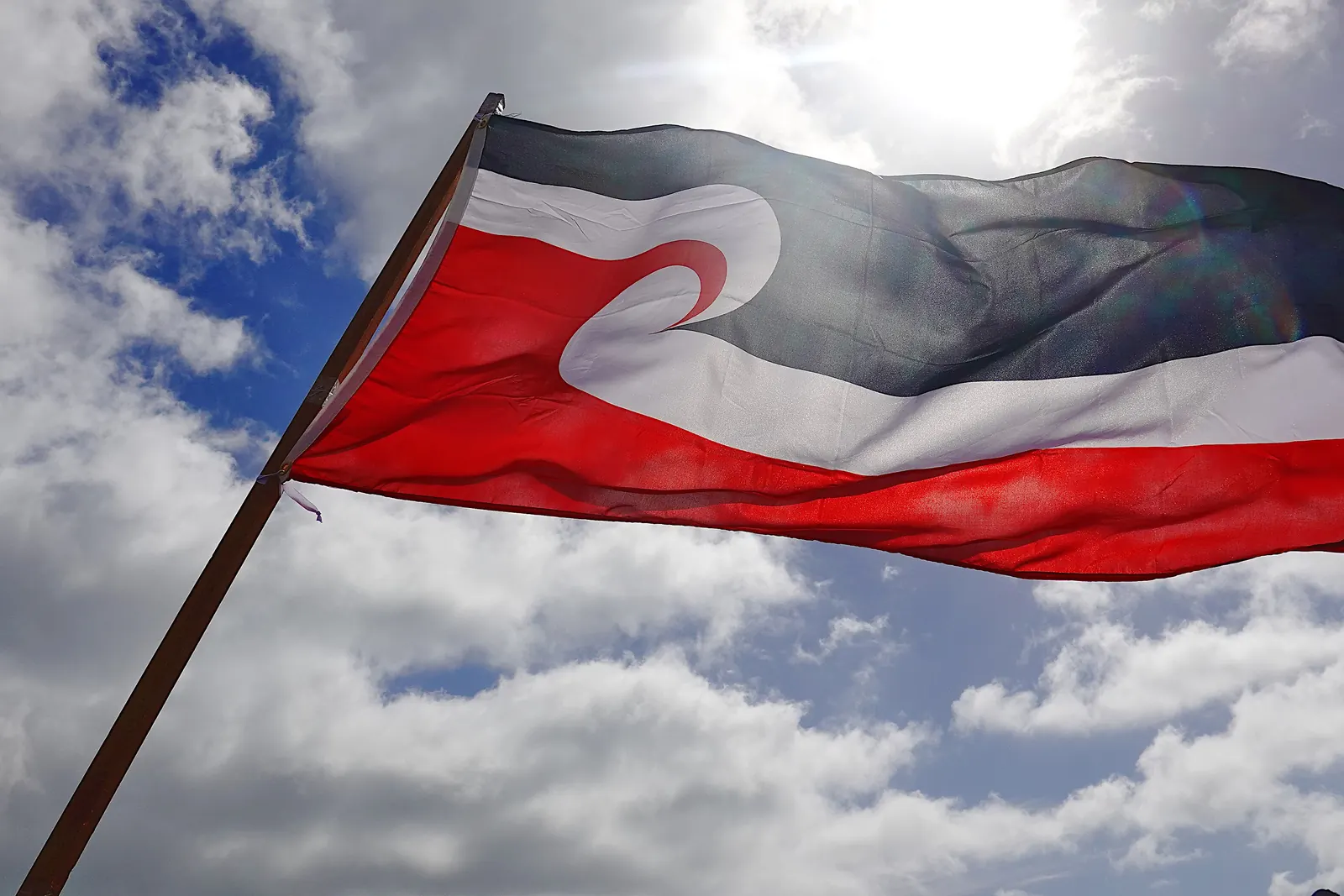
The Tino Rangatiratanga flag was developed in 1989 by members of the Te Kawariki group and unveiled at Waitangi on 6 February 1990. After 21 public hui and more than 1200 submissions in 2009, 80.1 percent of which preferred it, Cabinet recognised it on 14 December 2009 as the preferred national Māori flag. According to MCH, it has no official status but is a symbol of the land that can complement the New Zealand flag. Its three colours stand for three realms: black for Te Korekore, potential being; red for Te Whai Ao, coming into being; and white for Te Ao Mārama, the realm of being and light. The koru represents the unfolding of new life, hope for the future and renewal. It is flown with the black section at the top.
The United Tribes flag
The Flag of the United Tribes of New Zealand was chosen by 25 northern chiefs at Waitangi on 20 March 1834 and recognised by the British Admiralty as New Zealand’s flag. After the Treaty of Waitangi in 1840, the Union Jack replaced it as the official flag. According to NZHistory, the United Tribes flag remains important to northern Māori. The story is told in the guide to flagpole history.
Other flags
Many other flags fly in New Zealand: council and regional flags, iwi and hapū flags, club and company flags, and flags of other countries. How they are placed beside the New Zealand flag is explained in the guide to flag protocol, and sizes in the guide to flag sizes.
Frequently asked questions
How many official flags does New Zealand have?
According to Manatū Taonga, besides the New Zealand flag there are six other flags that can be displayed for official purposes: the Governor-General’s flag, the New Zealand Red Ensign, the New Zealand White Ensign, the Royal New Zealand Air Force Ensign, the New Zealand Civil Air Ensign and the Union flag.
Is the red ensign New Zealand’s national flag?
No. The New Zealand Red Ensign is the flag of New Zealand merchant ships. According to Manatū Taonga, it has sometimes been flown incorrectly in the belief that it is the national flag. It may be flown on land in places or on occasions of Māori significance, a customary use protected by section 9 of the Flags, Emblems, and Names Protection Act 1981.
Does the Tino Rangatiratanga flag have official status?
No. Cabinet recognised it on 14 December 2009 as the preferred national Māori flag, to complement the New Zealand flag. According to Manatū Taonga, it has no official status but is a symbol of the land.
What is the United Tribes flag?
The Flag of the United Tribes of New Zealand was chosen by 25 northern chiefs at Waitangi on 20 March 1834 and was recognised as New Zealand’s first national flag until 1840. According to NZHistory, it remains important to northern Māori.
Sources
This guide is based on the following sources:
- Other official New Zealand flags – Manatū Taonga – Ministry for Culture and Heritage
- Tino rangatiratanga flag – Manatū Taonga – Ministry for Culture and Heritage
- Flags of New Zealand – Other official flags – NZHistory, Manatū Taonga – Ministry for Culture and Heritage
- Flags of New Zealand – United Tribes flag – NZHistory, Manatū Taonga – Ministry for Culture and Heritage
- Flags, Emblems, and Names Protection Act 1981, sections 2, 5, 6 and 9 – New Zealand Legislation
Related guides
- Flag sizesThe five standard New Zealand flag sizes from 1 to 3 yards, the 1:2 proportions of the national flag and Manatū Taonga’s guide for matching flag and pole.
- The New Zealand flagWhat the New Zealand flag means: the royal blue, the Union Jack and the Southern Cross, the official colours, the 1902 star positions and the flag referendums.
- Flag protocolThe position of honour for the New Zealand flag: a line of flags, buildings, circles, yardarms and gaffs, and flying it with the Tino Rangatiratanga flag.
- Flag flying rulesThe rules for flying the New Zealand flag: who may fly it, flying at night, the flag’s condition and disposal, advertising and the offences in the Flags Act.