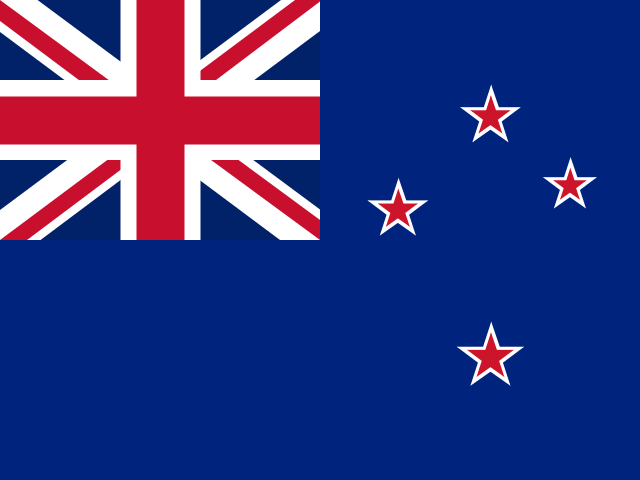
Flags in mourning in New Zealand: directives, funerals and coffins
Published Written by Flagpole Guides
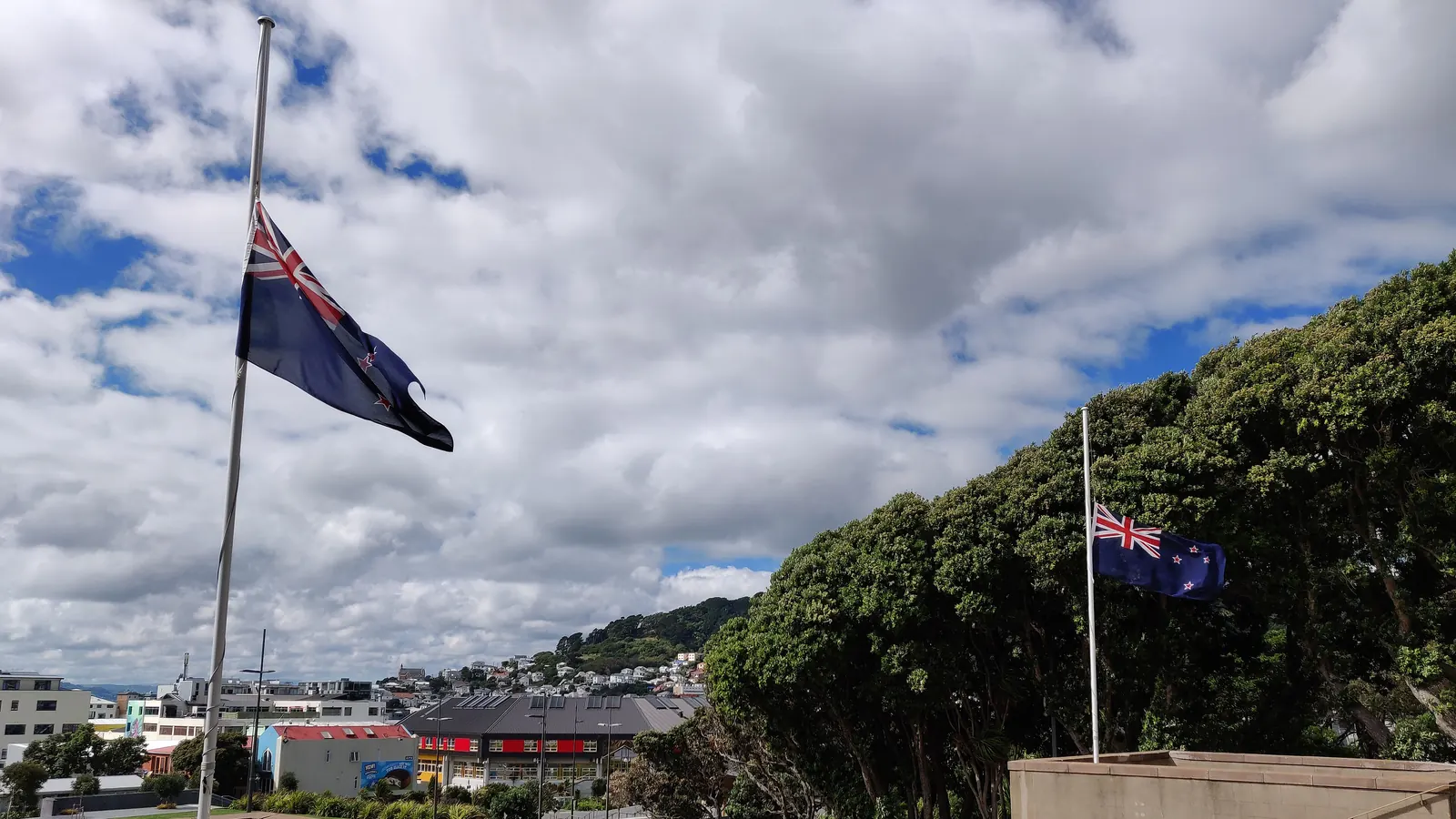
In New Zealand, mourning is shown mainly by flying flags at half-mast. How long and where depends on the occasion: the death of the Sovereign affects the whole country for days, the death of a former prime minister two days, and a local death only the flags of the community concerned. The occasions for government buildings are set in the New Zealand Flag Notice 2024, and Manatū Taonga – Ministry for Culture and Heritage (MCH) issues a directive and publishes a list of every official half-masting since 2005. How the flag is lowered is described in the guide to half-mast.
The death of the Sovereign
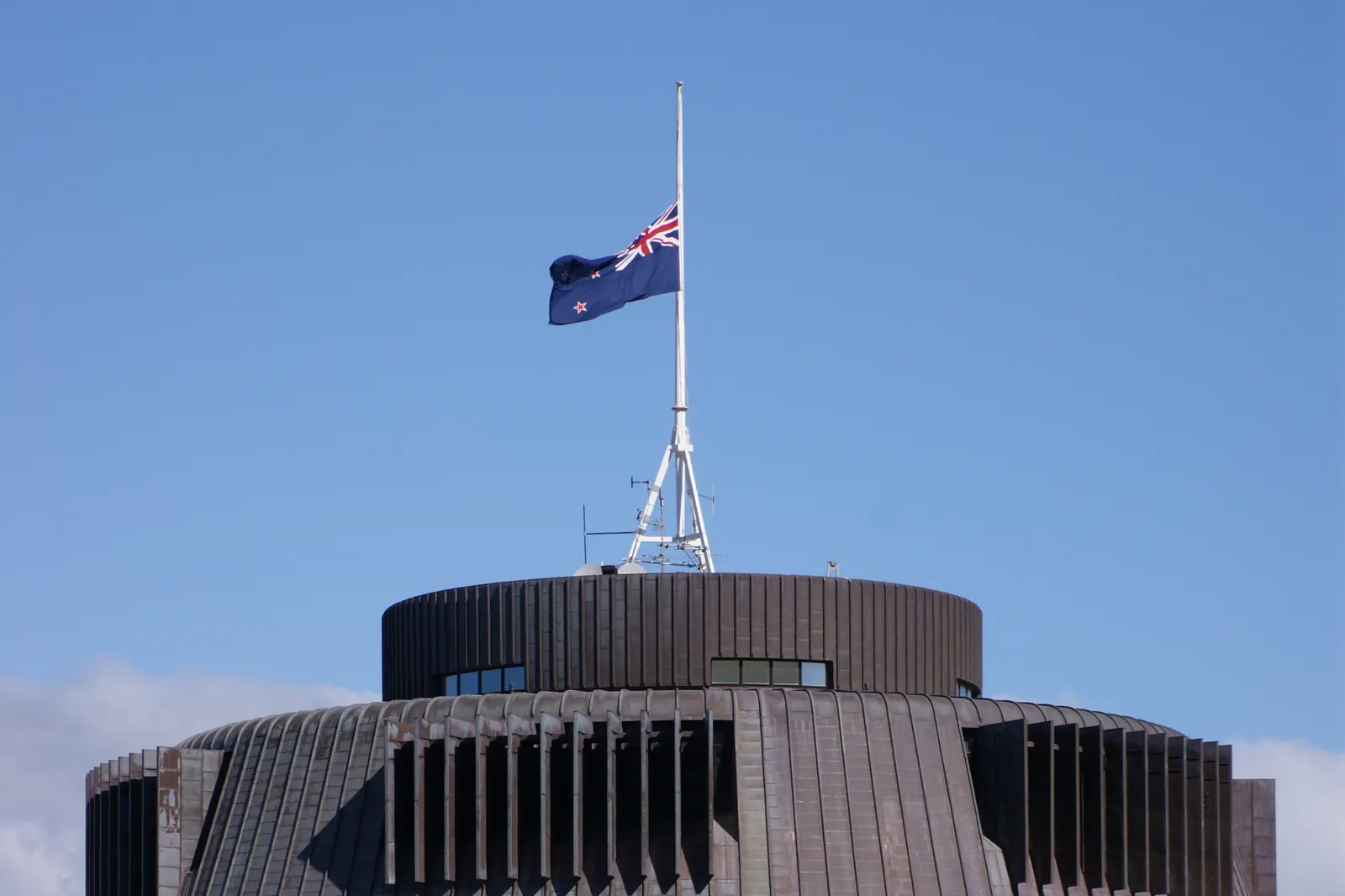
According to the Flag Notice, on the death of the Sovereign the flag flies at half-mast from the announcement of the death up to and including the day of the funeral. The exception is Proclamation Day, when the new Sovereign is officially announced and flags fly from the top of the mast.
The death of Queen Elizabeth II shows how this worked in practice. According to MCH’s list, the flag was half-masted on 9 and 10 September 2022 and again from 12 to 26 September, the day of the New Zealand Memorial Service.
Governors-General and prime ministers
For the Governor-General, a former Governor-General, the Prime Minister or a former Prime Minister, the flag flies at half-mast on the day the death is announced and on the day of the funeral. Examples from MCH’s list:
- the former Prime Minister Jim Bolger, on 16 October 2025 and on 23 October, the day of the funeral
- the former Governor-General Sir Michael Hardie Boys, on 31 January 2024 for the memorial service
- the former Prime Minister Mike Moore, on 3 February 2020 and on 14 February, the day of the funeral.
The Royal Family and heads of state
For a member of the Royal Family, the flag flies at half-mast on the day of the funeral, subject to special command from the Sovereign or the Governor-General. For a Commonwealth governor-general or prime minister in office, or a Commonwealth or foreign head of state, it flies at half-mast on the day of the funeral only. The death of Pope Francis in 2025 was marked on 22, 23 and 26 April, the day of the funeral, and the death of the Māori King Kiingi Tuuheitia Pootatau Te Wherowhero VII on 30 August and 5 September 2024.
Tragedies and anniversaries
The Minister and the Prime Minister can direct half-masting on other occasions of mourning of particular significance. MCH’s list includes:
- the Christchurch earthquake, from 23 February to 12.51 pm on 8 March 2011, and on anniversaries
- the Pike River mine tragedy in 2010 and its tenth anniversary in 2020
- the Christchurch mosque attacks, from 15 to 29 March 2019
- the Whakaari/White Island eruption, from 10 to 16 December 2019
- the funerals of police officers killed in the line of duty and of members of the Defence Force killed in Afghanistan
- the funerals and burials of members of Parliament.
Local mourning

Not every death is a matter for the government. According to MCH, local authorities such as councils can fly their local flag at half-mast after the death of a prominent local citizen, and it is appropriate to do so on the day or part of the day of the funeral. The same etiquette applies to the house flag of a company or organisation. In these cases the New Zealand flag remains at full mast, which clause 8 of the Flag Notice sets out as a rule of etiquette.
The flag on a coffin
According to MCH, any New Zealand citizen may have the New Zealand flag on their coffin. The protocols are:
- The first quarter, with the Union Jack, is draped over the left shoulder of the deceased.
- The flag is removed before the casket is lowered into the grave or, at a crematorium, immediately after the committal.
Mourning and other flags
When the New Zealand flag flies at half-mast, no other flag is flown above it, according to MCH. The order of flags is explained in the guide to flag protocol, and the days of national commemoration in the guide to flag days.
Frequently asked questions
How long are flags at half-mast when the Sovereign dies?
According to the New Zealand Flag Notice 2024, from the announcement of the death up to and including the day of the funeral, except on Proclamation Day, when the new Sovereign is officially announced and flags fly from the top of the mast. After the death of Queen Elizabeth II, flags flew at half-mast on 9 and 10 September 2022 and from 12 to 26 September, the day of the New Zealand Memorial Service.
Are flags lowered for former prime ministers?
Yes. Under the Flag Notice 2024, the flag flies at half-mast on government buildings on the day the death of a Governor-General, former Governor-General, Prime Minister or former Prime Minister is announced and on the day of the funeral. For the former Prime Minister Jim Bolger, flags were half-masted on 16 and 23 October 2025.
Can a private person lower a flag for a local death?
Yes. According to Manatū Taonga, local authorities can fly their local flag at half-mast after the death of a prominent local citizen, and the same etiquette applies to the house flag of a company or organisation. The New Zealand flag then stays at full mast.
Can the New Zealand flag be placed on a coffin?
Yes. According to Manatū Taonga, any New Zealand citizen may have the New Zealand flag on their coffin. The first quarter is draped over the left shoulder of the deceased, and the flag is removed before the casket is lowered into the grave or, at a crematorium, immediately after the committal.
Sources
This guide is based on the following sources:
- Display rules for the New Zealand flag – Half-masting and recent half-masting occasions – Manatū Taonga – Ministry for Culture and Heritage
- New Zealand Flag Notice 2024, clauses 5 and 8 – New Zealand Gazette
- Flags, Emblems, and Names Protection Act 1981, section 10 – New Zealand Legislation
Related guides
- Half-mastWhat half-mast means in New Zealand: how far down the flag flies, how it is raised and lowered, who issues directives and when flags are flown at half-mast.
- Flag protocolThe position of honour for the New Zealand flag: a line of flags, buildings, circles, yardarms and gaffs, and flying it with the Tino Rangatiratanga flag.
- Flag daysAll days of national commemoration on which the New Zealand flag is flown in 2026 and 2027, from Waitangi Day and Anzac Day to Matariki and Labour Day.
- Flag flying rulesThe rules for flying the New Zealand flag: who may fly it, flying at night, the flag’s condition and disposal, advertising and the offences in the Flags Act.