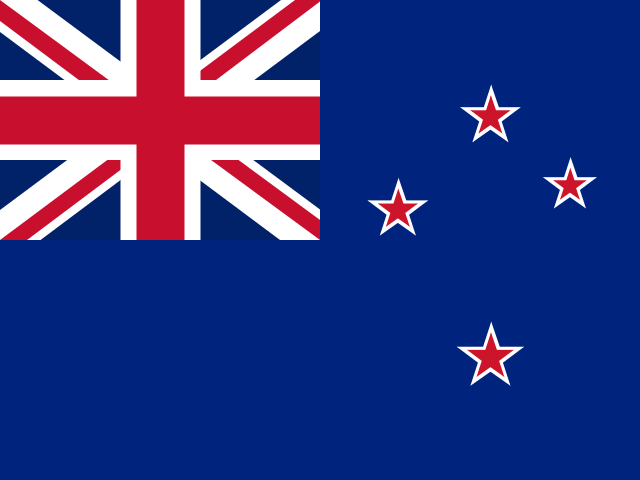
Foreign flags in New Zealand
Published Written by Flagpole Guides
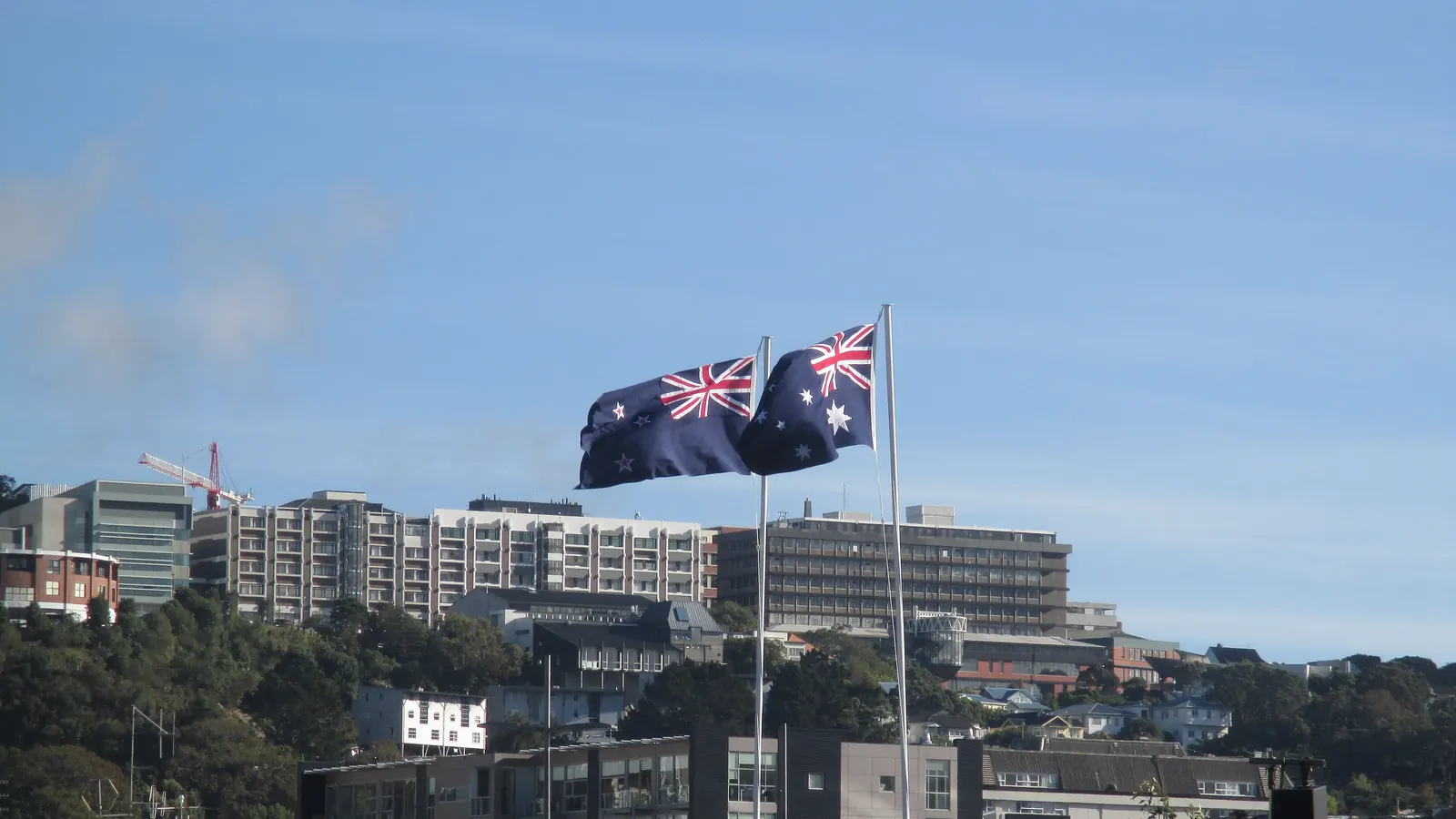
Flags of other countries fly in New Zealand at embassies and high commissions, hotels, international companies, sporting events, and at the homes of people with roots elsewhere. New Zealand has no law against flying another country’s flag. The display rules of Manatū Taonga – Ministry for Culture and Heritage (MCH) set out how foreign national flags are placed when they fly together with the New Zealand flag.
The basic rules
According to MCH:
- The New Zealand flag takes the position of honour and precedence over all other national flags, except when flown with royal or vice-regal flags.
- International practice forbids the display of the flag of one country above the flag of another in peacetime.
- When the New Zealand flag is flown with the flags of other countries, each flag is the same size and flies from a separate flagpole of the same height.
A line of flags
From left to right, as seen by a person facing the flags, the order is:
- the New Zealand flag
- flags of other countries in alphabetical order
- house flags.
In special circumstances, flags of Commonwealth countries may take precedence over other foreign flags, also in alphabetical order.
Other arrangements
| Arrangement | Position of the New Zealand flag |
|---|---|
| Two or more poles parallel to a building | First on the left, looking at the main entrance |
| Poles on a forecourt, left of the entrance | Outermost pole |
| Poles on a forecourt, right of the entrance | Innermost pole |
| Semi-circle of national flags | Centre |
| Enclosed circle of national flags | Pole immediately opposite the main entrance |
| Yardarm, with one other national flag | Left side of the yardarm, viewed from the front |
| Crossed flags | On the left as seen by a viewer, staff in front |
The rules are explained in more detail in the guide to flag protocol.
The Union Jack
The Union Flag, better known as the Union Jack, is the British national flag and appears in the first quarter of the New Zealand flag because of historical ties with the United Kingdom. According to MCH, it is of equal rank when flown with other national flags, and it is only appropriate to fly it where a direct link exists with the United Kingdom or to recognise a distinguished British visitor.
Official visits
Under the New Zealand Flag Notice 2024, the New Zealand flag flies at full mast on government buildings in any locality visited by a head of state or head of government. On the death of a Commonwealth or foreign head of state, it flies at half-mast on government buildings on the day of the funeral. Recent examples are listed in the guide to flags in mourning.
Flag hire
The Visits and Ceremonial Office of the Department of Internal Affairs hires out indoor and outdoor flags of countries around the world for events of New Zealand government agencies and foreign missions in New Zealand, subject to availability. Its outdoor flags are 2½ yards long, 2.3 × 1.15 metres; poles and bases are not included. New Zealand flag makers also make flags of other countries. According to the Flag & Banner Company, flags of countries with other proportions, such as Switzerland, are often made at 2:1 in New Zealand to match the other flags flown here.
Businesses and events
International companies, hotels and event organisers often fly several national flags in a row. The same display rules apply to them: flags of the same size, poles of the same height and the New Zealand flag in the position of honour. More in the guide to flagpoles for businesses.
Frequently asked questions
Is it allowed to fly another country’s flag in New Zealand?
Yes. New Zealand has no law against flying the flag of another country. According to Manatū Taonga, when the New Zealand flag is flown with other national flags, it takes the position of honour, and each flag is the same size and flies from a separate flagpole of the same height.
In which order are several national flags flown?
According to Manatū Taonga, from left to right as seen by a person facing the flags: the New Zealand flag, then the flags of other countries in alphabetical order, then house flags. In special circumstances, flags of Commonwealth countries may take precedence over other foreign flags.
When is the Union Jack flown in New Zealand?
According to Manatū Taonga, the Union Jack is of equal rank with other national flags, and it is only appropriate to fly it where a direct link exists with the United Kingdom or to recognise a distinguished British visitor.
Can foreign flags be hired in New Zealand?
The Visits and Ceremonial Office of the Department of Internal Affairs hires out indoor and outdoor flags of many countries for events of New Zealand government agencies and foreign missions in New Zealand, subject to availability. Its outdoor flags are 2½ yards long, 2.3 × 1.15 metres.
Sources
This guide is based on the following sources:
- Display rules for the New Zealand flag – Manatū Taonga – Ministry for Culture and Heritage
- Other official New Zealand flags – The Union Flag – Manatū Taonga – Ministry for Culture and Heritage
- New Zealand Flag Notice 2024, clauses 4 and 5 – New Zealand Gazette
- Flag Hire Service – Department of Internal Affairs
- Flag & Banner Company – FAQ – Flag & Banner Company
Related guides
- Flag protocolThe position of honour for the New Zealand flag: a line of flags, buildings, circles, yardarms and gaffs, and flying it with the Tino Rangatiratanga flag.
- Flagpoles for businessesFlagpoles for New Zealand businesses: house flags beside the national flag, the flag in advertising, flags as signs, half-masting and health and safety duties.
- Flag daysAll days of national commemoration on which the New Zealand flag is flown in 2026 and 2027, from Waitangi Day and Anzac Day to Matariki and Labour Day.
- Flag flying rulesThe rules for flying the New Zealand flag: who may fly it, flying at night, the flag’s condition and disposal, advertising and the offences in the Flags Act.