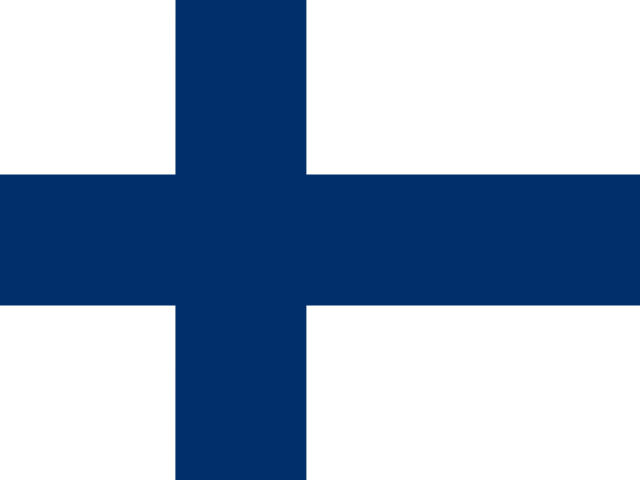
History of the flagpole and the Finnish flag
Published Written by Flagpole Guides
This page is an English translation of the Finnish original. Where the two versions differ, the Finnish text is the original.
Finland’s own flag is younger than the flags of many other European countries, but the flag-flying tradition quickly became part of the Finnish yard. This guide describes how the blue-cross flag came about, how the flagpole became common in home gardens and how the rules of flag flying have taken shape.
The flag before independence
According to the Ministry of the Interior, Finland’s official flag until independence was first the Swedish flag and, under imperial rule, the Russian flag. The Grand Duchy of Finland had its own lion coat of arms, which was also used unofficially as a flag, and its red and yellow became a kind of national colours.
According to the Ministry, the debate on a flag of its own began in 1848, when the song Maamme (Our Land) was first performed at the students’ spring festival at Kumtähti field and the student union’s flag was carried at the festival. In the debate sparked by Zachris Topelius, blue and white emerged as national colours in the 1850s and 1860s, and by the end of the 19th century blue and white were common in the flags and pennants of sailing clubs.
From the lion flag to the blue-cross flag
Around independence a lion flag was used, which according to the Ministry of the Interior was raised on the pole of the Senate House on 6 December 1917 and in 1917–1918 gained almost the status of a state flag. In spring 1918 Parliament dealt with the flag question, and on 28 May 1918 it adopted the blue-and-white cross flag on the proposal of the Constitutional Law Committee. The Act was published two days later. The design was drawn up by the artists Eero Snellman and Bruno Tuukkanen.
The flag comes to home gardens
According to the Kysy kirjastonhoitajalta library service, Suomalaisuuden Liitto started a campaign in the 1920s to bring the Finnish flag into wider use. Besides newspaper articles, flag sales were held in 1926 and flagpole drawings were distributed for use at home. Following a suggestion by the writer Maila Talvio, Midsummer was chosen as the Day of the Finnish Flag, because it was not linked to any political event. The Day of the Finnish Flag has been celebrated unofficially since 1927.
From wood to fibreglass
According to Suomalaisuuden Liitto, flagpoles used to be made of wood. Nowadays poles of glass-fibre reinforced plastic are preferred because they are light, durable and easy to care for. The change of material has made poles lighter to put up and reduced the need for care. The materials are described in the guide to flagpole materials.
According to the Association, house pennants began to become common in Finland in the 1950s, following the example of the other Nordic countries, and their popularity has grown steadily. In recent years small plots have also brought facade flags fixed to the wall into home gardens.
The 1978 flag law
The 1918 Act was replaced by the Act on the Flag of Finland (380/1978), which entered into force on 1 June 1978. The Decree on Flying the Flag of Finland (383/1978), which lists the official flag days and flying times, entered into force on the same day. A provision on desecrating the flag was added to the Act in 1995, and the section of the decree on flying times was amended in 1996. In 2026 county elections were added to the list of official flag days.
More flag days over time
The almanac’s list of established flag days has grown gradually. According to the Ministry of the Interior, Minna Canth Day first appeared in the almanac in 2007, Sibelius Day in 2011, the Day of Children’s Rights in 2020, and the Day of Finnish Nature and Miina Sillanpää Day in 2023. In 2026 the Ministry recommended flying the flag on Evacuees’ Day for the first time. All current days are in the guide to flag days.
Frequently asked questions
When was the Finnish blue-cross flag adopted?
According to the Ministry of the Interior, Parliament adopted the blue-and-white cross flag on the proposal of the Constitutional Law Committee on 28 May 1918, and the flag law was published two days later. The design was drawn up by the artists Eero Snellman and Bruno Tuukkanen.
Which flag did Finland have before the blue-cross flag?
According to the Ministry of the Interior, Finland’s official flag until independence was first the Swedish and then the Russian flag. Around independence a red lion flag was used, which was raised on the pole of the Senate House on 6 December 1917.
Since when has Midsummer been the Day of the Finnish Flag?
According to the Kysy kirjastonhoitajalta library service, the Day of the Finnish Flag has been celebrated unofficially at Midsummer since 1927. It grew out of a campaign started by Suomalaisuuden Liitto in the 1920s to make the flag more widely used, and Midsummer was chosen because it was not linked to political events.
What were flagpoles made of in the past?
According to Suomalaisuuden Liitto, flagpoles used to be made of wood. Nowadays poles of glass-fibre reinforced plastic are preferred because they are light, durable and easy to care for.
Sources
This guide is based on the following sources, most of them in Finnish:
- Suomen lipun historia – Sisäministeriö
- Laki Suomen lipusta (380/1978) – Finlex (oikeusministeriö)
- Mistä vuodesta lähtien Suomen lipun päivää on vietetty? – Kysy kirjastonhoitajalta (Suomen yleiset kirjastot)
- Liputus – Suomalaisuuden Liitto
- Liputuspäiväesitykset – Sisäministeriö
Related guides
- Flag symbolismThe symbolism of the Finnish flag: the blue cross, blue and white, the official colours in PMS and NCS, the coat of arms on the state flag and respect.
- Flag daysFinland’s official, established and recommended flag days in 2026 and 2027 with dates and weekdays, under Decree 383/1978 and the Ministry of the Interior.
- Flagpole materialsFlagpole materials in Finland: fibreglass, aluminium, steel and wood – properties, care and durability in Finnish weather, and the effect on price.
- Flag typesFinnish flag types: the national flag, the state flags, the President’s flag, the house pennant, the facade flag, and the flags of Åland and the Sámi.