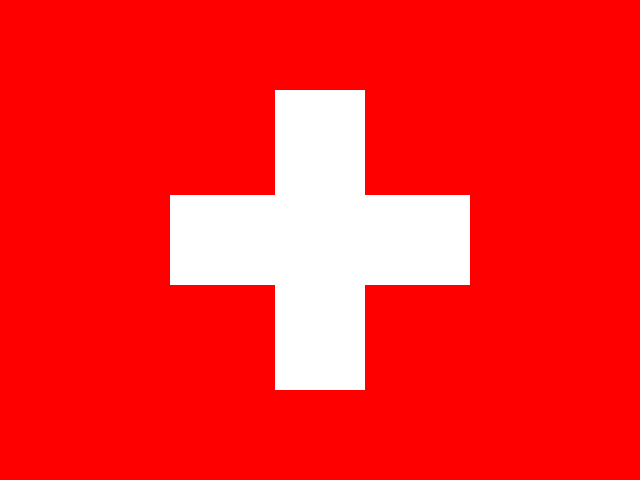
Flag lighting in Switzerland: may the flag stay up at night?
Published Written by Flagpole Guides
This page is an English translation of the German original. Where the two versions differ, the German text is the original.
Whether a flag stays on the pole overnight is, for private individuals in Switzerland, not a legal question but a matter of custom. In the armed forces, by contrast, it is clearly regulated, and the lighting itself is subject to principles on light emissions and to neighbour law.
What the flag regulations say
The Swiss Armed Forces’ flag regulations state, for raising the Swiss flag at military sites:
- The Swiss flag may fly on the pole only by day.
- At the latest when darkness falls, it is taken in or lit.
According to the regulations, it is a tradition in many schools and units to raise the Swiss flag in the morning and take it in in the evening. For private individuals, associations and businesses, this is not an obligation. Some adopt the rule as a sign of respect for the flag, taking it in at dusk or lighting it.
On federal buildings, flags fly on particular days under the Federal Council’s instructions, on 1 August for example from the last working day before to the first working day after. The two flags on the southern domes of the Parliament Building fly all year round.
Lighting and light emissions
Light at night is an environmental issue in Switzerland. In 2021, the Federal Office for the Environment (FOEN) published recommendations on avoiding light emissions. They are aimed at everyone who plans, approves or operates lighting installations and are based on the Environmental Protection Act and the Nature and Cultural Heritage Act. At their heart is a 7-point plan:
- Necessity: light only what needs to be lit.
- Intensity: only as bright as necessary.
- Light spectrum: match the light colour to the purpose and surroundings.
- Choice and placement: precise lighting without unnecessary spill into the surroundings.
- Direction: in principle from above, with luminaires aimed precisely.
- Time management: control lighting according to need and switch it off or dim it at times.
- Shielding: additional shielding in problem cases.
For a flag, this often means in practice a spotlight aimed as narrowly as possible at the flag, with a warm light colour, a timer and no light spilling beyond the flag into the sky or towards the neighbours. The recommendations regard the period from 10 p.m. as particularly relevant for light falling into homes.
Neighbours and authorities
Under Article 684 of the Swiss Civil Code, everyone is obliged, in exercising their ownership, to refrain from any excessive impact on the property of their neighbours. Whether lighting a flag is excessive depends on location, brightness, duration and local custom. For lighting installations, the authorities can also order proportionate measures to limit emissions under Article 11 of the Environmental Protection Act; the FOEN recommendations cite the 7-point plan as the basis for this.
The flag at night and in bad weather
A flag that flies permanently wears out faster than one taken in in the evening. Under the flag regulations, torn or dirty flags are replaced with new ones. When the Confederation issues storm warnings, many take the flag in to protect flag and pole. Lighting accessories are covered in the guide to flagpole accessories, and what businesses consider for lit company flags in the guide to flagpoles for businesses.
Frequently asked questions
May a flag stay on the pole at night in Switzerland?
There is no rule for private individuals. The Swiss Armed Forces’ flag regulations state for military sites that the Swiss flag flies only by day and is taken in or lit at the latest when darkness falls. Many private individuals follow this practice.
How can a flag be lit without disturbing the neighbours?
In its recommendations on avoiding light emissions, the Federal Office for the Environment sets out seven principles, including: light only what needs to be lit, only as brightly as necessary, in principle from above, precisely aimed, and switched off or dimmed at times.
Can a neighbour object to a spotlight on a flagpole?
Under Article 684 of the Swiss Civil Code, everyone is obliged, in exercising their ownership, to refrain from any excessive impact on the property of their neighbours. Whether lighting is excessive depends on the circumstances. For lighting installations, the authorities can also order measures under the Environmental Protection Act.
Does flag lighting need a permit?
That depends on the canton and the scale. The FOEN recommendations provide that the principles for limiting light emissions can be examined in the permit procedure for lighting installations. The commune’s building authority can say whether a lighting installation needs a permit.
Sources
This guide is based on the following sources, most of them in German:
- Reglement 51.340 d: Der Umgang mit Fahnen, Standarten und Fanions (Fahnenreglement), Kapitel 5.1 – Swiss Armed Forces
- Empfehlungen zur Vermeidung von Lichtemissionen (2021) – Federal Office for the Environment FOEN
- Schweizerisches Zivilgesetzbuch, Art. 684 – Fedlex, Federal Chancellery
- Weisungen über die Beflaggung der Gebäude des Bundes vom 20. April 2016 (BBl 2016 3603), Art. 4 – Swiss Federal Council
Related guides
- Flag rulesThe rules for the Swiss flag: Coat of Arms Protection Act, Federal Council instructions, army flag regulations, flying times and criminal law protection.
- Flagpole accessoriesEvery part of a flagpole explained: finial, pulley, halyard, cleat, snap hooks, ground sleeve, outrigger, flag rotator and mourning band – and what each does.
- Flagpoles for businessesCompany flags in Switzerland: permits as advertising in Zurich, Bern and Geneva, the Swiss cross and coat of arms, order of flags and liability.
- Flagpole installationPutting up a flagpole in Switzerland: when a building permit is needed (Zurich, Bern, Vaud), foundation, utility lines, neighbours, renting and condominiums.