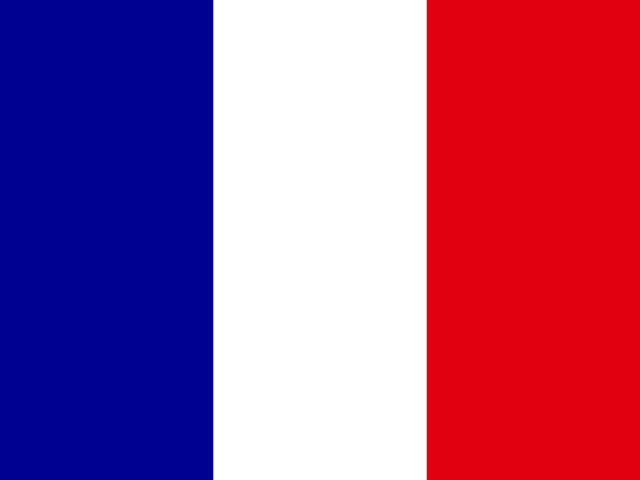
Flagpoles and flag flying in France
Published Written by Flagpole Guides
This page is an English translation of the French original. Where the two versions differ, the French text is the original.
In France the tricolour flies on town halls, schools, prefectures and war memorials, and many households, associations and businesses fly it too, especially on 14 July and during major sporting events. Contrary to a common belief, few rules are written down: flags on public buildings rest mainly on republican custom and on the instructions the Government sends to the prefects each year. The flagpole itself falls under the Planning Code. This page brings together the rules and customs for flags and flagpoles in France, based on French texts and the relevant authorities.
At a glance
- Flag days: the Government asks for flags on public buildings on the national days, from 19 March to 5 December, with the European flag beside the tricolour on 9 May. All dates for 2026 and 2027 are in the guide to flag days.
- Custom and obligation: according to the Ministry of the Interior, flying the flag permanently on public buildings is a custom, not an obligation, except for schools and secondary schools. More on this is in the guide to flag rules.
- Half-mast: the flag is lowered to half the height of the pole, or a black ribbon is tied to the top of the pole. More on this is in the guide to half-mast.
- Order: the national flag takes the place of honour, and the European flag appears on its left when looking at the building. More on this is in the guide to flag protocol.
- Sizes: no text sets the size of the flag. The flag size calculator shows the table of a French flag maker.
- Price: what affects the price of a flagpole and a flag is covered in the guides on the price of a flagpole and the price of a flag.
- Planning: up to 12 metres, a flagpole is usually exempt from any formality, except in protected areas. More on this is in the guide to flagpole installation.
Laws and authorities
Article 2 of the Constitution of 4 October 1958 states that “the national emblem is the blue, white and red tricolour flag”. The Constitution specifies neither the width of the bands nor the shade. According to a ministerial answer published in the Senate’s Official Journal in 2002, the earlier provisions, which set three equal vertical bands, remain the reference.
No general law governs flag flying. Decree no. 89-655 of 13 September 1989 on public ceremonies, precedence and civil and military honours provides that public ceremonies are organised on the Government’s orders or on the initiative of a public authority. On this basis, the Prime Minister issues instructions for flying flags and for half-mast, which the prefects pass on to the mayors. The Ministry of the Interior has published a protocol guide for mayors that sums up the customs.
The texts that do exist are targeted: article L. 111-1-1 of the Education Code requires the motto of the Republic, the tricolour and the European flag on the façade of state schools and state-contracted private schools. The Criminal Code punishes insulting the tricolour (article 433-5-1 and article R. 645-15). The flagpole falls under the Planning Code and the municipality’s local land-use plan (plan local d’urbanisme, PLU).
The flagpole in France
On town halls and schools the flag is often fixed to a façade staff, sometimes in a cluster with the European flag. Free-standing poles stand in front of prefectures, war memorials, businesses, campsites, harbours and in private gardens. More on this is in the guides on types of flagpoles and flagpole heights.
French makers mainly offer aluminium and fibreglass poles of 6 to 12 metres, and shorter steel poles for events. The guide on flagpole materials compares these materials.
About the guides
The guides are grouped by topic. Each guide covers one defined subject, ends with frequently asked questions, lists its sources and shows the date of its latest update. This English translation follows the French guides. The rules described apply to metropolitan France and, unless stated otherwise, to the overseas departments and regions; overseas collectivities with a special status, such as French Polynesia and New Caledonia, partly have their own identity symbols.
All guides
Flag flying and rules
When and how flags are flown in France: the national days, half-mast, mourning, public holidays, protocol and foreign flags.
- Flag daysThe flag days for public buildings in France in 2026 and 2027: national days, Bastille Day and Europe Day, with the legal text behind each day.
- Flag rulesThe rules on flag flying in France: the Constitution, Government instructions, schools, neutrality of public buildings and the offence of insulting the flag.
- Half-mastHow a flag is flown at half-mast in France according to the Ministry of the Interior, who decides on half-mast and the black ribbon at the top of the pole.
- Flags in mourningThe flag in times of mourning in France: official mourning decided by the Government, the mayor’s initiative, armed forces, associations, private mourning.
- Flags on holidaysFlags on public holidays in France: Bastille Day, 8 May, 11 November, the extra holidays of Alsace-Moselle and the abolition of slavery overseas.
- Flag protocolThe order of flags in France: the tricolour’s place of honour, the European flag, foreign and regional flags, ceremonies, wreaths and the mayor’s sash.
- Foreign flagsFlying a foreign flag in France: freedom for private households, official visits, alphabetical order and the neutrality of public buildings.
The flag
The tricolour and the other flags flown in France: types, sizes, symbolism, what affects the price of a flag and a flag size calculator.
- Flag typesThe types of flag used in France: pole flag, flag on a façade staff, ceremonial flag, naval ensign, regional flags and vertical banners.
- Flag sizesCommon flag sizes in France, from 40 × 60 to 300 × 450 cm, the 2:3 proportions of the tricolour, and sizes by pole height and façade staff.
- Flag size calculatorCalculator for the size of a flag by the height of the pole, based on a French flag maker’s table, with the band widths of the flag and of the naval ensign.
- Flag symbolismThe meaning of the tricolour: the colours of the king and of Paris, the 1789 cockade, the order of the bands, the shade of blue and the symbols of the Republic.
- Price of a flagWhat makes the price of a flag vary in France: size, fabric, printing, finish and fixing, plus the legal guarantee of conformity and the right of withdrawal.
The flagpole
Types of pole, materials, heights, accessories, mechanics, lighting and what affects the price of a flagpole, plus the history of flag flying in France.
- Types of flagpolesThe types of flagpole used in France: single pole with outside or inside halyard, pole with one or two arms, façade staff, telescopic or tapered pole.
- Flagpole materialsAluminium, fibreglass, steel and wood for a flagpole in France: heights on offer, weight, behaviour in wind, the seaside and maintenance.
- Flagpole heightsCommon flagpole heights in France, the 12-metre threshold of the Planning Code, the matching flag size and what influences the choice of height.
- Flagpole accessoriesThe accessories of a flagpole in France: halyard, pulley, cleat, snap hooks, finial, arm, ground sleeve, façade bracket and mourning ribbon.
- Flagpole mechanicsHow a flagpole works: outside or inside halyard, revolving truck, arm with counterweight, crank, tilting base plate and half-mast.
- Flag lightingLighting a flag at night in France: floodlights, the light pollution rules of the order of 27 December 2018 and the electrical installation.
- HistoryThe history of the tricolour and of flag flying in France: the 1789 cockade, the 1794 decree, the white flag, 1830, 1848, 1958 and the European flag.
- Price of a flagpoleWhat makes the price of a flagpole vary in France: height, material, type, anti-theft halyard, finish, foundation and installation, with consumer guarantees.
Installation, safety and maintenance
Planning code, foundations, buried networks, safety, maintenance, repair, lifespan and transport, for households, associations, businesses and municipalities.
- Flagpole installationInstalling a flagpole in France: exemption or prior declaration under the Planning Code, protected areas, local plan, co-ownership, DT-DICT and foundation.
- Flagpole safetyThe risks of a flagpole in France: wind and storms, work at height under the Labour Code and the INRS, power lines and buried networks.
- Flagpole maintenanceMaintaining a flagpole in France: halyard and pulley, cleaning the pole, replacing a worn flag, the foundation and protection against corrosion.
- Flagpole repairCommon flagpole faults in France: broken halyard, jammed pulley, stuck flag, corrosion, a leaning or damaged pole, guarantees and insurance.
- Flagpole lifespanHow long a flagpole, its halyard and its flag last in France, what wears them (wind, salt, UV light) and when replacement is usual.
- Flagpole transportTransporting a flagpole in France: loads overhanging at the rear, securing under the Highway Code, poles in several sections and delivery.
- Flagpoles for businessesCompany flagpoles and flags in France: the Environmental Code rules on signs, planning, the tricolour beside logo flags, safety and maintenance.
Frequently asked questions
Is permission needed to fly a flag in France?
No. According to the Ministry of the Interior’s protocol guide, a building that is not public may be decorated with flags freely. The flag rules concern public buildings. The flagpole itself, however, falls under the Planning Code (Code de l’urbanisme) and the local land-use plan.
Do town halls have to fly the flag?
Not permanently. According to the Ministry of the Interior, flying flags on public buildings is not compulsory, but republican custom has the national flag permanently on their façade. It becomes compulsory when the Government prescribes it, for example on the national days. Schools and secondary schools fly the flag permanently under article L. 111-1-1 of the Education Code.
What does the Constitution say about the flag?
Article 2 of the Constitution of 4 October 1958 states that “the national emblem is the blue, white and red tricolour flag”. It sets neither the shade nor the proportions; custom has three equal vertical bands, with the blue next to the pole.
How is a flag flown at half-mast in France?
According to the Ministry of the Interior’s protocol guide for mayors, half-masting consists of lowering the flag to half the height of its pole. Where that is technically impossible, a black ribbon is tied to the top of the pole.
Is a planning declaration needed for a flagpole?
It depends on the height and the location. Under article R. 421-2 of the Planning Code, a structure up to 12 metres high, with a footprint and floor area of no more than 5 m², is exempt from any formality, except in a remarkable heritage site, near a historic monument or in a listed site. The town hall can answer for a specific case.
Sources
This guide is based on the following sources, most of them in French:
- Constitution du 4 octobre 1958, article 2 – Conseil constitutionnel
- Le protocole à l’usage des maires – Ministère de l’Intérieur
- Rapport n° 1180 sur la proposition de loi visant à rendre obligatoire le pavoisement des drapeaux français et européen sur le fronton des mairies – Assemblée nationale
- Le drapeau français – Présidence de la République
- Code de l’urbanisme, article R. 421-2 – Légifrance
- Code de l’éducation, article L. 111-1-1 – Légifrance