Flag rules in France: what the texts say
Published Written by Flagpole Guides
This page is an English translation of the French original. Where the two versions differ, the French text is the original.
The tricolour is written into the Constitution, but France has no general flag law. The rules are found in a few targeted texts, in the Government’s instructions and in republican custom, which the Ministry of the Interior sums up in its protocol guide for mayors. This guide brings together what applies to public buildings and to private households.
The Constitution
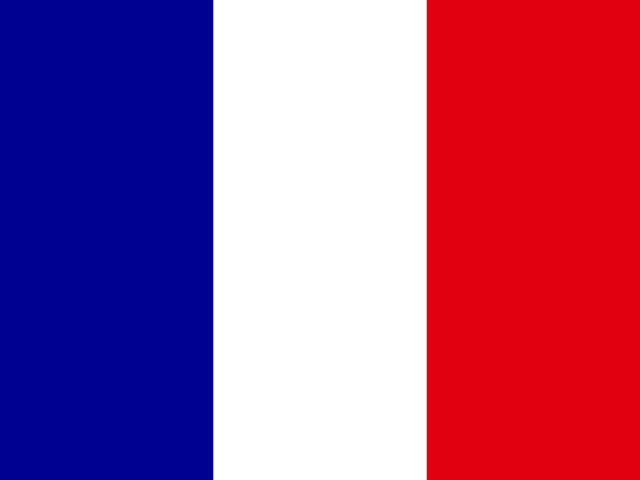
Article 2 of the Constitution of 4 October 1958 states: “The national emblem is the blue, white and red tricolour flag.” According to the Ministry of the Interior’s guide, it is the only compulsory emblem to fly on public buildings for national ceremonies, for the reception of foreign heads of state and, at half-mast, during official mourning. The guide adds that the flag must always be in a condition that matches the respect due to it.
Permanent custom, occasional obligation
According to the Ministry of the Interior’s guide, flying flags on public buildings is not compulsory, but republican custom has the national flag permanently on the façade of public buildings. A 2023 report of the National Assembly confirms that no text sets a general obligation, and that the custom is widely followed, especially by town halls.
Flying the flag becomes compulsory when the Government prescribes it. According to a ministerial answer published in 2022, the Prime Minister issues instructions for national and commemorative days, the reception of foreign heads of state and half-mast during official mourning. In that context, flags on public buildings are compulsory, and the Minister of the Interior can suspend a mayor who refuses, under article L. 2122-16 of the General Code of Local Authorities. In a judgment of 1 February 1967, the Council of State rejected the appeal of a mayor suspended for refusing to fly the flag on 18 June. A mayor can also decide on flags or half-mast for municipal buildings on their own initiative.
Several bills have sought to make permanent flags on town halls compulsory. One was passed by the National Assembly in May 2023 but went no further in the Senate; another, tabled in the Senate in 2025, had not been adopted when this guide was written.
Schools and training centres
The only permanent flag flying required by law concerns education. Article L. 111-1-1 of the Education Code, introduced by the law of 8 July 2013, states that the motto of the Republic, the tricolour and the European flag are placed on the façade of state primary and secondary schools and state-contracted private schools. Article L. 6231-7 of the Labour Code provides the same for apprentice training centres. According to the National Assembly report, no specific penalty attaches to a breach of this obligation.
Neutrality of public buildings
The principle of neutrality of public services limits what a public building can display. In an order of 21 July 2025 (no. 506299), the urgent-applications judge of the Council of State restated that this principle rules out placing on public buildings signs that symbolise political, religious or philosophical opinions, and upheld the removal of a banner in the colours of a foreign flag on a town hall. According to the Ministry of the Interior’s guide, regional or departmental emblems can be displayed for local events, provided this is temporary and the national flag always keeps the place of honour. More on this is in the guide to foreign flags in France.
Insulting the flag
The Criminal Code protects the tricolour in two ways:
- Article 433-5-1: publicly insulting the national anthem or the tricolour during an event organised or regulated by the public authorities is punishable by a fine of 7,500 euros; when committed by a group, by six months’ imprisonment and a fine of 7,500 euros.
- Article R. 645-15: outside those cases, destroying, damaging or using the tricolour in a degrading way in a public place or a place open to the public, in circumstances likely to disturb public order and with the intention of insulting it, is punishable by a fifth-class fine. So is spreading images of such acts.
Private flag flying
According to the Ministry of the Interior’s guide, a building that is not public may be decorated with flags freely. No rule sets the days, times or order of flags for households, associations or businesses. Other rules may, however, apply to the support: the local land-use plan, co-ownership rules, a lease or, for an advertising flag, the rules on signs. More on this is in the guides on flagpole installation and flagpoles for businesses.
Frequently asked questions
Is there a flag law in France?
No, there is no general law. According to a 2023 report of the National Assembly, no statute or regulation sets a general obligation to fly flags on public buildings. Flag flying rests on republican custom, on Government instructions and, for schools, on article L. 111-1-1 of the Education Code.
Can a mayor refuse to fly the flag?
When the Government prescribes flags or half-mast, the mayor applies it as an agent of the State. According to the Ministry of the Interior, the minister can suspend a mayor who refuses, under article L. 2122-16 of the General Code of Local Authorities. The Council of State upheld such a suspension in 1967.
Can a private household fly a flag at home?
Yes. According to the Ministry of the Interior’s protocol guide, a building that is not public may be decorated with flags freely. Co-ownership rules, a lease or the local land-use plan may, however, govern the installation of a flagpole or a bracket on the façade.
What is the offence of insulting the flag?
Article 433-5-1 of the Criminal Code punishes publicly insulting the tricolour during an event organised or regulated by the public authorities with a fine of 7,500 euros, and with six months’ imprisonment as well when committed by a group. Article R. 645-15 punishes destroying the flag or using it in a degrading way in a public place, under certain conditions, with a fifth-class fine.
Can a town hall fly any flag it likes?
No. The principle of neutrality of public services rules out placing on a public building signs that symbolise political, religious or philosophical opinions. The Council of State restated this on 21 July 2025 (no. 506299).
Sources
This guide is based on the following sources, most of them in French:
- Constitution du 4 octobre 1958, article 2 – Conseil constitutionnel
- Le protocole à l’usage des maires – Ministère de l’Intérieur
- Rapport n° 1180 sur la proposition de loi visant à rendre obligatoire le pavoisement des drapeaux français et européen sur le fronton des mairies – Assemblée nationale
- Code de l’éducation, article L. 111-1-1 – Légifrance
- Code pénal, article 433-5-1 – Légifrance
- Code pénal, article R. 645-15 – Légifrance
- Conseil d’État, juge des référés, 21 juillet 2025, n° 506299 – Conseil d’État
- État du protocole relatif à l’usage du drapeau tricolore (question écrite n° 6562) – Assemblée nationale
- Garantir le pavoisement permanent des bâtiments publics (exposé des motifs) – Sénat
Related guides
- Flag daysThe flag days for public buildings in France in 2026 and 2027: national days, Bastille Day and Europe Day, with the legal text behind each day.
- Flag protocolThe order of flags in France: the tricolour’s place of honour, the European flag, foreign and regional flags, ceremonies, wreaths and the mayor’s sash.
- Foreign flagsFlying a foreign flag in France: freedom for private households, official visits, alphabetical order and the neutrality of public buildings.
- Half-mastHow a flag is flown at half-mast in France according to the Ministry of the Interior, who decides on half-mast and the black ribbon at the top of the pole.
- Flag symbolismThe meaning of the tricolour: the colours of the king and of Paris, the 1789 cockade, the order of the bands, the shade of blue and the symbols of the Republic.