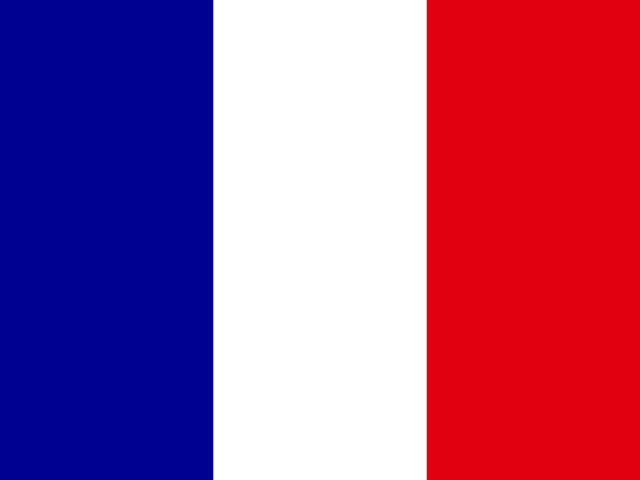
Flags on public holidays in France: 14 July and legal holidays
Published Written by Flagpole Guides
This page is an English translation of the French original. Where the two versions differ, the French text is the original.
Public holidays and flag days only partly overlap in France. Three public holidays are also national days on which the Government asks for flags on public buildings: 8 May, 14 July and 11 November. Religious holidays and 1 May are not flag days. For households, the flag comes out above all for the national day.
The legal public holidays
Article L. 3133-1 of the Labour Code lists the legal holidays:
| Public holiday | Flag day for public buildings |
|---|---|
| 1 January | No |
| Easter Monday | No |
| 1 May | No |
| 8 May, victory of 1945 | Yes |
| Ascension Day | No |
| Whit Monday | No |
| 14 July, national day | Yes |
| Assumption (15 August) | No |
| All Saints’ Day (1 November) | No |
| 11 November, 1918 Armistice | Yes |
| Christmas Day (25 December) | No |
National days that are not public holidays, such as 18 June or 27 May, are also flag days. The full list is in the guide to flag days.
14 July
The law of 6 July 1880 made 14 July the national day. According to the 2023 National Assembly report, tricolour banners were already present at the Festival of the Federation on 14 July 1790. 14 July is the day when the tricolour is most visible: the military parade on the Champs-Élysées, ceremonies in the municipalities, dances and fireworks. Many households decorate their house or balcony with flags that day.
8 May and 11 November
8 May commemorates the victory of 1945 and 11 November the 1918 Armistice; since the law of 28 February 2012, 11 November also honours all who died for France. On both days, ceremonies take place at the war memorials of almost every municipality, with the laying of wreaths, a minute’s silence and the Marseillaise. According to the Ministry of the Interior’s guide, the prefect lays their wreath last. The flag bearers of veterans’ associations play an important part.
Alsace and Moselle
In the departments of Bas-Rhin, Haut-Rhin and Moselle, article L. 3134-13 of the Labour Code adds two public holidays: Good Friday in municipalities with a Protestant church or a mixed church, and 26 December. These days are not flag days.
Overseas
Under article L. 3422-2 of the Labour Code, the commemoration of the abolition of slavery is a public holiday in several territories, each on its own date:
- Mayotte: 27 April
- Martinique: 22 May
- Guadeloupe and Saint-Martin: 27 May
- French Guiana: 10 June
- Saint-Barthélemy: 9 October
- Réunion: 20 December
In metropolitan France, the commemoration of the abolition of slavery takes place on 10 May, which is one of the flag days. The guide to flag symbolism covers the meaning of the tricolour.
Frequently asked questions
Which public holidays are also flag days?
Three public holidays are among the national days on which the Government asks for flags on public buildings: 8 May, 14 July and 11 November. The other holidays, such as Christmas or Easter Monday, are not flag days.
How many public holidays does France have?
Article L. 3133-1 of the Labour Code lists eleven: 1 January, Easter Monday, 1 May, 8 May, Ascension Day, Whit Monday, 14 July, Assumption, All Saints’ Day, 11 November and Christmas Day. Alsace-Moselle has two more, and the overseas territories add the commemoration of the abolition of slavery.
Why is 14 July the national day?
The law of 6 July 1880 made 14 July the national day. The date refers to the storming of the Bastille on 14 July 1789 and to the Festival of the Federation on 14 July 1790, where tricolour banners were already present.
When is the abolition of slavery commemorated overseas?
Under article L. 3422-2 of the Labour Code, it is a public holiday on 27 April in Mayotte, 22 May in Martinique, 27 May in Guadeloupe and Saint-Martin, 10 June in French Guiana, 9 October in Saint-Barthélemy and 20 December in Réunion. In metropolitan France, the commemoration takes place on 10 May.
Sources
This guide is based on the following sources, most of them in French:
- Jours fériés et ponts dans le secteur privé – Service Public
- Rapport n° 1180 sur la proposition de loi visant à rendre obligatoire le pavoisement des drapeaux français et européen sur le fronton des mairies – Assemblée nationale
- Le protocole à l’usage des maires – Ministère de l’Intérieur
- Le drapeau français – Présidence de la République
Related guides
- Flag daysThe flag days for public buildings in France in 2026 and 2027: national days, Bastille Day and Europe Day, with the legal text behind each day.
- Flag rulesThe rules on flag flying in France: the Constitution, Government instructions, schools, neutrality of public buildings and the offence of insulting the flag.
- HistoryThe history of the tricolour and of flag flying in France: the 1789 cockade, the 1794 decree, the white flag, 1830, 1848, 1958 and the European flag.
- Flag symbolismThe meaning of the tricolour: the colours of the king and of Paris, the 1789 cockade, the order of the bands, the shade of blue and the symbols of the Republic.