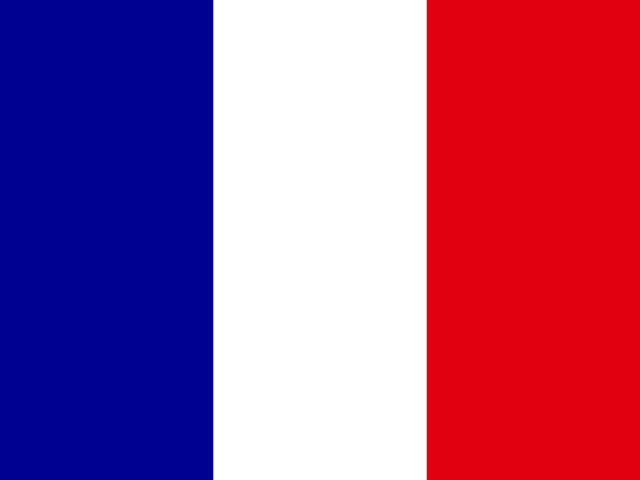
History of flag flying in France, from 1789 to today
Published Written by Flagpole Guides
This page is an English translation of the French original. Where the two versions differ, the French text is the original.
The history of flag flying in France is the history of the tricolour, born with the Revolution, set aside and restored as regimes changed, and now the emblem of the Republic. According to the French presidency, the tricolour “has not yet found its historian”: the uncertainty around its birth leaves room for legends. This guide traces the main stages from official sources.
The word pavoisement
According to a 2023 National Assembly report, pavoisement means decorating a building with coloured fabrics or flags. The word comes from pavois, a large shield used in the Middle Ages. It was first used in the navy, for dressing ships with flags, before coming to mean, by extension, decorating any building with flags.
From cockade to flag (1789-1794)
- July 1789: before it was a flag, the tricolour was a cockade. According to the French presidency, La Fayette, commander of the National Guard, handed a tricolour cockade to Louis XVI, received at the Hôtel de Ville three days after the storming of the Bastille. It combined the white of the king with the blue and red of Paris.
- 14 July 1790: tricolour banners are present at the Festival of the Federation, as paintings and engravings of the time show.
- Autumn 1790: the Constituent Assembly decides that warships and merchant ships will fly an ensign with three vertical bands, then with red next to the pole.
- 15 February 1794 (27 Pluviôse Year II): the Convention sets the final form: blue attached to the pole, white in the middle, red flying.
Eclipses and returns (1814-1848)
Under the Restoration, from 1814 to 1830, the tricolour loses its blue and red in favour of the white flag of the monarchy. It reappears on the barricades of the Three Glorious Days, 27, 28 and 29 July 1830. Article 67 of the Charter of 14 August 1830 proclaims that “France takes back its colours”. On 25 February 1848, when insurgents demand an all-red flag, Lamartine defends the tricolour, which “has gone around the world, with the name, the glory and the liberty of the homeland”.
The Republic and its festivals
The law of 6 July 1880 makes 14 July the national day, and the tricolour settles permanently on the town halls and schools of the Third Republic. After the First World War, the law of 24 October 1922 makes 11 November a day of commemoration, and the municipalities’ war memorials become ceremonial sites decorated with flags.
The 1946 Constitution describes the national emblem as the tricolour “with three vertical bands of equal dimensions”. The Constitution of 4 October 1958 states in article 2 that “the national emblem is the blue, white and red tricolour flag”.
The European flag
On 9 December 1955, the Committee of Ministers of the Council of Europe adopts a blue flag with a circle of twelve stars. According to the National Assembly report, many French municipalities immediately fly the colours of Europe, and circular no. 246 of 4 May 1963 states that there is no objection in principle. The European Communities adopt this flag in 1985 and have used it since 1986.
Recent texts
- 2003: the law on internal security creates the offence of insulting the tricolour (article 433-5-1 of the Criminal Code).
- 2010: a decree creates a minor offence for destroying or degrading the flag (article R. 645-15).
- 2013: the law of 8 July 2013 requires the motto, the tricolour and the European flag on the façade of primary and secondary schools.
- 2018-2020: the French presidency returns to the navy blue used before 1976. More on this is in the guide to flag symbolism.
The current rules are presented in the guide to flag rules.
Frequently asked questions
Where does the word pavoisement come from?
According to a 2023 National Assembly report, the word comes from “pavois”, a large shield of the Middle Ages. The term was first used in the navy, for dressing ships with flags, before it came to mean decorating any building with flags.
When did the tricolour take its current form?
On 15 February 1794 (27 Pluviôse Year II), the Convention decreed that the national flag would be made of the three colours in vertical bands, with the blue attached to the pole, the white in the middle and the red flying.
Has the tricolour always been the flag of France?
No. Under the Restoration, from 1814 to 1830, the white flag of the monarchy replaced it. The tricolour returned with the July Revolution of 1830; the Charter of 14 August 1830 proclaimed that “France takes back its colours”. In 1848, Lamartine defended it against the red flag.
Since when has the European flag flown on town halls?
According to the National Assembly report, many municipalities flew the colours of Europe as soon as the Council of Europe adopted the flag in 1955. Circular no. 246 of 4 May 1963 stated that there was no objection in principle.
Sources
This guide is based on the following sources, most of them in French:
- Le drapeau français – Présidence de la République
- Rapport n° 1180 sur la proposition de loi visant à rendre obligatoire le pavoisement des drapeaux français et européen sur le fronton des mairies – Assemblée nationale
- Dimension des bandes du drapeau tricolore (question écrite n° 00563) – Sénat
- Le drapeau européen – Union européenne
- Constitution du 4 octobre 1958, article 2 – Conseil constitutionnel
Related guides
- Flag symbolismThe meaning of the tricolour: the colours of the king and of Paris, the 1789 cockade, the order of the bands, the shade of blue and the symbols of the Republic.
- Flag rulesThe rules on flag flying in France: the Constitution, Government instructions, schools, neutrality of public buildings and the offence of insulting the flag.
- Flag daysThe flag days for public buildings in France in 2026 and 2027: national days, Bastille Day and Europe Day, with the legal text behind each day.
- Flag typesThe types of flag used in France: pole flag, flag on a façade staff, ceremonial flag, naval ensign, regional flags and vertical banners.