Flagpole maintenance in Norway: care, inspection and flag care
Published Written by Flagpole Guides
This page is an English translation of the Norwegian original. Where the two versions differ, the Norwegian text is the original.
A flagpole needs little maintenance, but not none. The halyard, pulley and cleat wear, the foundation can move with ground frost, and the flag and pennant can only take so much wind and sun. With a fixed routine in spring and autumn, most problems are spotted before they become large.
What is checked
| Part | What is commonly looked for |
|---|---|
| Halyard | Wear, stiffness, thin spots, knots |
| Pulley | That the wheel turns easily and the line sits correctly |
| Finial | That it is secure and intact |
| Cleat and hooks | Loose screws, worn hooks |
| The pole | Cracks, surface damage, corrosion |
| Foundation | That the pole stands vertical and has not come loose |
| Hatch and lock | That the hatch opens easily with an internal halyard |
In spring
Spring is the usual time for a check, before 17 May and the flag season. After the winter, ground frost may have shifted the foundation, and ice may have worn the halyard and pulley. Many replace the halyard at regular intervals, because a new line is a small cost compared with dealing with a line stuck at the top. Raising the flag fully and lowering it a couple of times shows whether the pulley is running stiffly.
In autumn
Before winter, many take in the flag and leave the pennant up, or take both down on exposed sites. A tilting pole can be laid down if it is to stand unused over the winter. Ice and snow add extra load, and a frozen halyard is hard to free.
The pole
The material decides how much care the pole needs:
- Glass fibre: Flaggstangsfabrikken writes that its glass fibre poles need no maintenance and neither rust nor flake. The surface can become dull from the sun over the years.
- Aluminium: little maintenance. Fittings and screws are checked for corrosion, especially on the coast.
- Steel: the corrosion protection is checked and repaired where damaged.
- Wood: needs regular paint or oil, and the base is checked for rot.
The flag and the pennant
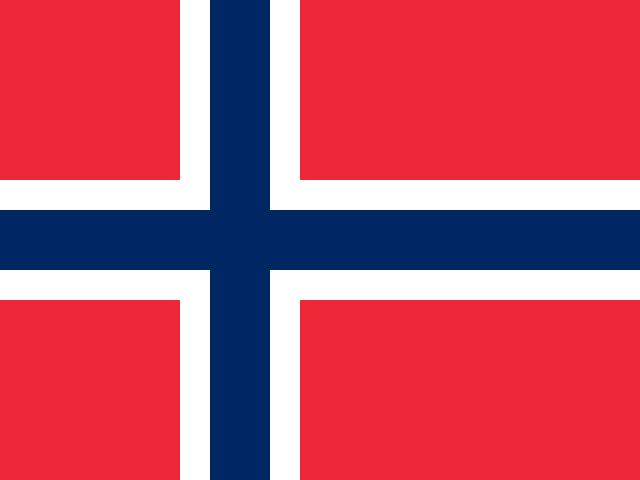
According to Store norske leksikon, it is customary for the flag to be kept clean, to be dry before it is folded or rolled up, and to be folded towards the hoist so that only the red colour is visible. It is stored in a dry, clean place. According to Flagg.no, a faded and worn flag is replaced because it is no longer worthy as a national symbol.
- Washing: many polyester flags can be washed gently according to the maker’s instructions.
- Fraying: when the fly edge starts to fray, it can be re-stitched before the damage spreads.
- Wind: Flaggshop mentions that flag and pennant can be taken down in high wind, especially large flags, because the load is great.
- Disposal: according to Store norske leksikon, it is customary for a worn-out flag to be unpicked along the seams so that the colours are separated, before it is burnt.
What happens when something breaks is covered in the guide to flagpole repair. How long pole and flag last is covered in the guide to flagpole lifespan, and the parts in the guide to flagpole accessories.
Frequently asked questions
How often is a flagpole inspected?
It is common to look over the flagpole in spring before the flag season and in autumn before winter. The halyard, pulley, cleat, foundation and the pole itself are what is most often checked.
How is the Norwegian flag folded?
According to Store norske leksikon, it is customary for the flag to be dry before it is folded or rolled up, and to be folded towards the hoist so that only the red colour is visible.
Can the flag be washed?
Many polyester flags can be washed gently. The maker’s washing instructions give the temperature and method. A flag that is not completely dry can get mould and colour stains when stored.
What happens to a worn-out Norwegian flag?
According to Store norske leksikon, it is customary for a flag that is no longer serviceable to be unpicked along the seams so that the colours are separated, before it is burnt.
Sources
This guide is based on the following sources, most of them in Norwegian:
- Flaggregler (Norge) – behandling av flagget – Store norske leksikon
- Hvilken høyde skal flaggstangen ha? – Flaggstangsfabrikken (produsent)
- Guide for flagg og flaggstang – Flaggshop (forhandler)
- Flaggregler, flaggtider og offentlige flaggdager – Flagg.no (bransje)
Related guides
- Flagpole repairCommon damage to flagpoles in Norway: a broken halyard, a jammed pulley, a leaning pole, cracks and corrosion – the causes, and who usually does the repair.
- Lifespan and sustainabilityHow long flagpoles and flags last in Norway, what wears them most, reuse and waste – and the custom for disposing of a worn-out Norwegian flag.
- Flagpole accessoriesFinial, pulley, halyard, cleat, hooks, ground sleeve, tilting foundation and pennant fittings: the parts of a Norwegian flagpole and what they do.
- Flagpole safetyFlagpole safety in Norway: wind load and Eurocodes, snow and ice, foundations, neighbour relations, working at height for employers and power lines.