History of the flagpole: the flag and the pole in Norway
Published Written by Flagpole Guides
This page is an English translation of the Norwegian original. Where the two versions differ, the Norwegian text is the original.
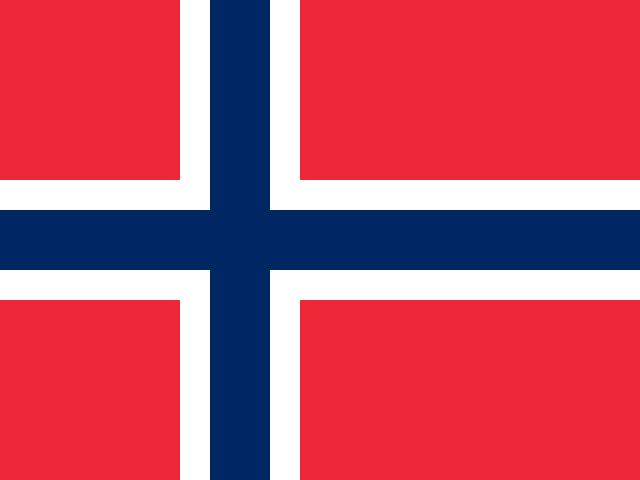
The history of the flagpole in Norway is above all the history of the flag. From the medieval lion banner via Dannebrog and the union flags to the pure flag of 1899, the flag has been a political question, and the pole has followed: from ships’ masts and fortress poles to the flagpole in the garden.
Timeline
| Year | Event |
|---|---|
| 1318 | Duchess Ingebjørg’s seal shows an armorial banner for Norway |
| 1748 | Dannebrog becomes the only recognised Danish-Norwegian merchant flag |
| 1814 | Dannebrog with the Norwegian lion is proclaimed Norway’s flag |
| 1821 | The Storting adopts Frederik Meltzer’s cross flag |
| 1844 | The union mark, the “herring salad”, is introduced in the flags |
| 1898 | The Flag Act is passed, with the pure flag as merchant flag |
| 1899 | The Flag Act comes into force on 16 December |
| 1905 | The union mark is removed from the naval ensign |
| 1927 | The flag regulation is adopted |
| 1933 | Act on flag flying on municipal public buildings |
| 2021 | Municipalities may use other flags for observances of general interest |
The lion banner and Dannebrog
According to Store norske leksikon, the oldest known form of Norwegian flag is the lion of the royal arms on a flag cloth. Such a banner appears on Duchess Ingebjørg’s seal from 1318, with the golden lion and silver axe on a red field. In the 17th and 18th centuries, it became common to use the Danish flag on Norwegian ships and fortresses too, and from 1748 Dannebrog was the only recognised Danish-Norwegian merchant flag.
1814 and 1821
After the separation from Denmark, Regent Christian Frederik on 27 February 1814 proclaimed Dannebrog with the Norwegian lion in the upper field as Norway’s flag. The Storting could not agree on a new flag in 1815 and 1818. In 1821 there were 18 proposals, and Frederik Meltzer’s cross flag was adopted in the Odelsting on 4 May 1821 by 40 of 59 votes. King Carl Johan refused sanction, but approved the flag by royal decree on 13 July 1821 as a merchant flag. Until 1838, it was used only north of Cape Finisterre.
The herring salad and the pure flag
By royal decree of 20 June 1844, Norway and Sweden were given their own merchant flags and naval ensigns with a shared union mark in the canton, popularly called the “herring salad”. From the 1880s, demands to remove it grew. According to Store norske leksikon, the pure flag was adopted as the merchant flag by the Act of 10 December 1898, promulgated without royal sanction after being passed by the Storting for the third time. At the same time, the country got a state flag, the swallow-tailed flag without the union mark. Lovdata describes the Flag Act as a foreshadowing of the dissolution of the union six years later. In 1905, the union mark was also removed from the naval ensign.
The pole
The first flagpoles were masts and staffs on ships and fortresses. According to Store norske leksikon, the custom of half-mast arose at sea in the age of sail. Section 5 of the 1927 flag regulation still describes both worlds: flags on buildings on the roof, wall or a free-standing pole, and flags on vessels on the ensign staff aft or under the gaff. Wooden poles were long the norm on land. Today, glass fibre and aluminium are most used, as described in the guide to flagpole materials.
The flag days
The flag regulation of 21 October 1927 laid down rules for the state flag and the merchant flag, and the flag days have been changed several times since. The list took its current form through an amendment adopted on 3 December 2004, which came into force on 1 January 2005. After King Harald V’s death in 2026, his birthday is, according to Lovdata, to be removed. All dates are in the guide to flag days, and the cross and colours in the guide to flag symbolism.
Frequently asked questions
When did Norway get its own flag?
The Storting adopted Frederik Meltzer’s proposal in 1821, and the flag was adopted by royal decree on 13 July 1821. It was a merchant flag, and until 1838 it was used only north of Cape Finisterre in Spain.
What was the “herring salad”?
The “herring salad” (sildesalaten) was the popular name for the union mark in Norwegian and Swedish colours placed in the canton of both countries’ flags by royal decree of 20 June 1844. The pure flag without the union mark became the merchant flag through the Flag Act of 10 December 1898.
Why did the Norwegian Flag Act take so long?
Demands to remove the union mark grew from the 1880s. According to Store norske leksikon, the Flag Act was promulgated without royal sanction after being passed by the Storting for the third time, and it came into force on 16 December 1899.
When was the Norwegian flag regulation adopted?
The flag regulation, the regulation on the use of the state flag and the merchant flag, was adopted by royal decree on 21 October 1927. The list of official flag days took its current form through an amendment that came into force on 1 January 2005.
Sources
This guide is based on the following sources, most of them in Norwegian:
- Norges flagg – historikk – Store norske leksikon
- Lov om Norges Flag [flaggloven] – Lovdata
- Flagget og loven – Lovdata
- Forskrift angående bruk av statsflagget og handelsflagget [flaggforskriften] – Lovdata
- Lov om flagging på kommunenes offentlige bygninger – Lovdata
- Flagge på halv stang – historikk – Store norske leksikon
Related guides
- Flag symbolismWhat the Norwegian flag stands for: the Nordic cross, the colours of liberty, Frederik Meltzer’s proposal of 1821 and the flag’s colours today.
- Flag daysAll official flag days in Norway in 2026 and 2027 with dates and weekdays, plus the Sámi flag days and the changes after the accession of King Haakon.
- Flag typesNorwegian flag types: the rectangular flag, the swallow-tailed state flag, the royal standard, the post and customs flags, the pennant, table flags and banners.
- Flagpole materialsFlagpole materials in Norway: glass fibre, aluminium, steel and wood – properties, maintenance and how coast, snow and frost in Norway affect the choice.