Flagpoles and national flag rules in Italy
Published Written by Flagpole Guides
This page is an English translation of the Italian original. Where the two versions differ, the Italian text is the original.
In Italy the Tricolore can be seen on town halls, schools, barracks and prefectures, but also on many balconies, villas, hotels and company headquarters. The use of the flag is regulated by law: there are rules on the days it is flown on public buildings, on flying hours, on half-mast as a sign of mourning and on the place of honour when it is flown together with other flags. This page brings together information about the flag and flagpoles in Italy, based on Italian legislation and the guidance of the competent institutions.
The essentials
- Days: D.P.R. no. 121/2000 lists the days on which flags are flown on all public buildings, from 7 January, Tricolour Day, to 4 November. All dates are in the guide to flag days.
- Hours: As a rule flags are not raised before sunrise and are lowered at sunset; at night they may be flown if the place is lit. More information is in the guide to the flag rules.
- Mourning: As a sign of mourning, flags flown outdoors are kept at half-mast. The subject is covered in the guides to half-mast and national mourning.
- Size: No law sets the size of the flag according to the pole. The State Ceremonial Office gives some ordinary sizes, and the flag size calculator shows the most common sizes.
- Price: The factors that affect the price are described in the guides to buying a flagpole and buying a flag.
- Permits: Installing a flagpole falls under the building rules and the municipality's regulations. The subject is covered in the guide to flagpole installation.
Laws and institutions
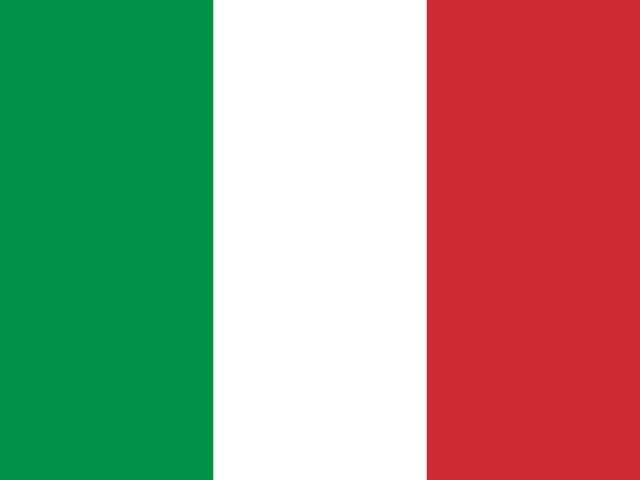
Article 12 of the Constitution states that the flag of the Republic is the Italian tricolour: green, white and red, in three vertical bands of equal size. Law no. 22 of 5 February 1998 lays down the general provisions on the use and display of the Italian flag and the flag of the European Union, and D.P.R. no. 121 of 7 April 2000 is its implementing regulation for State administrations and public bodies. Article 292 of the Penal Code punishes insulting the flag with a fine and damaging it publicly and intentionally with imprisonment of up to two years.
Practical guidance on flying the flag is published by the State Ceremonial Office (Ufficio del Cerimoniale di Stato) of the Presidency of the Council of Ministers, which also issues the instructions on half-mast in the event of national mourning. The regions have their own flags and, in many cases, regional laws on flying them alongside the Tricolore and the European flag. Under article 12 of D.P.R. no. 121/2000, the display of flags on the seats of regions and local authorities falls within their own regulatory autonomy.
There is no specific law on flagpoles. The Consolidated Building Act (D.P.R. no. 380/2001), the municipality's building regulations, the Code of Cultural Heritage and Landscape in protected areas and, in condominiums, the Civil Code apply.
The flagpole in Italy
On public buildings, two or three staffs are common: the Tricolore, the flag of the European Union and, on the seats of regions, provinces and municipalities, the authority's own banner. Many flags are flown on balcony staffs angled from the façade, others on ground-mounted poles in front of the building. At private homes, a staff on the balcony and a flagpole in the garden are common. More information is in the guides to types of flagpoles and flagpole heights.
The Tricolore was born in Reggio Emilia on 7 January 1797, as the flag of the Cispadane Republic; according to the State Ceremonial Office, on the Quirinale Palace the Tricolore is flown from the central balcony and from the tower. The story is told in the guide to the history of the flagpole.
About the guides
The guides are arranged by subject. Each guide covers a defined topic, ends with frequently asked questions, lists its sources and shows the date of the last update. The dates of the movable days, such as Easter and Easter Monday, are calculated for 2026 and 2027. The regional rules are mentioned in the guides where they apply, above all in the guides to flag types and flag protocol.
All guides
Flag flying and rules
When, how and why the Tricolore is flown in Italy – from the flag days on public buildings to national mourning, protocol and the flags of other countries.
- Flag daysWhen the Tricolore is flown on public buildings in Italy: the days of D.P.R. 121/2000, the civil solemnities and the public holidays of 2026 and 2027.
- Flag rulesThe rules on using the Tricolore in Italy: who flies it, flying hours, dignity of the flag, one flag per staff, private use and protection under criminal law.
- Half-mastHalf-mast in Italy: what D.P.R. 121/2000 provides, the two strips of black crêpe, who orders half-mast and how flags are draped in mourning indoors.
- National mourningNational mourning in Italy: who declares it, State funerals, half-mast on public buildings and some recent examples from 2023 to 2025.
- Flags on holidaysThe Tricolore on Italy's national days: 25 April, 1 May, 2 June, 4 October and 4 November, the flag days and the holidays without a flag rule.
- Flag protocolThe order of flags in Italy: the Tricolore's place of honour, the European flag, regional and municipal banners, foreign guests and the order at ceremonies.
- Foreign flagsFlying the flags of other countries in Italy: private individuals, hotels and companies, public buildings, embassies, order with the Tricolore and article 299.
The flag
The flag’s proportions, colours, sizes and symbolism, what affects the price of a flag, and a calculator that shows the size of flag for a given pole.
- Flag typesThe flags used in Italy: the Tricolore, the European flag, regional flags, gonfalons, naval ensigns, the presidential standard and indoor flags.
- Flag sizesSizes of the Tricolore: 2:3 proportions, Pantone colours, the ordinary sizes of the State Ceremonial Office, standard sizes and the flag-to-pole ratio.
- Flag size calculatorA calculator for the size of flag for each pole height in Italy: standard sizes, the State Ceremonial Office's guideline and its ordinary sizes.
- Flag symbolismWhat the Tricolore stands for: its origin in the cockade, the meaning of the colours in the songs of the Risorgimento and its place in the Constitution.
- Buying a flagWhat affects the price of a flag in Italy: size, fabric, make-up, finishing, customisation, the official colours of the Tricolore and consumer rights.
The flagpole
Types, materials, heights, accessories, lighting and what affects the price of a flagpole – and the history of the flagpole in Italy.
- Types of flagpolesTypes of flagpoles and staffs in Italy: ground-mounted poles, balcony staffs, roof poles, poles with a yard, telescopic poles and indoor staffs.
- Flagpole materialsFlagpole materials in Italy: aluminium, fibreglass, steel and wood, their properties, resistance to sea air and the wind zones of the NTC 2018.
- Flagpole heightsHow tall a flagpole is in Italy: common heights, the staffs named by the State Ceremonial Office, the ratio to the flag, wind and building rules.
- Flagpole accessoriesThe accessories of a flagpole: finial, pulley, halyard, snap hooks, counterweight, cleat, lockable box, hinged base and rotating arm.
- Flagpole mechanicsHow a flagpole works: external and internal halyards, the pulley, rotating arms, raising and lowering the flag, half-mast and poles without a halyard.
- Flag lightingFlying the flag at night in Italy: what D.P.R. 121/2000 provides, regional laws, floodlights and lights at the top of the pole, and light pollution.
- History of the flagpoleThe history of the flag and the flagpole in Italy: from the Tricolore of 1797 in Reggio Emilia to the Kingdom, the Republic and the naval ensigns.
- Buying a flagpoleWhat affects the price of a flagpole in Italy: height, material, halyard, base, accessories, transport, installation and consumer rights.
Installation, safety and care
Building rules, protected areas, foundations, safety, maintenance and transport – for houses, condominiums, businesses and public bodies.
- Flagpole installationInstalling a flagpole in Italy: permit-free works, municipal rules, landscape and heritage protection, condominiums, foundations and buried cables.
- Flagpole safetyFlagpole safety in Italy: the wind zones of the NTC 2018, weather bulletins, distances from power lines, buried cables and working at height.
- Flagpole maintenanceMaintaining a flagpole: regular checks, the halyard, cleaning and sea air, the foundation and caring for a flag that the rules require in good condition.
- Flagpole repairCommon flagpole faults: a broken halyard, a stuck pulley, a flag wrapped around the pole, corrosion, a loose base, a leaning pole and the legal guarantee.
- Flagpole lifespanHow long a flagpole and a flag last: lifespan by material, the effect of wind and sea air, parts that wear out first and the legal guarantee.
- Flagpole transportTransporting a flagpole in Italy: article 164 of the Highway Code on projecting loads, the warning panel, the penalties and delivery.
- Flagpoles for businessesFlagpoles and flags for companies and hotels in Italy: the Tricolore, foreign and company flags, advertising flags, the single levy and the Highway Code.
Frequently asked questions
Can a private individual fly the Tricolore without permission?
Yes. According to the State Ceremonial Office of the Presidency of the Council of Ministers, there is no authorisation scheme for private individuals, who are free to decide whether to fly the Tricolore. The general rules on the dignity of the flag in article 9 of D.P.R. no. 121/2000 still apply.
Which laws govern the Italian flag?
Article 12 of the Constitution states that the flag of the Republic is the Italian tricolour: green, white and red, in three vertical bands of equal size. Its use and display are governed by Law no. 22 of 5 February 1998 and by D.P.R. no. 121 of 7 April 2000. Article 292 of the Penal Code punishes insulting and damaging the flag.
On which days is the flag flown on public buildings?
Under article 1 of D.P.R. no. 121/2000, flags are flown on all public buildings on 7 January, 11 February, 25 April, 1 May, 9 May, 2 June, 28 September, 4 October and 4 November, and on 24 October together with the United Nations flag. Further days are set by specific laws or by directives of the President of the Council of Ministers.
At what time is the flag raised and lowered?
Under article 4 of D.P.R. no. 121/2000, flags are as a rule not raised before sunrise and are lowered at sunset. Flying them at night is permitted only if the place is adequately lit.
Is a permit needed to install a flagpole?
Neither the Consolidated Building Act (D.P.R. no. 380/2001) nor the 2018 glossary of permit-free building works names flagpoles. Furnishing elements in the grounds of buildings are permit-free works, but the municipal building regulations and any landscape or heritage protection still apply. The municipality can clarify each specific case.
Sources
This guide is based on the following sources, most of them in Italian:
- Costituzione della Repubblica Italiana (articolo 12) – Normattiva
- Legge 5 febbraio 1998, n. 22 (uso della bandiera della Repubblica italiana e dell'Unione europea) – Normattiva
- D.P.R. 7 aprile 2000, n. 121 (regolamento sull'uso delle bandiere) – Normattiva
- La Bandiera: dove si espongono le bandiere – Presidenza del Consiglio dei Ministri, Ufficio del Cerimoniale di Stato
- Risposte a domande frequenti: bandiere – Presidenza del Consiglio dei Ministri, Ufficio del Cerimoniale di Stato
- Codice penale (articolo 292) – Normattiva
- D.P.R. 6 giugno 2001, n. 380 (Testo unico dell'edilizia) – Normattiva