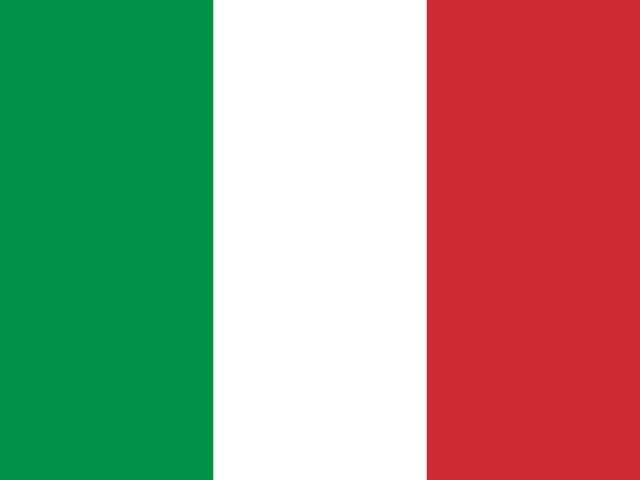
Lifespan of the flagpole and the flag in Italy
Published Written by Flagpole Guides
This page is an English translation of the Italian original. Where the two versions differ, the Italian text is the original.
A well-chosen and well-kept flagpole lasts a long time, but not all its parts last equally long. The structure can remain in service for decades, while the halyard and above all the flag are replaced much more often. This guide describes the factors that affect the lifespan of the pole and the flag.
Lifespan by material
| Material | Indicative lifespan | Main factors |
|---|---|---|
| Aluminium | Often several decades | Quality of the anodising or coating, corrosion at contact points |
| Fibreglass | Often decades | Ultraviolet light on the surface, wind load |
| Galvanised steel | Decades | Condition of the galvanising and paint |
| Wood | Shorter | Damp at the base, regular painting |
The lifespans are indicative and vary greatly with the site and maintenance. The manufacturer usually states the expected lifespan and the terms of any commercial guarantee. The materials are compared in the guide to flagpole materials.
The site
The site has a great effect on lifespan. On the coasts, salt air speeds up corrosion of the fittings and joints. In the windiest zones, such as Liguria, the province of Trieste and the islands, where the Technical Standards for Construction give the highest wind speeds, the pole and flag work harder. In the mountains, strong sun and frost test the halyard and surfaces.
Parts that wear out first
- Halyard: ultraviolet light and rubbing wear it out in a few years, sooner on poles where a flag is always flying.
- Pulley: wears with use and dirt; a noisy or stuck pulley is replaced.
- Snap hooks: salt air can corrode them.
- Seals and locks: on poles with an internal halyard the box wears with use.
Replacing these parts is described in the guide to flagpole repair.
The lifespan of the flag
The flag is the part with the shortest life. Its lifespan depends on the fabric, the size, the wind and the number of days it is flown. A flag flown every day, and at night too, wears out much sooner than one flown only on national days. The fly, which flaps in the wind, is the first part to fray.
D.P.R. no. 121/2000 provides that flags are flown in good condition and properly unfurled. In its circular of 26 January 2011, the Presidency of the Council asked administrations to replace worn, faded, torn or dirty flags immediately. The care that extends the life of a flag is described in the guide to flagpole maintenance.
Guarantee and wear
Under article 133 of the Consumer Code, the seller is liable for lack of conformity that becomes apparent within two years of delivery. Normal wear from use and age is not, as a rule, a lack of conformity. Consumer rights are described in the guides to buying a flagpole and buying a flag.
Frequently asked questions
How long does a flagpole last?
An aluminium or fibreglass flagpole with regular maintenance often lasts for decades. Its lifespan depends on the material, the surface protection, exposure to wind and sea air and the care of the base. Moving parts, such as the halyard, last much less.
How long does a flag last when flown?
It depends on the fabric, the size, the wind and how long it is flown. A flag flown every day on the coast wears much faster than one flown only on national days. Under D.P.R. no. 121/2000, flags are flown in good condition.
Does the guarantee cover wear on the flagpole?
The Consumer Code makes the seller liable for lack of conformity that becomes apparent within two years of delivery. Normal wear from use and age is not, as a rule, a lack of conformity.
Sources
This guide is based on the following sources, most of them in Italian:
- Codice del consumo (articoli 133 e 135) – Normattiva
- D.P.R. 7 aprile 2000, n. 121 (articolo 9) – Normattiva
- La Bandiera: cenni storici e norme per l'esposizione (circolare del 26 gennaio 2011) – Presidenza del Consiglio dei Ministri, Ufficio del Cerimoniale di Stato
- Norme tecniche per le costruzioni 2018 (D.M. 17 gennaio 2018) – Gazzetta Ufficiale
Related guides
- Flagpole materialsFlagpole materials in Italy: aluminium, fibreglass, steel and wood, their properties, resistance to sea air and the wind zones of the NTC 2018.
- Flagpole maintenanceMaintaining a flagpole: regular checks, the halyard, cleaning and sea air, the foundation and caring for a flag that the rules require in good condition.
- Flagpole repairCommon flagpole faults: a broken halyard, a stuck pulley, a flag wrapped around the pole, corrosion, a loose base, a leaning pole and the legal guarantee.
- Buying a flagpoleWhat affects the price of a flagpole in Italy: height, material, halyard, base, accessories, transport, installation and consumer rights.
- Buying a flagWhat affects the price of a flag in Italy: size, fabric, make-up, finishing, customisation, the official colours of the Tricolore and consumer rights.