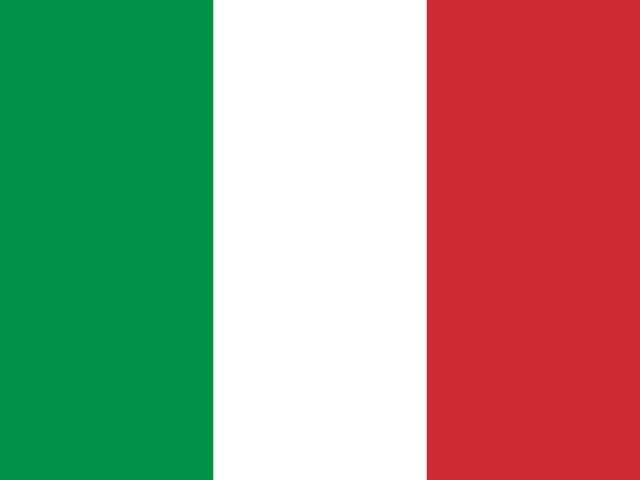
Maintenance of the flagpole and the flag in Italy
Published Written by Flagpole Guides
This page is an English translation of the Italian original. Where the two versions differ, the Italian text is the original.
A flagpole needs little maintenance, but not none. The halyard, pulley and fittings wear with sun, wind and rain, and by the sea the salt speeds up the wear. The flag wears even faster. For the Tricolore flown by public bodies, article 9 of D.P.R. no. 121/2000 provides that flags are flown in good condition and properly unfurled, so maintenance is part of using the flag. This guide describes the usual care.
Regular checks
It is common to check the pole at least once a year and after storms. The usual points are:
| Part | What is checked |
|---|---|
| Halyard | Wear, broken fibres, fading, knots |
| Pulley | Turns freely, without noise or play |
| Snap hooks | Open and close, without corrosion |
| Cleat or box | Fixing and lock |
| Base and bolts | Tightness, corrosion, cracks in the concrete |
| Surface | Scratches, corrosion, loss of gloss |
| Plumb | The pole stays upright |
On a pole with a hinged base, the top is checked with the pole lowered, without working at height.
The halyard
The halyard is the part that wears most. Ultraviolet light weakens the fibres, and the wind makes the rope rub against the pulley and the pole. A faded halyard or one with broken fibres can snap in the wind. On a pole with an external halyard, replacement is simple; with an internal halyard, the counterweight inside the tube makes the job longer. Replacement is described in the guide to flagpole repair.
Cleaning and sea air
Aluminium and fibreglass poles are cleaned with water and a mild detergent. On the coasts and the islands, where the Technical Standards for Construction also give the highest wind speeds, salt settles on the pole and fittings and speeds up corrosion. It is common to rinse the pole with fresh water a few times a year and to check the points where different metals meet, such as steel screws on an aluminium pole, where corrosion usually starts.
The flag in good condition
For flags flown by public bodies, each body designates the people responsible for flying them correctly, the so-called flag men (article 10 of D.P.R. no. 121/2000). In its circular of 26 January 2011, the Presidency of the Council of Ministers asked for checks that flags were not worn, faded, torn, dirty or badly wrapped around the staff, and for flags in poor condition to be replaced immediately. According to the State Ceremonial Office, the rule on dignity applies to anyone who flies the Tricolore.
The usual care for the flag is:
- Strong wind: a flag taken down during strong wind wears less on the fly.
- Damp: a wet flag is left to dry before being stored, to avoid mildew.
- Washing: polyester flags are washed by hand or in a machine at a low temperature.
- Repair: a small tear on the fly can be sewn up, as long as the flag keeps its 2:3 proportions and three equal bands.
The price of a new flag is covered in the guide to buying a flag.
The foundation
The concrete foundation rarely needs maintenance, but cracks, standing water in the sleeve or corroded bolts on the hinged base are warning signs. A pole that is no longer upright points to a problem with the foundation or the base. The risks are described in the guide to flagpole safety.
Maintenance and lifespan
Regular maintenance extends the life of the pole and avoids bigger repairs. The lifespan of the materials is described in the guide to flagpole lifespan, and the parts in the guide to flagpole accessories.
Frequently asked questions
How often is a flagpole checked?
No rule sets an interval for a private flagpole. It is common to check it at least once a year and after storms: halyard, pulley, snap hooks, base, bolts and whether the shaft is upright.
When is the flag replaced?
Under article 9 of D.P.R. no. 121/2000, flags are flown in good condition and properly unfurled. In a 2011 circular, the Presidency of the Council asked administrations to replace worn, faded, torn or dirty flags immediately.
How is a flag washed?
Polyester flags are usually washed by hand or in a machine at a low temperature, with a mild detergent, and left to dry before being stored. The manufacturer states the right washing method for the fabric on the label.
Sources
This guide is based on the following sources, most of them in Italian:
- D.P.R. 7 aprile 2000, n. 121 (articoli 9 e 10) – Normattiva
- La Bandiera: cenni storici e norme per l'esposizione (circolare del 26 gennaio 2011) – Presidenza del Consiglio dei Ministri, Ufficio del Cerimoniale di Stato
- Norme tecniche per le costruzioni 2018 (D.M. 17 gennaio 2018) – Gazzetta Ufficiale
Related guides
- Flagpole repairCommon flagpole faults: a broken halyard, a stuck pulley, a flag wrapped around the pole, corrosion, a loose base, a leaning pole and the legal guarantee.
- Flagpole lifespanHow long a flagpole and a flag last: lifespan by material, the effect of wind and sea air, parts that wear out first and the legal guarantee.
- Flagpole safetyFlagpole safety in Italy: the wind zones of the NTC 2018, weather bulletins, distances from power lines, buried cables and working at height.
- Flagpole accessoriesThe accessories of a flagpole: finial, pulley, halyard, snap hooks, counterweight, cleat, lockable box, hinged base and rotating arm.
- Buying a flagWhat affects the price of a flag in Italy: size, fabric, make-up, finishing, customisation, the official colours of the Tricolore and consumer rights.