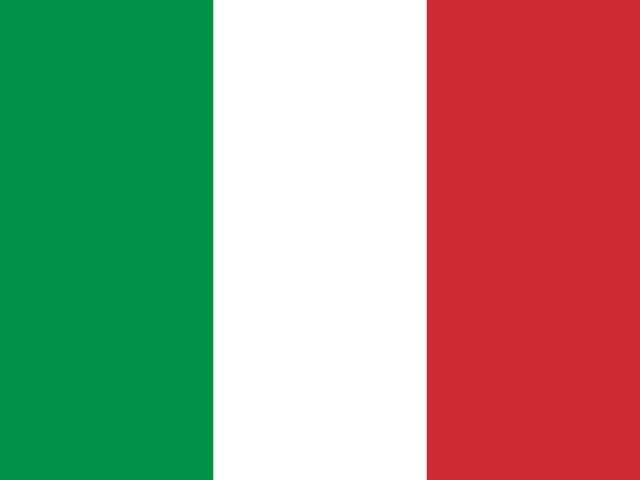
Symbolism of the Tricolore
Published Written by Flagpole Guides
This page is an English translation of the Italian original. Where the two versions differ, the Italian text is the original.
The Tricolore is one of the symbols of the Republic, together with the national anthem and the emblem. Under article 12 of the Constitution, which places it among the fundamental principles, the flag of the Republic is the Italian tricolour: green, white and red, in three vertical bands of equal size. This guide describes the origin of the colours, the meanings that have been given to them and the flag's value for the institutions.
From cockade to flag
According to the State Ceremonial Office's publication on the flag, the Tricolore originated in the cockade worn by students in Bologna during the first uprisings of 1794. Modelled on the cockade of the French Revolution, it was made of three ribbons of different colours, with one difference: green instead of blue. One of the very rare surviving examples is kept at the University of Bologna.
On 7 January 1797, in Reggio Emilia, the Parliament of the Cispadane Republic adopted the green, white and red flag. It had horizontal bands, with the republic's emblem in the centre: a quiver with four arrows, symbolising the provinces, within a laurel wreath. A few months later the Cisalpine Republic adopted the tricolour with vertical bands.
The meaning of the colours
No rule gives the three colours an official meaning. Over time they have been read in different ways:
| Colour | Common readings |
|---|---|
| Green | Hope; the meadows and fields of Italy |
| White | Faith; the snows of the Alps |
| Red | Love, joy or the blood shed for independence |
These readings recur often in the songs of the Risorgimento collected by the State Ceremonial Office. In "Passa la ronda" by Teobaldo Ciconi, from 1848, green is hope, white faith and red the wounds of the heroes. The Italian Navy notes that for a long time the colours had no precise definition and were described as green as grass, white as snow and red as blood.
The functions of the flag
The Ceremonial Office's publication refers to the report accompanying Law no. 22/1998, according to which the Tricolore expresses three functions:
- Italianness, as the cultural identity of the Italian people;
- the sovereignty of the State, as the means of protecting the needs of individuals and of the community;
- the feeling of Italian union, as awareness of the bond between all citizens, regardless of faith and ideology.
From these functions follows, according to the Ceremonial Office, the duty to display the flag with the utmost dignity. The rules are in the guide to the flag rules.
The Tricolore and unification
The Tricolore became the flag of the Kingdom of Sardinia in 1848, when Charles Albert chose for his troops the Savoy shield on the Italian flag, and in 1861 the flag of the Kingdom of Italy. With the Republic, in 1946, the Savoy shield was removed. Since 2012, 17 March, the anniversary of the proclamation of unification, has been the Day of National Unity, the Constitution, the Anthem and the Flag. The meaning of the occasions is described in the guide to flags on holidays.
The Tricolore Museum
In Reggio Emilia, in the town hall, the room in which the Tricolore was born on 7 January 1797 is today the Sala del Tricolore. Next to it, the Museo del Tricolore, devoted to the history of the flag, was set up between 2004 and 2006. The history of the flagpole and the flag in Italy is told in the guide to the history of the flagpole, and the types of flags in the guide to flag types.
Frequently asked questions
What do the colours of the Italian flag mean?
No rule gives the three colours an official meaning. In the songs of the Risorgimento collected by the State Ceremonial Office, green is often hope, white faith and red love, joy or the blood of heroes. The Italian Navy notes that for a long time the colours were described as green as grass, white as snow and red as blood.
Where do the colours of the Tricolore come from?
According to the State Ceremonial Office, the tricolour flag originated in the cockade worn by students in Bologna during the uprisings of 1794, modelled on the cockade of the French Revolution, with green instead of blue. With the Cispadane Republic, in 1797, the three colours of the cockade were used for the first green, white and red flag.
Why is the flag in the Constitution?
Article 12, among the fundamental principles of the Constitution, states that the flag of the Republic is the Italian tricolour. The State Ceremonial Office's publication on the flag observes that the framers of the Constitution placed it among the fundamental principles, not as a mere symbol but as a founding principle of the Republic.
Sources
This guide is based on the following sources, most of them in Italian:
- La Bandiera: cenni storici e norme per l'esposizione – Presidenza del Consiglio dei Ministri, Ufficio del Cerimoniale di Stato
- Bandiera Nazionale e Bandiere Navali – Marina Militare
- Costituzione della Repubblica Italiana (articolo 12) – Normattiva
- Museo del Tricolore – Musei Civici di Reggio Emilia
Related guides
- Flag typesThe flags used in Italy: the Tricolore, the European flag, regional flags, gonfalons, naval ensigns, the presidential standard and indoor flags.
- History of the flagpoleThe history of the flag and the flagpole in Italy: from the Tricolore of 1797 in Reggio Emilia to the Kingdom, the Republic and the naval ensigns.
- Flags on holidaysThe Tricolore on Italy's national days: 25 April, 1 May, 2 June, 4 October and 4 November, the flag days and the holidays without a flag rule.
- Flag sizesSizes of the Tricolore: 2:3 proportions, Pantone colours, the ordinary sizes of the State Ceremonial Office, standard sizes and the flag-to-pole ratio.