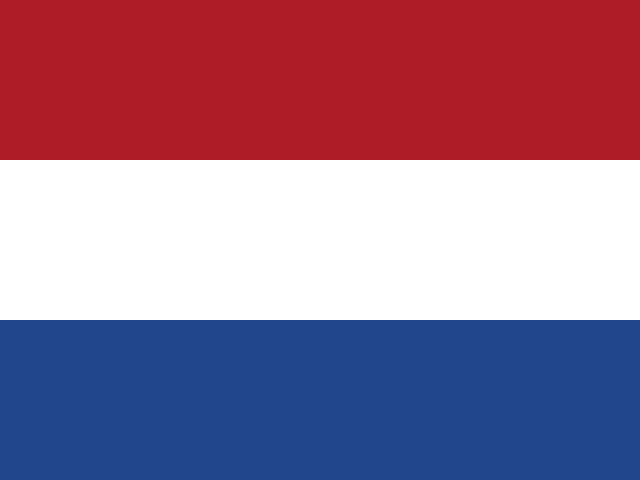
Flag days in the Netherlands 2026 and 2027
Published Written by Flagpole Guides
This page is an English translation of the Dutch original. Where the two versions differ, the Dutch text is the original.
The fixed flag days in the Netherlands are set out in the general flag instruction (algemene vlaginstructie) for central government buildings. The instruction is issued by the Prime Minister; according to the Dutch government, the current version dates from 2013, after the royal succession. Provinces, municipalities and water authorities are asked to follow it, and for citizens, businesses and organisations it is a guideline. Below are all the dates for 2026 and 2027, with the weekday and the way the flag is flown from government buildings.
Flag days year by year
Veterans’ Day is the last Saturday of June and Prinsjesdag the third Tuesday of September. The other dates are fixed, but move when they fall on a Sunday or a Christian holiday. In 2027, 17 May falls on Whit Monday; Queen Máxima’s birthday is therefore marked on 18 May that year.
The fixed days in the flag instruction
| Date | Occasion | Government buildings |
|---|---|---|
| 31 January (1 February) | Birthday of Princess Beatrix | limited, with orange pennant |
| 27 April (26 April) | King’s Day | extended, with orange pennant |
| 4 May | National Remembrance Day, half-mast from 18.00 until sunset | extended |
| 5 May | Liberation Day | extended |
| 17 May (18 May) | Birthday of Queen Máxima | limited, with orange pennant |
| last Saturday of June | Veterans’ Day | extended |
| 15 August (16 August) | Formal end of the Second World War | extended |
| third Tuesday of September | Prinsjesdag, in The Hague only | extended |
| 7 December (8 December) | Birthday of the Princess of Orange | limited, with orange pennant |
| 15 December (16 December) | Kingdom Day | limited |
Under the flag instruction, the date in brackets applies only when the usual date falls on a Sunday or a generally recognised Christian holiday. Which holidays are generally recognised is set out in the General Time Limits Act (Algemene termijnenwet): Easter Monday, Ascension Day, Whit Monday and both Christmas days, with Good Friday treated alike.
Extended and limited flag flying
The flag instruction distinguishes extended flying (uitgebreid vlaggen), from all central government buildings, and limited flying (beperkt vlaggen), from the main buildings only. According to the government these are the main buildings of the ministries, the Senate and House of Representatives, the Council of State, the Court of Audit, the National Ombudsman, the Cabinet of the King and the Supreme Court of the Netherlands. Municipalities apply the distinction to their own buildings. The flag instruction of the municipality of Zaanstad, for example, names the town hall as its main building and, for extended flying, also flies the flag from other municipal buildings and church towers.
4 and 5 May
On 4 May the flag instruction has the flag at half-mast from 18.00 until sunset. The National 4 and 5 May Committee calls on residents to fly the flag at half-mast that day from sunrise to sunset. Both sources use the tricolour without a pennant. How the flag is flown at half-mast is described in the guide to half-mast.
On 5 May, according to the National Committee, the flag may fly at full mast from sunrise to sunset, without a pennant. It can then also fly together with the municipal flag, the provincial flag or flags of countries involved in the liberation.
On 15 August the official end of the Second World War in the Kingdom is commemorated. According to the National Committee, the flag flies at full mast that day, not at half-mast, and without a pennant.
The orange pennant
On King’s Day and the birthdays of Queen Máxima, Princess Beatrix and the Princess of Orange the flag flies with the orange pennant (oranje wimpel). On all other occasions the flag flies without it, including on Kingdom Day. More about the pennant is in the guide to flag types.
Special flag instructions
Beyond the fixed days, the Prime Minister can issue a special flag instruction, for example for a birth, marriage or death in the Royal House or to commemorate the victims of a national or international disaster. During an official visit by a foreign head of state, the flag instruction has the flag flown only in the places the head of state visits.
Municipalities sometimes fly the flag on more days than the flag instruction lists. Zaanstad, for example, raises the European flag on 9 May, Europe Day. More on this is in the guide to foreign flags in the Netherlands. Flying the flag for family celebrations and exams is covered in the guide to flags on holidays.
Frequently asked questions
How many fixed flag days does the Netherlands have?
The general flag instruction lists ten fixed days a year. In addition, the Prime Minister can issue a special flag instruction, for example for a birth, marriage or death in the Royal House or to commemorate the victims of a disaster.
What happens if a flag day falls on a Sunday?
Under the flag instruction the date in brackets then applies: usually the following day, and for King’s Day the Saturday before. The same applies to a generally recognised Christian holiday such as Whit Monday. On 4 and 5 May the flag is always flown on the date itself.
What is the difference between extended and limited flag flying?
With extended flying (uitgebreid vlaggen) the flag flies from all central government buildings. With limited flying (beperkt vlaggen) only from the main buildings, such as those of the ministries, the Senate and House of Representatives, the Council of State and the Supreme Court.
Are private individuals obliged to fly the flag on flag days?
No. The flag instruction applies to government buildings. According to the Dutch government, citizens, businesses and organisations can follow it as a guideline, but they are not obliged to.
Sources
This guide is based on the following sources, most of them in Dutch:
- Wanneer kan ik de Nederlandse vlag uithangen? – Rijksoverheid
- Vlaginstructie – Het Koninklijk Huis
- Vlagprotocol 4 en 5 mei – Nationaal Comité 4 en 5 mei
- Algemene termijnenwet – Overheid.nl (wetten.overheid.nl)
- Vlaginstructie gemeente Zaanstad 2021 – Gemeente Zaanstad (Gemeenteblad)
Related guides
- Flag rulesFlag rules in the Netherlands: who may fly the flag, flying from sunrise to sunset, raising and lowering, the place of honour and what official guidance says.
- Half-mastHalf-mast in the Netherlands: how the flag is flown at half-mast under the official guidance, 4 May, special flag instructions and half-mast after a death.
- Flags on holidaysFlying the flag on holidays in the Netherlands: King’s Day, Liberation Day, flags for a wedding, birthday or passed exam, and the Christian holidays.
- Foreign flags in the NetherlandsFlags of other countries in the Netherlands: the Dutch flag’s position of honour, ordering by French country name, the European flag and the Kingdom’s flags.