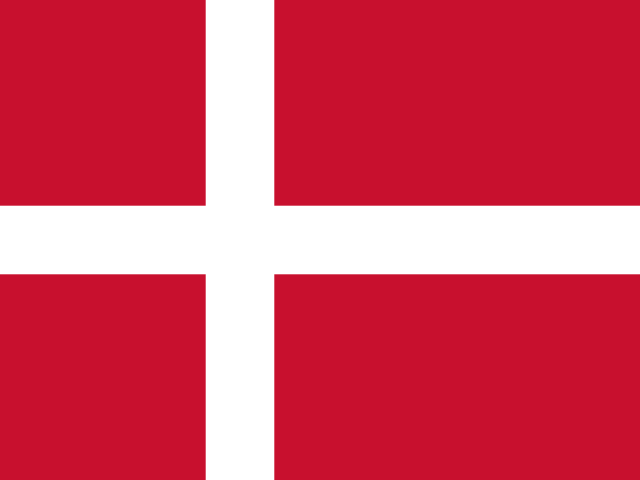
Flag lighting in Denmark: Dannebrog and pennant after sunset
Published Written by Flagpole Guides
This page is an English translation of the Danish original. Where the two versions differ, the Danish text is the original.
In Denmark, the flag is as a rule taken down at sunset. According to Bolius, flying the flag after dark is said to be »flying the flag for the Devil«. The custom has one exception, though: a flag that is directly lit can fly after sunset. This guide describes when that is in order and which lighting is regarded as sufficient.
The flag times
According to Dannebrogs-Samfundet, the flag is raised no earlier than 8 a.m. or sunrise and lowered at sunset at the latest. After sunset, according to Dannebrogs-Samfundet, the flag only flies if it is lit. Den Store Danske describes the same custom. In winter, this means the flag is up for only a few hours.
Flying the flag at night
Dannebrogs-Samfundet describes the conditions as follows:
| Lighting | Sufficient according to Dannebrogs-Samfundet? |
|---|---|
| Lamp on a post shining directly on the flag | Yes |
| Lamp fitted directly to the flagpole | Yes |
| Floodlight close to the flagpole | Yes |
| Street lighting | No |
| LED lights in the finial | No |
What matters, then, is that the light falls on the flag itself, so it is clearly visible in the dark.
Pennant and stander
The pennant and the stander are exempt from the flag times. According to Dannebrogs-Samfundet, they can fly from the flagpole day and night and do not need to be lit. They are lowered when the flag is raised. That is why many Danish flagpoles never look quite empty.
Businesses and public buildings
Lit flags are seen especially at businesses, hotels, town halls and memorials, where the flag is meant to be visible around the clock. The lighting is often a floodlight in the ground or on the façade. Where several flags are raised together, the order in the guide to flag protocol applies. More about business flags in the guide to flagpoles for businesses.
Neighbours and the municipality
A floodlight shining in the dark can disturb neighbours. Under section 6 D(2) of the Building Act, according to the guidance, the municipality can issue an order or a prohibition where signs, lighting installations and the like are a nuisance or disfigure the surroundings. The guidance mentions, among other things, removing lighting that disturbs residents. The light can be aimed so it falls on the flag and not on the neighbours’ windows.
More about the accessories in the guide to flagpole accessories, about installation in the guide to flagpole installation, and about the flag times in the guide to flag rules.
Frequently asked questions
Can Dannebrog fly at night?
According to Dannebrogs-Samfundet, flying the flag at night is permitted if the flag is directly lit. Without lighting, the flag is lowered at sunset at the latest. This is custom, not law.
Which lighting is sufficient?
Dannebrogs-Samfundet writes that the lighting is mounted on a post, fitted directly to the flagpole or is a floodlight close by. Street lighting and LED lights in the finial are not regarded as sufficient lighting.
Is the pennant taken down at night?
No. According to Dannebrogs-Samfundet, the Dannebrog pennant and stander can fly day and night and do not need to be lit.
Can the municipality intervene against lighting?
Yes. Under section 6 D(2) of the Building Act, according to the guidance, the municipality can issue an order or a prohibition where signs, lighting installations and the like are a nuisance or disfigure the surroundings, for example disturbing lighting in a residential area.
Sources
This guide is based on the following sources, most of them in Danish:
- Sådan bruges Dannebrog, 2nd edition (2019), pp. 16–17 and 21–23 – Dannebrogs-Samfundet (formerly Danmarks-Samfundet)
- Flagning – Lex – Den Store Danske
- Flagstænger og flagregler – Bolius
- Vejledning om byggelovens § 6 D – Bygningsreglementet.dk
Related guides
- Flag rulesFlag rules in Denmark: the Flag Act, flag times from 8 a.m. to sunset, the swallow-tailed and rectangular flags, wind, flying at night and good flag etiquette.
- Flagpole accessoriesFlagpole accessories in Denmark: finial, pulley, flag line, flag clips, cleat, base, tilting bracket, pennant and stander – the parts and what they do.
- Flagpoles for businessesFlagpoles for businesses in Denmark: company flags, Dannebrog in logos, foreign flags at hotels, municipal orders under the Building Act and liability.
- Flagpole installationFlagpole installation in Denmark: the Building Act, local plans and easements, coastal protection, distance to the boundary, foundation and position.