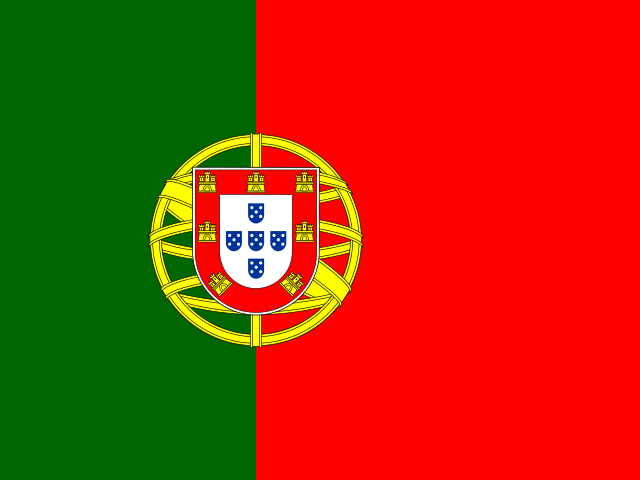
Symbolism of the Portuguese national flag
Published Written by Flagpole Guides
This page is an English translation of the Portuguese original. Where the two versions differ, the Portuguese text is the original.
The national flag was designed in 1910 by a commission appointed by the Provisional Government, and each element is explained in the report that the commission presented. Green and red are the colours of the Republic, the armillary sphere recalls the Discoveries, and the shield with the quinas and castles comes from the tradition of the monarchy. This guide summarises the meaning of the elements according to the Museum of the Presidency of the Republic.
The Flag Commission of 1910
According to the Museum of the Presidency of the Republic, the Provisional Government appointed a commission on 15 October 1910 to create the new flag. Its members were the painter Columbano Bordalo Pinheiro, the writer Abel Botelho, the journalist and politician João Chagas and two fighters of 5 October, Lieutenant Ladislau Pereira and Captain Afonso Palla. On 29 October the commission completed the report justifying its design, and on 29 November the Provisional Government approved the green and red flag.
The colours
| Colour | Meaning according to the 1910 report |
|---|---|
| Green | The colour of hope and, for the positivists, of progress and the future. Above all, one of the colours of the revolution of 5 October, which "sprang from spontaneous popular instinct" |
| Red | A "combative, warm" colour, historically linked to the flag of Portugal. Only then comes the association with blood, which over the years took precedence |
| White | A "fraternal colour", of simplicity, harmony and peace, present in the flag since the beginnings of the monarchy |
| Yellow and gold | The armillary sphere and the castles |
According to the museum, the blue of the monarchy’s flag was left out because it was associated with the cult of Our Lady of the Conception. The choice was contested: between the Government’s approval and the decree of the Constituent National Assembly, the "flag quarrel" set the supporters of blue and white against the supporters of green and red in the newspapers.
The armillary sphere
The report describes the Manueline armillary sphere as "the eternal emblem of our adventurous genius, of our dreaming and epic existence", a direct reference to the age of the Discoveries. According to the drawing instructions of the Presidency of the Republic’s archive, the sphere is a highly stylised depiction of the navigational instrument of the same name, with rings representing two meridians, the Equator and the Ecliptic, placed for graphic harmony rather than astronomical accuracy.
The shield, the quinas and the castles
The shield of the national arms rests on the sphere. According to the museum, the commission’s report did not dwell on the meaning of the arms, stating only their link to the founding of the nation and the winning of independence. The museum summarises the traditional explanations:
- The quinas: five blue escutcheons, each with five white bezants. Tradition links them to the legend of Ourique: King Afonso Henriques is said to have added the escutcheons in memory of the five Moorish kings defeated in the battle. Later, the explanation that the bezants represent the five wounds of Christ became widespread.
- The seven castles: said to represent the incorporation of the Algarve, whose arms bore castles. King João II is said to have fixed their number. The 1910 report saw them as "one of the most decorative and most energetic symbols of national integrity and independence".
The Presidency’s drawing instructions specify that the castles are always seven, yellow and with three towers, and that replacing them with a single tower is incorrect.
The colours in the official design
The law describes the colours in words, with the shade of green prescribed as "dark green". The Presidency of the Republic’s archive lists the colours used in the official image it provides, for example green PMS 349 and red PMS 485, together with vector files for reproducing the flag. The shape and proportions are in the guide to flag sizes.
From revolution to everyone’s flag
According to the Museum of the Presidency of the Republic, for many people the new flag remained linked to the republican revolution for several years, and it was the First World War that united the Portuguese under the new symbol. The history of flagpoles and flags in Portugal is told in the guide to the history of the flagpole, and the dates linked to the flag in the guide to flags on holidays.
Frequently asked questions
What do the colours of the Portuguese flag mean?
According to the report of the 1910 Flag Commission, quoted by the Museum of the Presidency of the Republic, green is the colour of hope and one of the colours of the revolution of 5 October, and red is a combative, warm colour that recalls blood and spurs to victory. The white of the shield is described as a colour of simplicity, harmony and peace.
What does the armillary sphere stand for?
According to the commission’s report, the Manueline armillary sphere is the eternal emblem of the Portuguese adventurous spirit, a direct reference to the age of the Discoveries. In the official design it is a stylised depiction of the navigational instrument of the same name.
What do the quinas and the castles mean?
According to the Museum of the Presidency of the Republic, the five quinas are traditionally linked to the legend of Ourique and the bezants, later on, to the five wounds of Christ. The seven castles are said to represent the incorporation of the Algarve, and the 1910 report saw them as a symbol of national integrity and independence.
Why is the Portuguese flag no longer blue and white?
According to the Museum of the Presidency of the Republic, the 1910 commission left out blue because it was associated with the cult of Our Lady of the Conception and with the monarchy. Green and red had been the colours flown during the republican revolution.
Sources
This guide is based on the following sources, most of them in Portuguese:
- Bandeira Nacional – Museu da Presidência da República
- Bandeira Nacional – Presidência da República
- Bandeira nacional da República Portuguesa — desenho – Presidência da República
- Decreto da Assembleia Nacional Constituinte de 19 de junho de 1911 – Presidência da República
Related guides
- Flag typesTypes of flags in Portugal: the national flag, the naval jack and pennants, the flags of the Azores and Madeira, and municipal and parish flags.
- History of the flagpoleThe history of the flag and the flagpole in Portugal: from ships’ masts and the 1910 revolution to the Azorean autonomy flag and the pole in Parque Eduardo VII.
- Flags on holidaysThe national flag on Portuguese public holidays: the meaning of 25 April, 10 June, 5 October and 1 December, and the regional and municipal holidays.
- Flag sizesFlag sizes in Portugal: the official proportions of 1911, the usual sizes, the relationship with the height of the pole and the rules of the Azores and the GNR.