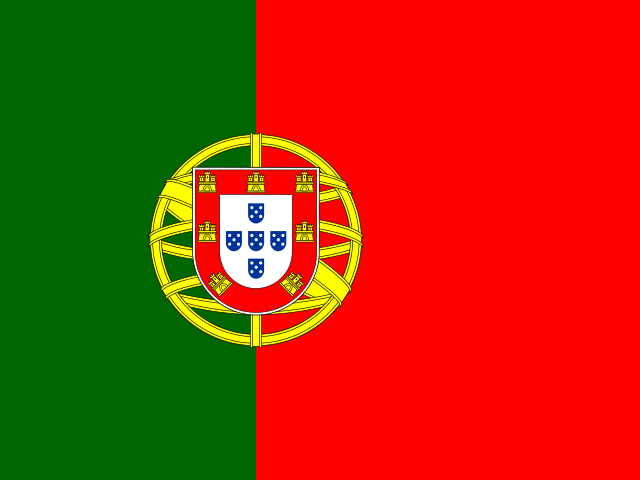
National mourning and the national flag in Portugal
Published Written by Flagpole Guides
This page is an English translation of the Portuguese original. Where the two versions differ, the Portuguese text is the original.
National mourning is the official way in which the country pays tribute after the death of a senior figure of the State or after a tragic event. For the flag, the consequence is clear: under Decreto-Lei n.º 150/87, the national flag is flown at half-mast for the days set. This guide explains who declares national mourning, in which cases and what it means for those who fly flags.
Who declares national mourning
National mourning is governed by article 42 of Lei n.º 40/2006, the Law on the Precedence of the Protocol of the Portuguese State:
- The Government declares national mourning, its duration and its scope by decree.
- National mourning is declared on the death of the President of the Republic, the President of the Assembly of the Republic and the Prime Minister, and also of former Presidents of the Republic.
- National mourning is also declared on the death of a person, or on the occurrence of an event, of exceptional significance.
The decree is approved by the Council of Ministers, signed by the President of the Republic, countersigned by the Prime Minister and published in the first series of the Diário da República.
Recent examples
| Decree | Reason | Duration |
|---|---|---|
| Decreto n.º 6-A/2025 of 23 April | Death of Pope Francis | Three days, 24 to 26 April 2025 |
| Decreto n.º 8-B/2025 of 22 October | Death of Francisco Pinto de Balsemão | Two days, 22 and 23 October 2025 |
Decreto n.º 8-B/2025 expressly cites paragraphs 1 and 3 of article 42 of Lei n.º 40/2006, that is, mourning for a person of exceptional significance. The days of mourning coincided with the funeral ceremonies.
What changes for the flag
Under article 7 of Decreto-Lei n.º 150/87, during national mourning the national flag is flown at half-mast for the number of days set, and any other flag flown with it is flown in the same way. To fly at half-mast, the flag first goes to the top. The procedure is described in the guide to half-mast.
National mourning sometimes coincides with a public holiday or a Sunday, days on which the flag is flown on public buildings. In that case the flag is flown at half-mast. The flag days are in the guide to flag days.
What changes for events and activities
In April 2025 the Government published a clarification on the national mourning for Pope Francis, which coincided with the 25 April commemorations. According to that clarification, the decree of national mourning does not in itself impose or set any measures or restrictions on the activities of public or private bodies and persons: it only declares the mourning and its dates. The course of conduct chosen by the Government applied to its own members, who took part in the formal sessions and postponed the festive events.
For a private individual, flying the flag at half-mast during national mourning is therefore a way of joining in the tribute, not an obligation imposed by the mourning decree.
Municipal mourning
The câmaras municipais sometimes declare municipal mourning. According to the memorandum on flags of the Câmara Municipal do Sabugal, during municipal mourning only the municipality’s flag is flown at half-mast, for the number of days set. The national flag stays at the top, since only national mourning brings it to half-mast.
The flag on the coffin
According to the Sabugal memorandum, at official funeral ceremonies the national flag may cover the coffin. The protocol of official ceremonies is covered in the guide to flag protocol.
Frequently asked questions
Who declares national mourning in Portugal?
The Government. Under article 42 of Lei n.º 40/2006, the Government declares national mourning, its duration and its scope by decree. The decree is approved by the Council of Ministers, signed by the President of the Republic and published in the Diário da República.
In which cases is national mourning declared?
Lei n.º 40/2006 provides for national mourning on the death of the President of the Republic, the President of the Assembly of the Republic, the Prime Minister and former Presidents of the Republic. It may also be declared on the death of a person, or on the occurrence of an event, of exceptional significance.
Does national mourning oblige private individuals to fly the flag at half-mast?
Decreto-Lei n.º 150/87 provides for the national flag to be flown at half-mast during national mourning. According to the Government, the decree of national mourning of April 2025 only set the mourning and its dates, without imposing measures or restrictions on the activities of public or private bodies and persons.
How long does national mourning last?
The duration is set in each decree. In 2025, for example, Decreto n.º 6-A/2025 set three days of national mourning on the death of Pope Francis, and Decreto n.º 8-B/2025 set two days on the death of Francisco Pinto de Balsemão.
Sources
This guide is based on the following sources, most of them in Portuguese:
- Lei n.º 40/2006, de 25 de agosto (Lei das Precedências do Protocolo do Estado Português) – Diário da República
- Decreto-Lei n.º 150/87, de 30 de março (uso da Bandeira Nacional) – Presidência da República
- Decreto n.º 6-A/2025, de 23 de abril – Diário da República
- Decreto n.º 8-B/2025, de 22 de outubro – Diário da República
- Esclarecimento sobre o luto nacional – Governo da República Portuguesa
- Memorando: colocação de bandeiras – Câmara Municipal do Sabugal
Related guides
- Half-mastHalf-mast in Portugal: when it applies, raising the flag to the top before half-mast, what happens to other flags and the difference from municipal mourning.
- Flag rulesThe rules for the Portuguese national flag: who may fly it, flying hours from 9.00 to sunset, lighting, good condition, place of honour and legal protection.
- Flag protocolFlag protocol in Portugal: the place of honour of the national flag with two, three or more poles, and the European, regional and municipal flags.
- Flag daysWhen the national flag is flown in Portugal: Sundays, the national and regional holidays of 2026 and 2027, official ceremonies and days set by the Government.